 ONTEA
ONTEA
Specify a hotel bathroom tap on three numbers and one surface: the flow rate the outlet actually delivers, the temperature control the outlet can guarantee, and the finish that survives being wiped down several times a day by someone who has never considered your maintenance schedule. Get those right and the tap specification is a short conversation. Get them wrong and the failure shows up as a water bill, a scald complaint, or a finish that has to be replaced three years into a maintenance cycle.
The honest version of each answer is a little less tidy than the marketing version. Flow rate is capped, but the cap that binds your project is not always the cap you think it is. Thermostatic control is required in some situations and merely sensible in others, and the line between the two is drawn by document, not by intuition. And the most durable finish is not simply the hardest one, because a hotel bathroom is attacked from two directions at once, by cleaning chemistry and by people.
Key Takeaways
- Approved Document G Table 2.1 gives the UK's recognised fittings benchmark: basin taps 6 l/min, showers 10 l/min, baths 185 litres, but it is scoped to new dwellings, so it is a good specification target for a hotel rather than a legal trigger.
- The Water Supply (Water Fittings) Regulations 1999 do not cap tap or shower flow at all. They prohibit installing or using a fitting in a way that causes waste or undue consumption, and set a route for demonstrating compliance.
- Scald safety is a documented risk, not a preference. HSE names large hotels specifically and requires a Type 3 thermostatic mixing valve where vulnerable guests can reach baths and showers.
- Chloride-based cleaning chemicals pit stainless steel. Buying a harder grade or a coated finish does not make a fixture bleach-proof.
What flow rate is actually required, and by whom
Start with the number that will appear on your schedule, then check who is obliged to care about it.
The figure most UK specifiers quote is in Approved Document G, Table 2.1, which sets the maximum consumption of fittings under the fittings approach. Basin taps are capped at 6 l/min, showers at 10 l/min, baths at 185 litres for a whole fill, sink taps at 8 l/min, and WCs at 6/4 litres for a dual flush or 4.5 litres for a single flush (Approved Document G, Sanitation, hot water and safety, 2015 edition incorporating 2016 and 2024 amendments, Table 2.1). The basis differs by fitting, which matters when you read a supplier's data: showers and basin taps are capped per minute, baths by total fill volume.
The uncomfortable part for a specifier is scope. Table 2.1 sits under Requirement G2, which applies to new dwellings. A hotel is not a dwelling. So the honest position is that those figures are the national benchmark a developer, a lender and a reviewing party will expect a project to meet, and specifying to them keeps a hotel asset at or near the dwelling standard. It is not accurate to tell a hotel operations director that the law requires 6 l/min at their basin.
If you were hoping the Water Supply (Water Fittings) Regulations 1999 would settle it, they will not. Regulation 3(1) restricts how a fitting may be installed and used: no water fitting shall be installed, connected, arranged or used in such a manner that it causes or is likely to cause waste, misuse, undue consumption or contamination of water supplied by a water undertaker. That is a qualitative duty with a quantitative shadow. It gives you the argument to refuse a tap that a guest can leave running indefinitely, but it does not hand you a number for a basin (The Water Supply (Water Fittings) Regulations 1999, SI 1999/1148, regulation 3).
There is one more thing worth knowing about how these Regulations actually work, because it comes up in tender responses. Regulation 4 sets the test a fitting has to meet for a water undertaker to accept it, and it is deliberately open about how that test is discharged: the Regulations set the obligation rather than dictating a single piece of evidence, and it is left to the undertaker to decide what it will accept on a given installation (SI 1999/1148, regulation 4).
How a low-flow tap performs in practice
Low flow is usually sold as pure restraint, and in a guest bathroom it is not. A tap that feels starved changes behaviour in a way that shows up in your review scores.
The mechanism is simple. Reduce the flow rate far enough and the user compensates, usually by holding the lever open longer to fill a basin, which extends the run time, and sometimes by leaning in to test whether the water is actually running. The result is that the water saved per minute can be substantially given back per visit. This is the practical reason why a hotel specification should treat a flow figure as something to verify on site with the real pressure and the real basin, not as a paper saving that appears in a spreadsheet.
There is a second reason to be careful, and it is the one procurement teams in healthcare-adjacent work run into. NHS guidance on healthcare premises advises against the use of aerators, strainers and flow restrictors at the point of discharge, and states that spray-type mixer taps are not recommended in healthcare premises (HTM 04-01 Part A: Design, installation and commissioning, Health Technical Memorandum, Department of Health, paragraph 10.57). The reasoning is infection control, because restricted outlets are harder to keep clean and the spray pattern gives bacteria a surface. A hotel that is not a hospital is not bound by this, but a hotel that contains accessible rooms, a leisure floor or anything close to clinical is taking a decision here that deserves to be written down rather than inherited from a residential schedule.
There is a third option that suits high-footfall rooms better than simply throttling the flow: control how long water can run at all. A self-closing basin mixer runs for a set interval and then stops without anyone touching a handle again, which removes the running-tap habit that inflates water bills in a corridor washroom or a restaurant's public toilets, without the installation and maintenance overhead of sensor electronics.
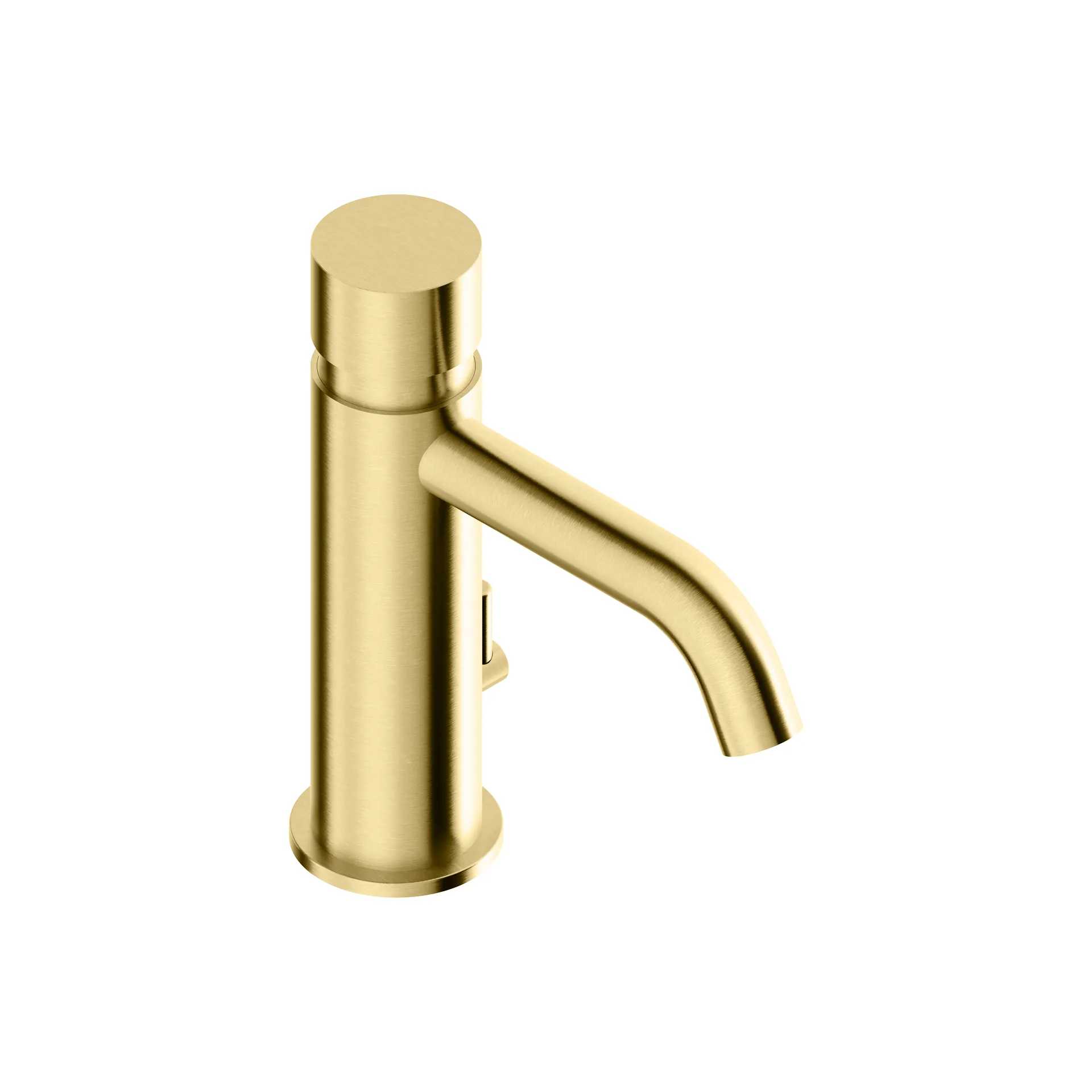 ProductSelf-closing basin mixer tap in 316L stainless steel, brushedT14119SPublished water flow 6 L/min, AISI 316L body, single tap hole with G3/8" flexible tails, supplied without a waste.View in catalogue →
Note what that product does and does not solve. Six litres per minute is comfortably inside the Approved Document G benchmark, and the self-closing action removes the behaviour problem rather than arguing with it. But it does not remove the aerator question, because the flow restriction is still at the outlet. If your building has a healthcare or clinical function attached to it, that is a conversation to have before the schedule is issued, not after.
The mainstream alternative for a guest room is a straightforward lever mixer on a vanity top. It is what a guest expects to find, it is the easiest thing for housekeeping to clean around, and the flow figure is then whatever the fitting delivers.
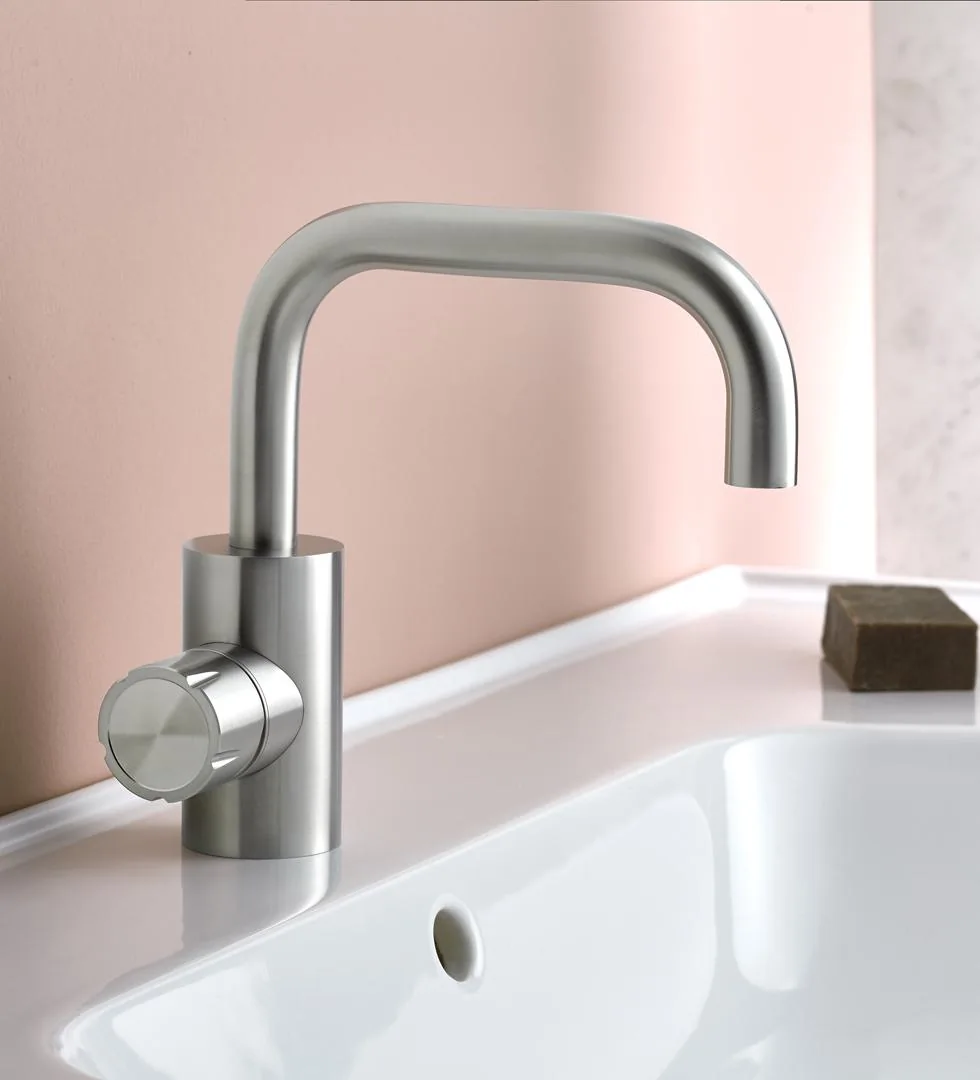 ProductDeck Mounted Basin Mixer, No Drain, 316L, brushed stainless steel2AC6745-BSAISI 316L body, single lever control, supplied without a waste so the drain can be matched to the basin. Five finishes available.View in catalogue →
A single lever matters more in a hotel than in a home, because it can be operated one-handed by a guest with a bag, a drink or a child on their hip. A separate hot and cold pair of cross-heads is a specification that feels traditional right up until a guest tries to use it one-handed.
Where thermostatic safety is genuinely required
Thermostatic control does one specific job: it holds the delivered temperature within a band regardless of what the supply does, and if the cold supply fails it will shut down rather than pass full hot water through. What it does not do is replace supervision, and it is not a substitute for the building's hot water strategy.
UK regulation sets a bath temperature limit and then specifies how to demonstrate it. Approved Document G paragraph 3.65 requires the hot water supply to a bath to be limited to a maximum of 48°C by an in-line blending valve or other appropriate temperature control device, with a maximum temperature stop and a suitable arrangement of pipework. Paragraph 3.66 sets out how acceptability is demonstrated: compliance with BS EN 1111:1999 for thermostatic mixing valves at PN 10 or BS EN 1287:1999 for low pressure thermostatic mixing valves, to demonstrate that the maximum temperature of 48°C cannot be exceeded in operation and that the product will fail safe, meaning it will not discharge water above the maximum temperature. The same paragraph adds a practical requirement that such valves should not be easily altered by building users (Approved Document G, paragraphs 3.65 and 3.66). That last clause is the one people forget. A thermostatic valve that a guest can defeat with a screwdriver is not a safety device.
For hotels, the Health and Safety Executive is the source that speaks most directly to your building type. HSE names large hotels explicitly as buildings with complex hot and cold water systems for which its legionella technical guidance applies, and sets out the scald position: for most people the scalding risk is minimal where water is delivered up to 50°C at hand-wash basins, and a hot water warning notice may be sufficient, but where vulnerable people can get access to baths or showers and the scalding risk is significant, a Type 3 thermostatic mixing valve must be fitted to prevent water discharging at more than 44°C (HSE, Legionnaires' disease: hot and cold water systems).
That single passage resolves a question specifiers argue about constantly. Bathrooms without a bath still need attention, because a hotel guest room almost always has a shower, and the shower is where a vulnerable guest is most likely to be scalded. The temperature at a hand-wash basin and the temperature at a shower are different decisions, taken on different evidence.
Healthcare-adjacent rooms have their own benchmark, and it is worth knowing even if you are not building a hospital. NHS guidance for healthcare premises sets maximum recommended delivery temperatures of 41°C for showers and hair-wash facilities, 44°C for unassisted baths, 46°C for assisted bathing to allow for the cold mass of the bath, and 38°C for bidets, and adds that bath fill temperatures above 44°C should only be available where the bather is always under the supervision of a competent person. Critically, that table does not fix a basin temperature: NHS guidance treats basin outlet temperature as a risk-assessment decision for the Water Safety Group rather than a single number, precisely because the scald risk and the infection risk pull in opposite directions (HTM 04-01 Part A, Table 2 and paragraphs 10.57 to 10.59).
Where a thermostatic valve is genuinely required, it is normally at the shower rather than the basin, and it is worth specifying the isolation with it. A thermostatic mixer feeding three outlets is only maintainable if each outlet can be isolated without draining the system.
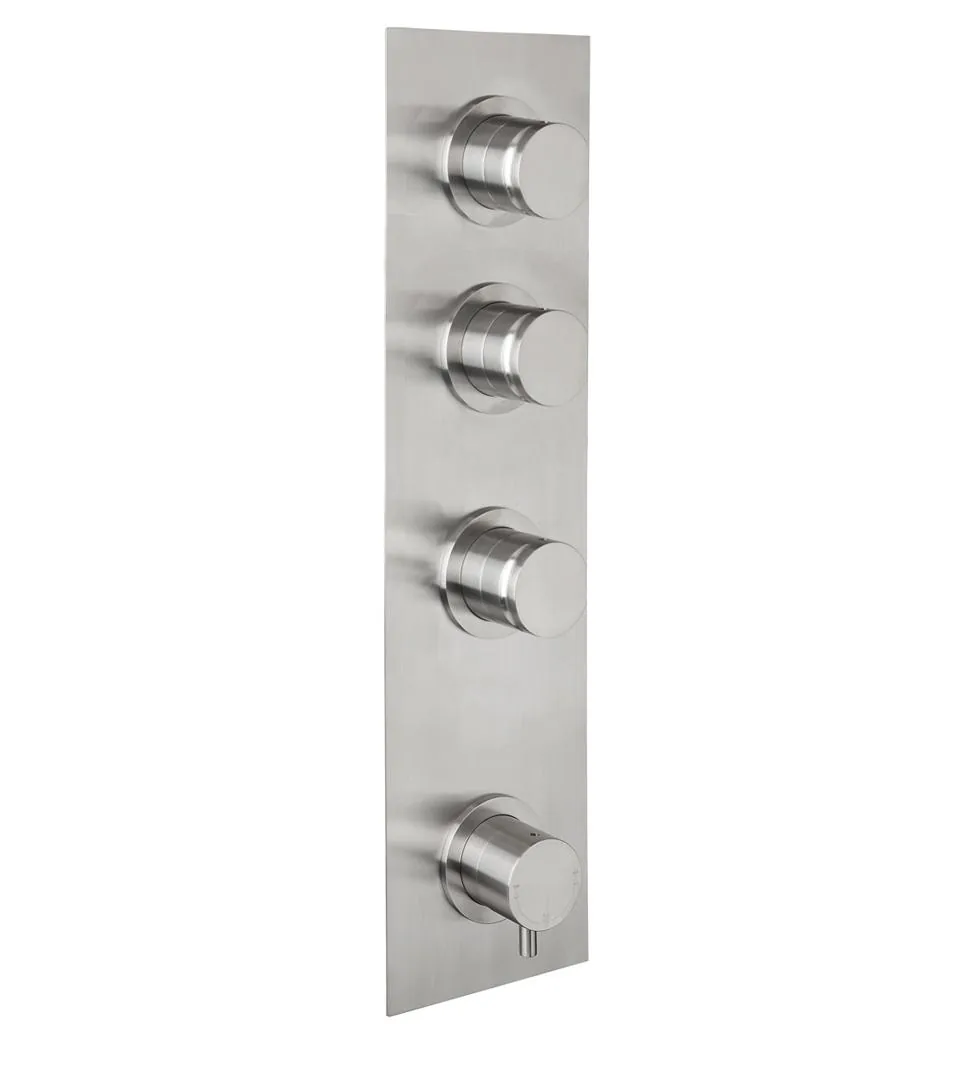 ProductThermostatic Shower Set With Three Shut Off Valves, brushed stainless steel2SO99S6-BSAISI 316L, wall mounted on half inch connections, one thermostatic mixer with three individual shut-off valves. Five finishes.View in catalogue →
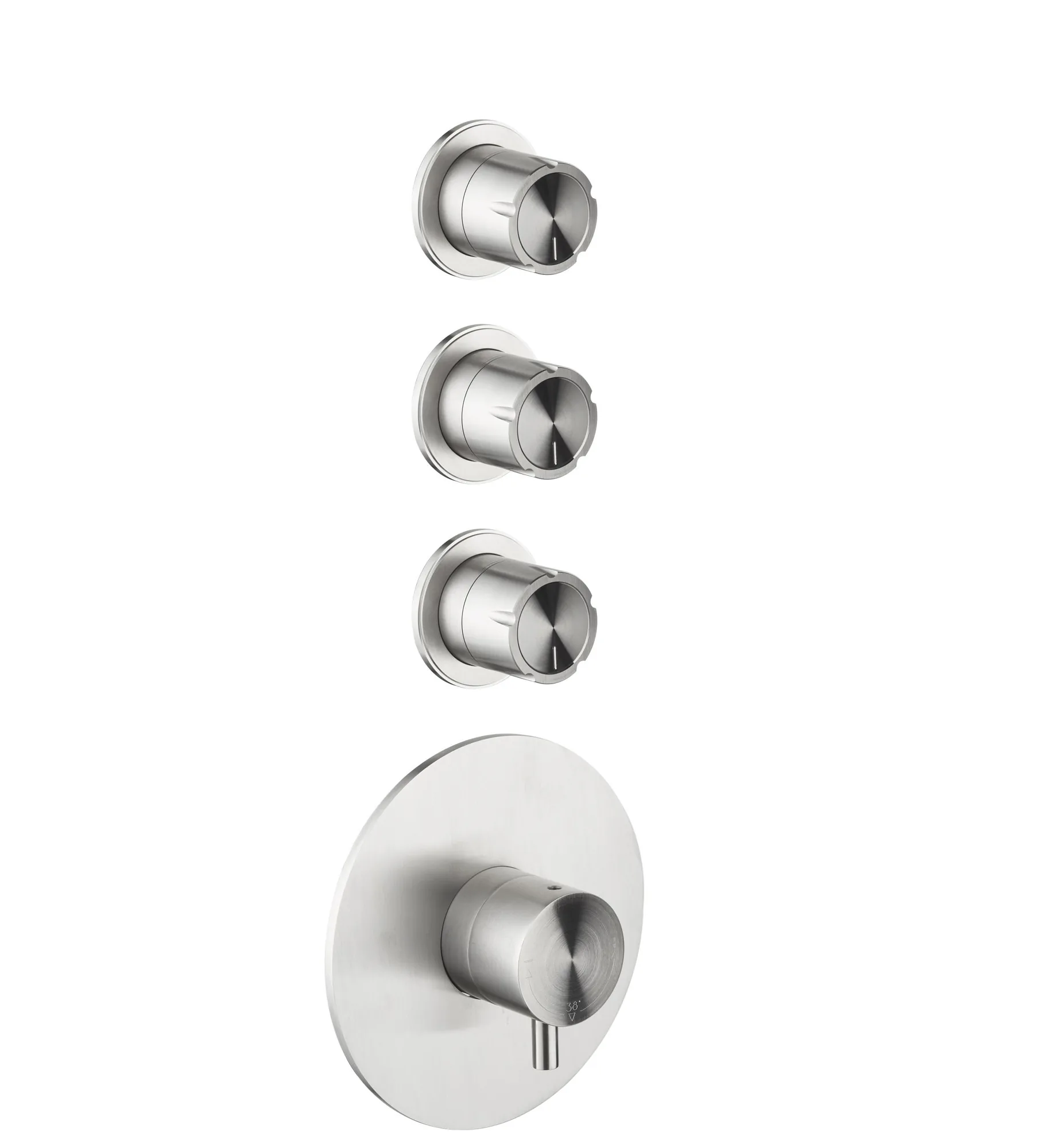 ProductConcealed Thermostatic Set With Three Shut-Off Valves, brushed stainless steel2AC66S6-BSAISI 316L, concealed body for a tiled recess, three isolatable outlets behind one thermostatic control.View in catalogue →
Finish durability under commercial cleaning and abuse
This is where a hotel specification most often goes wrong, because the reasoning is backwards. The instinct is to buy the hardest finish and expect it to survive. In a cleaning environment the finish is rarely attacked by abrasion; it is attacked by chemistry.
The British Stainless Steel Association is unambiguous. Chloride-containing solutions, including hydrochloric acid-based cleaning agents and hypochlorite bleaches, can cause unacceptable surface staining and pitting and should not be used in contact with stainless steels. Under no circumstances should concentrated bleaches contact decorative stainless steel surfaces. A frequent cause of staining and micropitting is splashing with undiluted bleach solutions and mortar cleaners, and soaking stainless steel in dilute bleach for long periods such as overnight is not advisable (BSSA Information Sheet No. 7.20, Care and Maintenance of Stainless Steel, Note 8).
The concentration detail is what turns that from a warning into a specification. Commercially concentrated sodium hypochlorite is around 15 wt%, and household bleach solutions are around 5.25% sodium hypochlorite. The hypochlorite ion is aggressive to stainless steel in a way similar to wet chlorine gas, and like the chloride ion it is a pitting corrosion hazard. Pitting or crevice corrosion can occur on most stainless steel grades in a 5% solution at ambient temperatures. Pitting has been reported from household bleach spills on stainless steel, where immediate dilution by rinsing avoids pitting but leaving it overnight results in pitting. As a guide, 15 to 20 ppm residual chlorine solutions at ambient temperatures should be safe with 316 types for a 24-hour maximum contact time, followed by rinsing (BSSA, Selection of Stainless Steels for Handling Sodium Hypochlorite).
Read that back as a practical rule for a hotel. Concentrated product sprayed and left for a weekend shift will pit your taps whatever grade they are. If your housekeeping team buys 5% bleach in bulk and sprays it, the protection you specified at procurement has already been undone by the cleaning cupboard, and the only real fix is a written dilution instruction and a rinse step. This is a service-level conversation, not a product conversation, and it belongs in the handover pack rather than on a product datasheet.
The same reasoning applies to coated finishes, and it is where a specifier can ask a better question. Physical vapour deposition puts a thin metal layer onto the surface with a bond into the base material rather than a plating layer sitting on top of it, so it wears through rather than flaking. The standard that governs decorative PVD coatings on this exact class of product is ISO 23100:2024-12, Decorative physical vapor deposition (PVD) coatings on kitchen and sanitary ware fittings, specification and test methods, published December 2024 (ISO 23100:2024-12). A document that names the exact model, rather than a logo or an assurance, is what makes a schedule defensible. The Finishes collection in the catalogue carries brushed stainless and PVD colour options across the same product bodies, so a scheme can move between colours without changing the product.
CollectionAISI 316L stainless steel across the Fontea tap and shower rangeThe molybdenum-bearing grade. Filter the live catalogue by material to review finishes and product types.View in catalogue →
What to put on the schedule
A tap schedule for a hotel guest bathroom should answer six questions per outlet, and every one of them has a source you can cite in a tender response.
- Flow rate at the outlet, in litres per minute. Not the flow rate of the shower set; the flow rate of the fitting at that basin, measured or published, so the Approved Document G benchmark can be checked rather than assumed.
- Whether the supply has been accepted by the water undertaker for this installation, and on what basis. On a tendered package that question is answered at the point the connection is applied for, not by the tap supplier, and it belongs in the programme rather than on a tap schedule.
- Temperature control, stated as a delivered temperature and a failure behaviour. If the outlet can scald, say what limits it, name the standard it is demonstrated against, and confirm the limit cannot be defeated by a guest.
- Material grade of the body and of any concealed components, in writing on the schedule rather than inferred from a finish photograph.
- The finish, its cleaning regime, and what damages it. Ship the housekeeping instruction with the O&M pack, including the dilution that makes the finish safe.
- The service route. What a facilities manager replaces, what they cannot, and what a trade account needs to quote against.
The last point is the one that decides whether the first five are worth anything. A tap specification that cannot be serviced at the volumes a hotel actually operates at is a specification that will be quietly substituted within two years, and after substitution none of your flow rates, temperature limits or finishes still describe what is in the building.
For the wider bathroom schedule, the accessory side of the same conversation is covered in specifying stainless steel washroom accessories for hotels and hospitality fit-outs, and the material question behind both is set out in AISI 304 versus 316L stainless steel taps. How the coated finishes are applied, and what to ask a supplier before approving one, is in PVD tap finish explained. What household chemicals do to the metal underneath is covered in housekeeping and stainless steel.
Specify it from the catalogue
Every fitting mentioned here is stocked and specified in the FONTEA trade catalogue: full technical data, finishes and wholesale tiers.
Related reading
-
 Specification
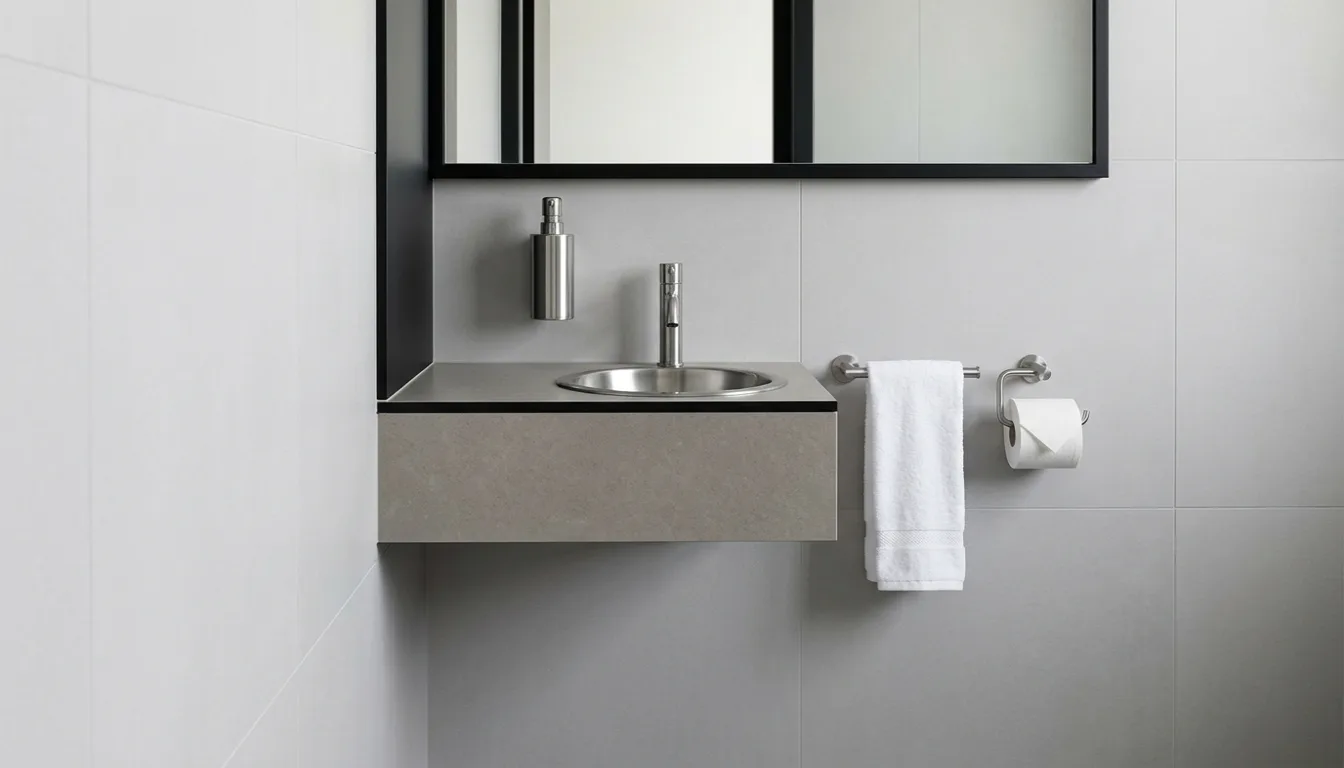
Commercial vs residential taps: why cycle life and chemical resistance matter for hospitality fit-outs
Where the money genuinely belongs on a hospitality fit-out. How cycle life is measured, why exposed coatings see a harsher corrosion duty than concealed ones, and what a specifier should refuse to accept without a test standard.
-
 Specification
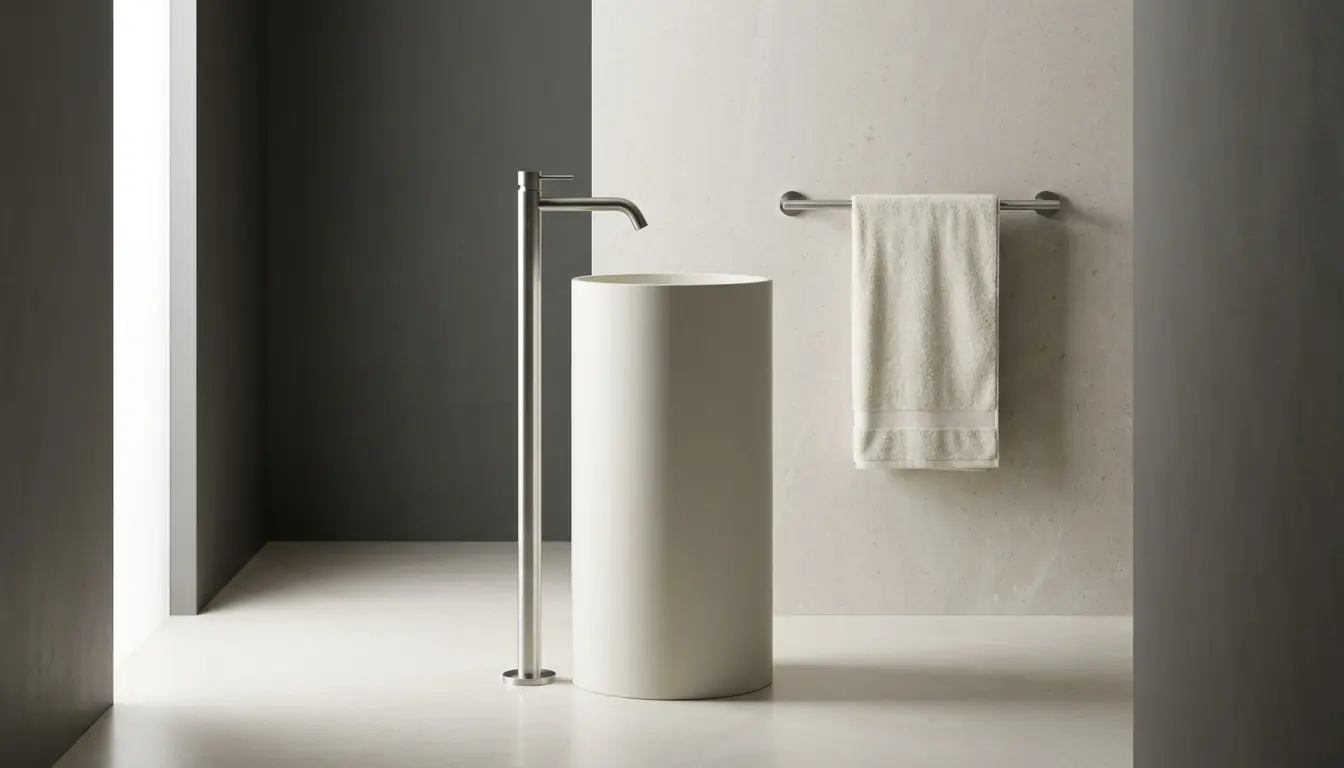
Ceramic cartridge types and cycle life: what trade buyers should ask suppliers
Ceramic cartridge on a spec sheet says very little. Here is what the common cartridge types are, how cycle life is actually measured, and the questions that separate a tested figure from a marketing one.
-
 Specification
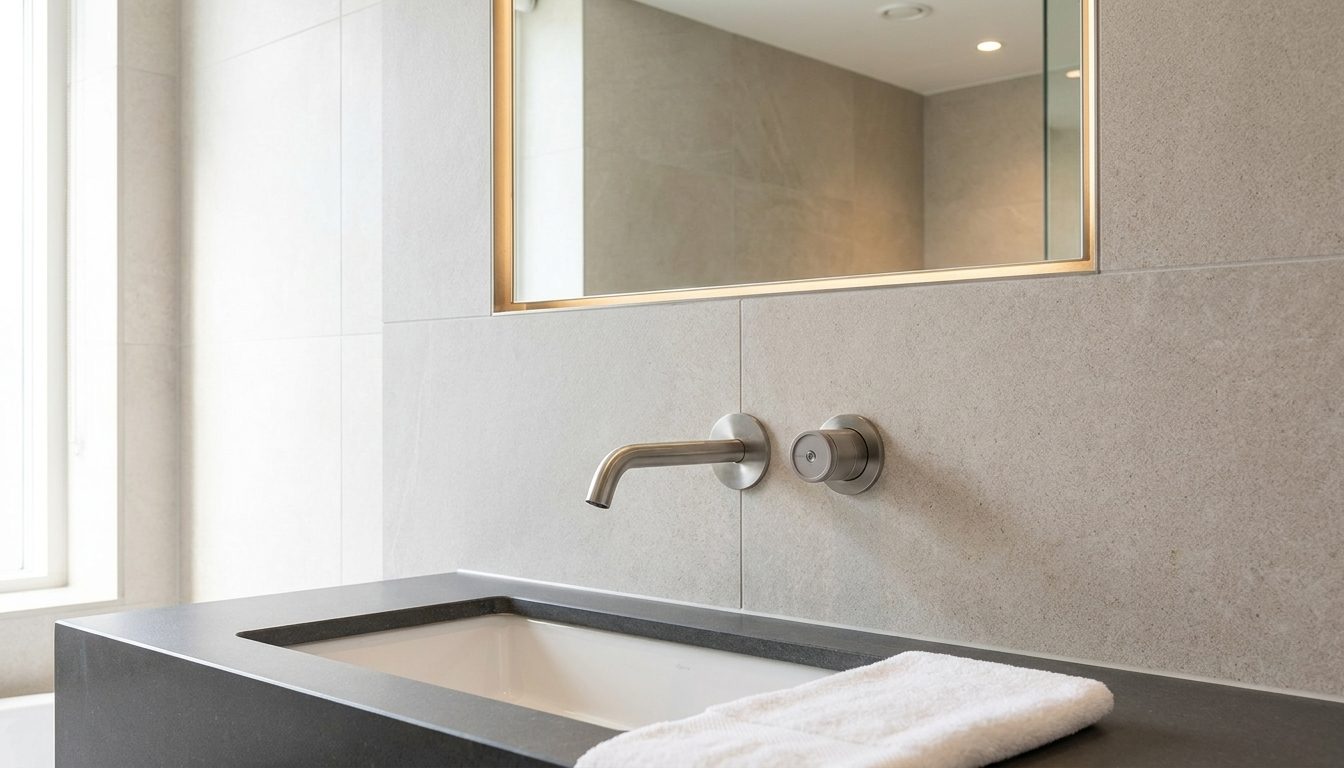
A tap and fitting spec-sheet checklist for architects writing a schedule
A practical checklist for specifying taps and fittings: the fields a schedule must state, what to ask a supplier to confirm, what gets left out and causes site problems, and how to spot a complete submittal.