 ONTEA
ONTEA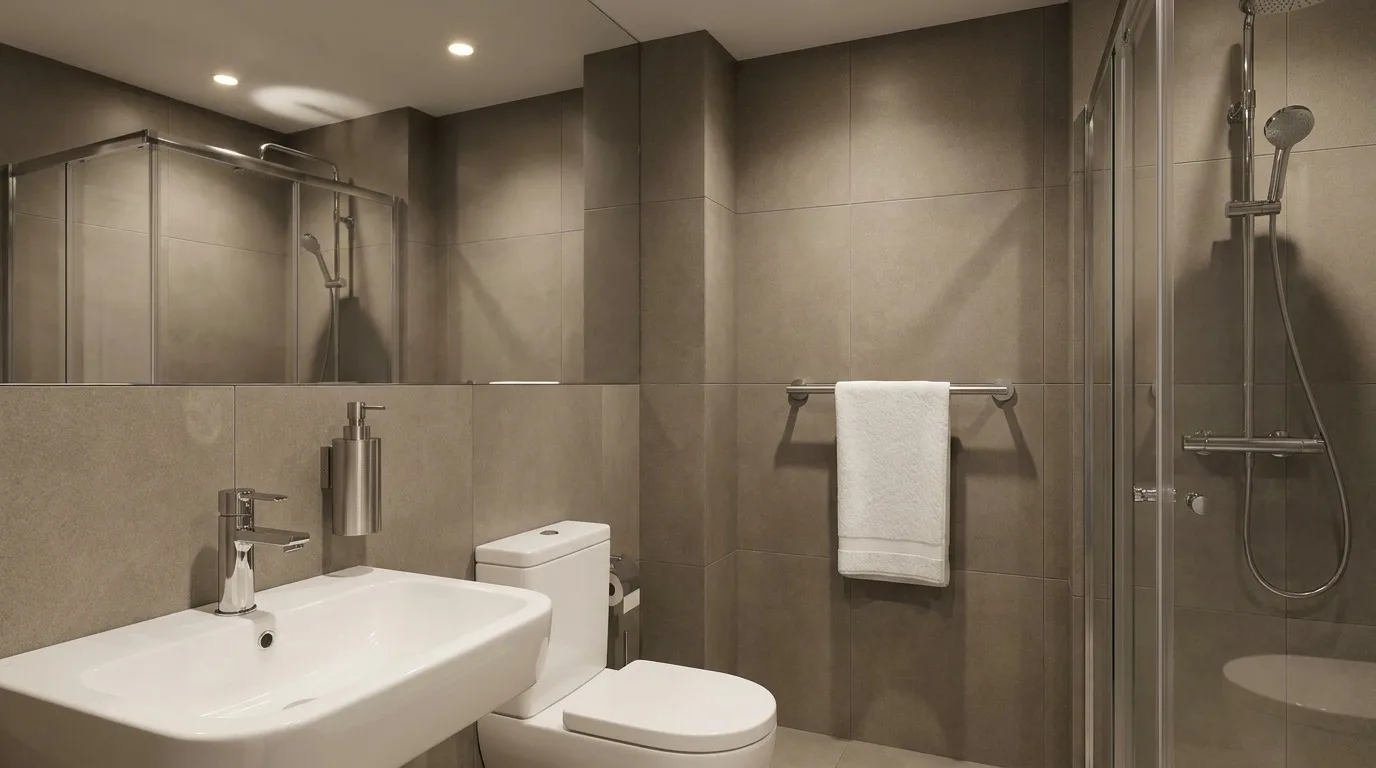
A hotel washroom accessory schedule should describe how each item will be used, fixed, cleaned, replaced and coordinated with the room. Product names alone are not enough. Specify the material grade, finish, dimensions, fixing method, substrate, cleaning instructions and approved reference for every accessory.
This approach suits guest bedrooms, public washrooms, staff facilities, leisure areas and hospitality refurbishments. It also keeps decorative accessories separate from water-connected technical products, which need their own design and installation checks.
Key Takeaways
- Schedule the complete accessory assembly, including concealed parts and wall fixings, not only the visible finish.
- Coordinate accessories by room type, user reach, cleaning route, refill routine and replacement plan.
- Approve a sample room and finish reference before procurement, then record the same information in the handover pack.
What should a hotel washroom accessory specification include?
A useful schedule connects each accessory to a room, a responsible party and an evidence requirement. At minimum, include:
| Schedule field | Decision to record | Evidence to request |
|---|---|---|
| Room or zone | Guest room, public washroom, staff area, spa or accessible room | Coordinated room or FF&E drawing |
| Accessory | Towel rail, hook, dispenser, tumbler, shelf or holder | Product reference and dimensions |
| Material | Named stainless steel grade and visible or concealed components | Product data sheet |
| Finish | Brushed, PVD or another specified finish | Physical sample and finish code |
| Fixing | Substrate, backing, anchor and concealed hardware | Installation detail |
| Operations | Refill, cleaning, inspection and replacement access | Care and maintenance sheet |
| Approval | Sample status and approved alternative | Signed sample record |
The schedule is not a substitute for the design drawings. It is the shared reference that prevents a product being swapped, moved or cleaned without checking its effect on the finished room.
For a hospitality project, also state who owns each decision. The interior designer may approve the finish, the contractor may confirm backing and installation, and the operator may approve refill and cleaning access. Assigning those checks early avoids a late instruction that the chosen accessory cannot be serviced in place.
Start with room types and operating conditions
The same accessory can need a different specification in a guest bedroom, a lobby washroom or a leisure suite. Begin by dividing the project into operating zones rather than selecting one accessory set for every location.
Guest bedrooms and en-suites
Guest rooms usually need a coordinated set that feels residential but can be serviced quickly. Review the basin, mirror, shower screen, WC, door swing and towel route together. A towel rail should be reachable without crossing the shower spray, and a soap dispenser should sit close enough to the basin to be useful without crowding the mixer or mirror.
Record the likely replacement route. If a hook or dispenser is damaged, the operator needs its product reference, finish and fixing information without dismantling an entire room to identify it.
Public and staff washrooms
Public areas bring more frequent cleaning, higher visitor turnover and less predictable use. Dudley Industries' hotel washroom guidance describes continuous use, housekeeping rounds, lockable mechanisms and straightforward refilling as operational considerations (Dudley Industries, Hotel Washroom Services). Use those as review questions, not as assumptions about every product. The schedule should identify cleaning access, refill access and any requirement for lockable or tamper-resistant mechanisms. Do not assume that a feature exists because it is common in commercial washrooms. Confirm it on the selected product data.
Staff facilities can use a simpler finish schedule, but they still need the same fixing and maintenance information. Consistent references across rooms reduce the number of spares and finish samples held by the facilities team.
Leisure, spa and coastal environments
Spa rooms, pool areas and exposed coastal properties deserve a closer review of moisture, chloride deposits, ventilation and drying time. Stainless steel is a family of grades, not one interchangeable material. Outokumpu's guidance explains that atmospheric corrosion depends on moisture, airborne salts, condensation, pollutants, grade, finish and detailing, and describes 304L for interior or light urban settings and 316L for more marine-influenced settings (Outokumpu, stainless steel and atmospheric corrosion).
That is a selection principle, not a blanket rule that every hotel needs 316L. For a coastal scheme, see the separate guide to 316L accessories for coastal and seafront properties and record the project's exposure assumptions in the schedule.
Choose material, finish and construction as one package
Specify the stainless steel grade and the finish together. A coloured surface does not identify the grade beneath it, and a visible body does not describe every concealed bracket, screw or insert.
Ask for these details before approval:
- Grade for the visible body and any concealed stainless components.
- Bracket, screw and mounting-plate material.
- Finish name, code and direction where a brushed surface is used.
- Construction details at joints, edges and welds.
- Dimensions, projection and clearance from the wall.
- Care instructions for the exact finish.
Finish samples matter because a small swatch does not show how a surface reads beside porcelain, stone, timber, lighting and other metalwork. Approve a physical sample under representative room lighting. For PVD finishes, keep one approved reference with the project records and state whether substitutions need fresh approval.
The stainless steel versus chrome accessories guide explains why a plated surface and a solid stainless accessory have different failure modes. This article applies that distinction to procurement: do not accept a vague description such as “metal finish” when the schedule needs a material, finish and maintenance decision.
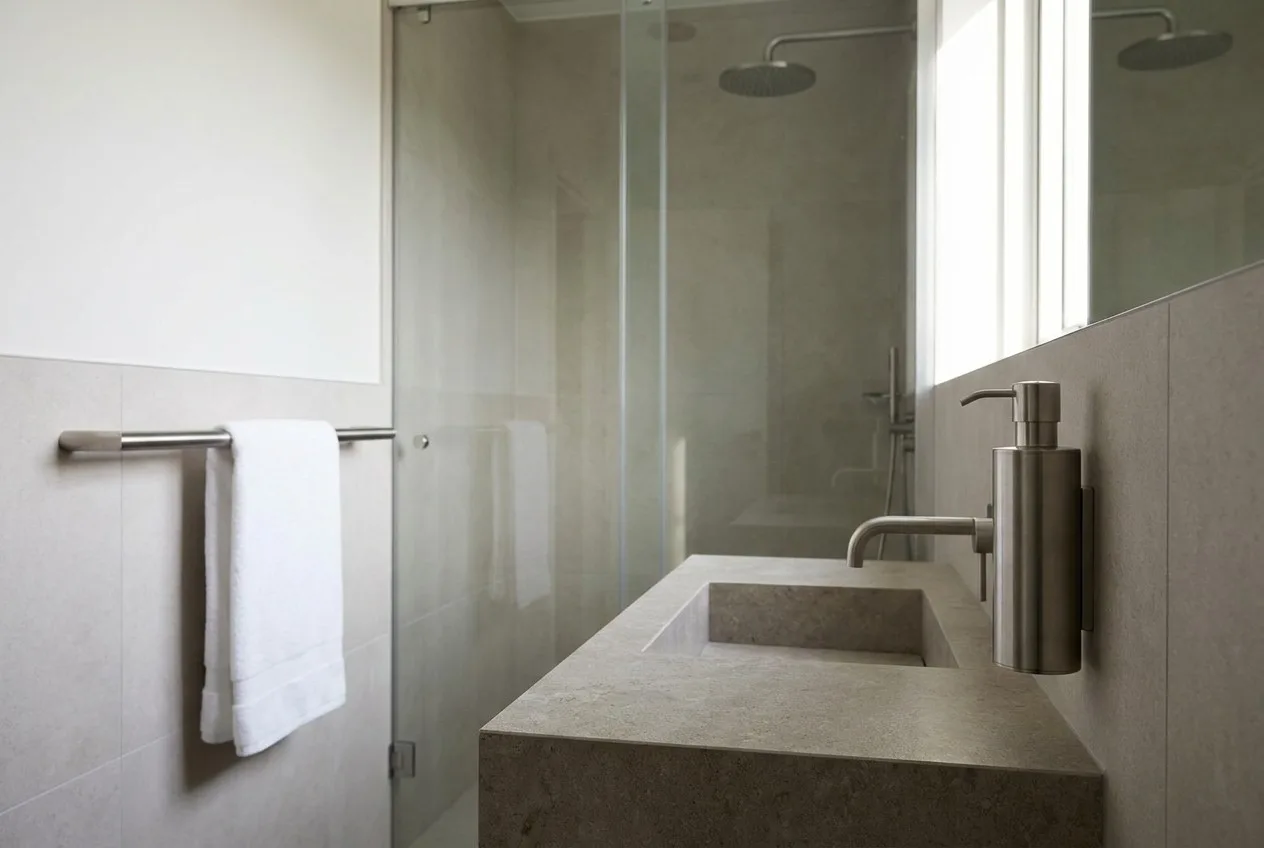
A concrete catalogue example is the FONTEA wall mounted towel rail, 650 mm. Its product page identifies a 650 mm bar in AISI 304 stainless steel, fixed flat to the wall on a stand-off so the towel dries rather than rests, published in four finishes from brushed stainless steel through to gold PVD. The page records that the projection and fixing detail are not published and should be confirmed with the supplier, so take the dimensions and fixing from the selected product's own data. The bar length and the wall stand-off are still useful schedule fields, because they can be checked against the wall, the towels and the circulation zone.
 ProductWall Mounted Towel Rail 650 mm, Long Bath Towel2MS3794-BSAISI 304 stainless steel bar, 650 mm long, wall mounted on a stand-off. Fix to a structural wall or suitable backer. Confirm projection and fixing detail with the supplier.View in catalogue →
Coordinate layout, accessibility and fixing before ordering
Accessories should be positioned on the coordinated room drawing, not placed after the sanitaryware and finishes are complete. Show the basin, mirror, WC, shower, bath, doors, grab rails where required, towel route and cleaning access on one plan.
In England, Approved Document M, Volume 2 provides guidance for access to and use of buildings other than dwellings. Use the current guidance and the project brief when coordinating accessible hotel rooms and washrooms. Do not copy a generic accessory height into every room, and do not describe a decorative accessory as a support fitting.
The fixing detail belongs in the specification. State:
- Wall build-up and finished surface.
- Backing or structural support required before wall closure.
- Anchor and screw type selected for that substrate.
- Concealed fixing arrangement and access for replacement.
- Installer responsibility for alignment, tightening and protection.
- Inspection required before practical completion.
A tile face can hide a weak fixing. A heavy towel rail, loaded shelf or frequently pulled accessory transfers force into the wall, so the substrate and anchor need to be known before the final surface is installed. Coordinate this work with the contractor's backing and fixing detail rather than treating it as a catalogue decision.
The FONTEA wall mounted shelf for toiletries shows why small items belong on the same drawing as the larger fittings. Its page identifies a wall-mounted AISI 304 shelf for bottles, a spare roll and a folded hand towel, published in four finishes from brushed stainless steel through to gold PVD. In a guest bathroom, its position should be checked against the basin, mirror, soap dispenser and splash zone, not chosen from a finish board alone.
The FONTEA range does not currently publish a wall-mounted toothbrush tumbler, so where the room needs a toothbrush and rinse-glass holder rather than open shelf space, that item comes from a different line or the detail accepts a shelf. The catalogue's AISI 304 stainless steel deck mounted cup covers the same need on a basin rim where a flat bearing surface exists, which is a different fixing decision and belongs on the drawing for the same reason. Either way the small basin-side item is a coordinated position, not a later addition.
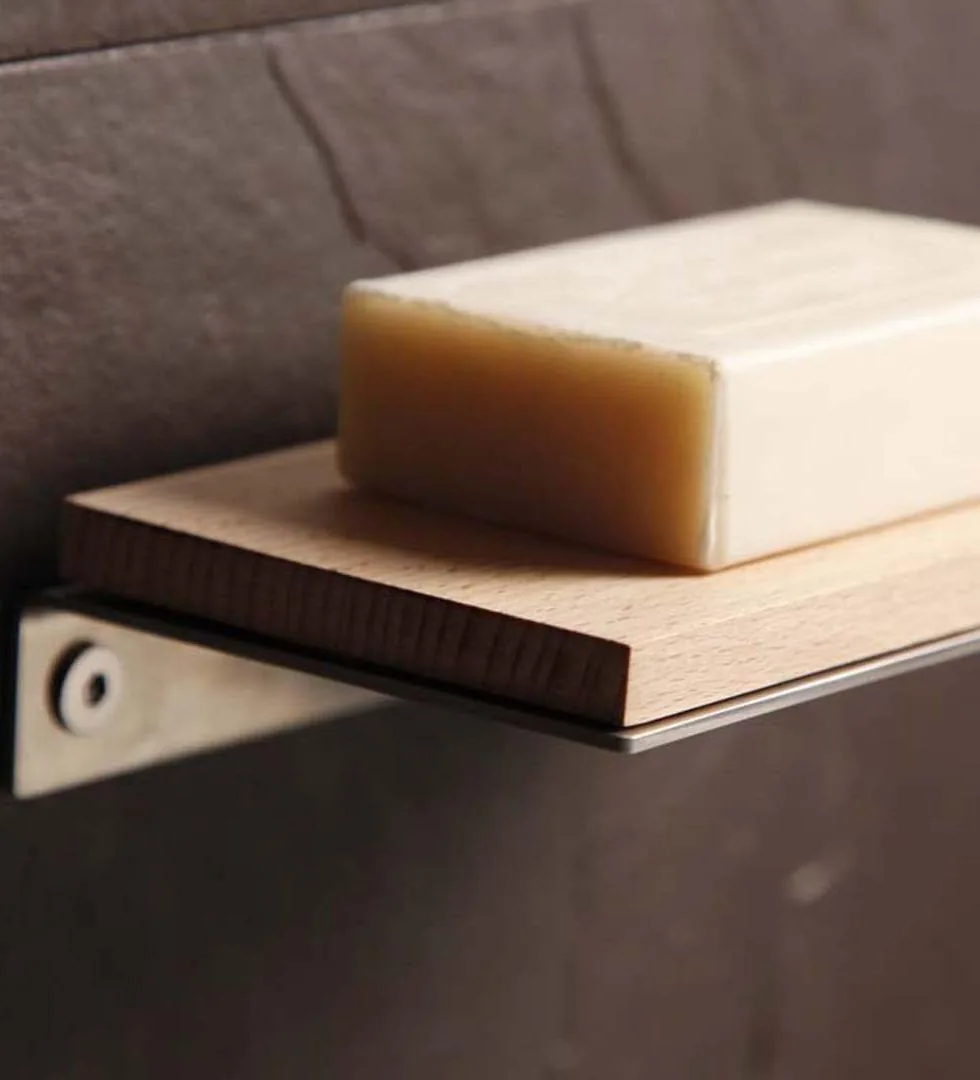 ProductWall Mounted Shelf for Toiletries2MS3784-BSAISI 304 stainless steel, wall fixed, four finishes. Fix to a structural wall or suitable backer and seal within the wet zone. Confirm projection, load capacity and fixing method with the supplier.View in catalogue →
Design for housekeeping, refilling and replacement
A hospitality accessory is part of an operating routine. Housekeeping staff need to wipe around it, refill it, spot damage and report a replacement without moving other fittings.
Use these questions during design review:
- Can the cleaner reach the wall junction and the underside of the accessory?
- Can a dispenser be refilled without removing a mirror, shelf or light fitting?
- Is the roll, soap or towel capacity appropriate for the room's service pattern?
- Can the operator identify the item from the schedule and order a matching replacement?
- Are the cleaning products approved for the material and finish?
The British Stainless Steel Association says soap or mild detergent in warm water followed by a clear-water rinse is usually adequate for routine cleaning of stainless steel (BSSA, Cleaning methods for stainless steel). Its guidance also warns that hydrochloric-acid cleaners and hypochlorite bleaches can cause staining and pitting, and that carbon-steel wool can contaminate the surface. Put the selected product's own care sheet beside this general guidance in the handover pack.
Cleaning access should influence layout. A wall-mounted dispenser beside the basin may be easier to wipe than a loose bottle, but only if the pump, wall junction and underside remain accessible. A towel rail should not sit where a wet towel blocks a ventilation grille or traps water against a wall. These are coordination decisions, not promises about product performance.
For water-connected products, keep the accessory schedule linked to the plumbing and water-safety design. The Health and Safety Executive guidance on hot and cold water systems notes that larger buildings such as hotels have more complex systems and need appropriate design, commissioning, operation and monitoring guidance. This article does not make a compliance claim for any product. It flags the boundary so a non-plumbed accessory is not confused with a technical fitting.
A useful example for basin-side coordination is the FONTEA wall mounted liquid soap dispenser. Its product page identifies a wall-mounted AISI 304 dispenser that keeps the basin deck clear and wipeable, in a body described as resistant to washroom cleaners, published in four finishes from brushed stainless steel through to gold PVD. The page records that the reservoir volume, the fixings and the pump type are not published and should be confirmed with the supplier, so confirm the refill method, dimensions and installation detail from the current product information before placing it in a project schedule.
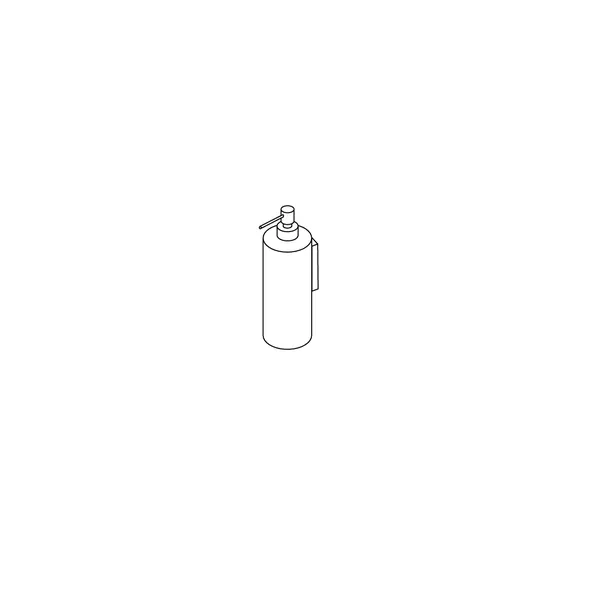 ProductWall Mounted Liquid Soap Dispenser in 304 Steel2MS3720-BSAISI 304 stainless steel, wall mounted beside the basin above the splash line, four finishes. Seal the fixings in a wet area. Confirm reservoir volume, fixings and pump type with the supplier.View in catalogue →
Build an approval process that survives procurement
A hotel sample room should test more than appearance. Use it to check reach, projection, wall clearance, cleaning access, finish consistency and the operator's replacement routine.
Record these approval stages:
1. Technical submittal
Check the product page or data sheet against the schedule. Resolve differences in grade, finish, dimensions, fixing hardware and care instructions before the item reaches the sample room.
2. Coordinated sample room
Install the actual accessory, or an agreed production-equivalent sample, in the room type that represents the widest set of constraints. Review it beside the basin, WC, shower, mirror, door and other metalwork. Photograph the approved arrangement for the project record.
3. Finish and batch record
Name the finish and retain a physical sample or controlled reference. Do not approve “brushed metal” or “black” as a complete description. Where a finish is important to the interior scheme, state who can approve an alternative.
4. Procurement and substitution control
List approved SKU, finish, quantity, room allocation and accepted alternative. If a substitution is proposed, repeat the checks for dimensions, material, fixing and cleaning. A visually similar item can still change the wall backing, refill route or replacement stock.
5. Handover
Give the operator a room-by-room schedule, care instructions, approved finish reference, fixing information and replacement route. Include photographs or marked-up drawings where a concealed fixing or unusual position will be difficult to identify later.
Hotel washroom accessory specification checklist
Design
- Divide the project into guest, public, staff, leisure and accessible room types.
- Coordinate accessories with sanitaryware, mirrors, doors, shower zones and circulation.
- Confirm whether each item is decorative, load-bearing or water-connected.
- Review grade, finish, dimensions and cleanability as one package.
Procurement
- Record product name, SKU, finish code, dimensions and approved image.
- Request technical data, fixing details and exact-finish care instructions.
- Approve a physical sample and a sample room before bulk ordering.
- Control substitutions through the same review, not by appearance alone.
Installation
- Confirm wall build-up, backing, anchors and concealed components before closure.
- Protect finished surfaces during installation and inspect alignment at completion.
- Check that dispensers, rails, holders and tumblers can be cleaned and replaced in place.
Handover
- Provide product schedule, finish references, cleaning instructions and replacement links.
- Give housekeeping teams a short list of approved cleaning methods and prohibited products.
- Record unresolved defects, spare references and the person responsible for close-out.
For current product options, browse the bathroom accessories catalogue and compare each product page against the project schedule. For quantities, room types or finish matching, use the contact page with the coordinated brief.
Frequently asked questions
Should every hotel washroom accessory be 316L?
No. The correct grade depends on the room's exposure, moisture, cleaning routine, finish and project requirements. Use a named grade and record the reason for the selection. For chloride-influenced environments, compare the exposure guidance and maintenance plan rather than treating 316L as corrosion-proof.
Which accessories belong in the hotel schedule?
Include every item that affects the room's appearance, operation, fixing or maintenance. That can include towel rails, hooks, toilet-roll holders, soap dispensers, tumblers, shelves, bins and technical accessories. Keep water-connected products linked to the plumbing and water-safety design.
What should be approved in a sample room?
Approve position, reach, projection, fixing, finish, cleaning access, refill access and interaction with adjacent fittings. Keep the approved sample reference with the room drawings and procurement schedule.
Are washroom accessories part of FF&E or the construction package?
Package ownership varies by project. State who supplies, fixes, tests, protects, cleans and warrants each item in the responsibility matrix. The accessory schedule should remain the shared reference even when supply and installation sit in different packages.
Specify for rooms, routines and replacement
Hotel washroom accessories perform as part of a room, not as isolated catalogue objects. Start with room type and operating conditions, then record material, finish, dimensions, fixing, cleaning and replacement information. Approve the complete arrangement in a sample room before procurement and hand over the same information to the operator.
That process gives architects, contractors, procurement teams and housekeeping staff one practical reference. It also leaves room for product choice without losing control of the details that determine whether a fitting works in daily hospitality use.
Specify it from the catalogue
Every fitting mentioned here is stocked and specified in the FONTEA trade catalogue: full technical data, finishes and wholesale tiers.
Related reading
-
 Accessories
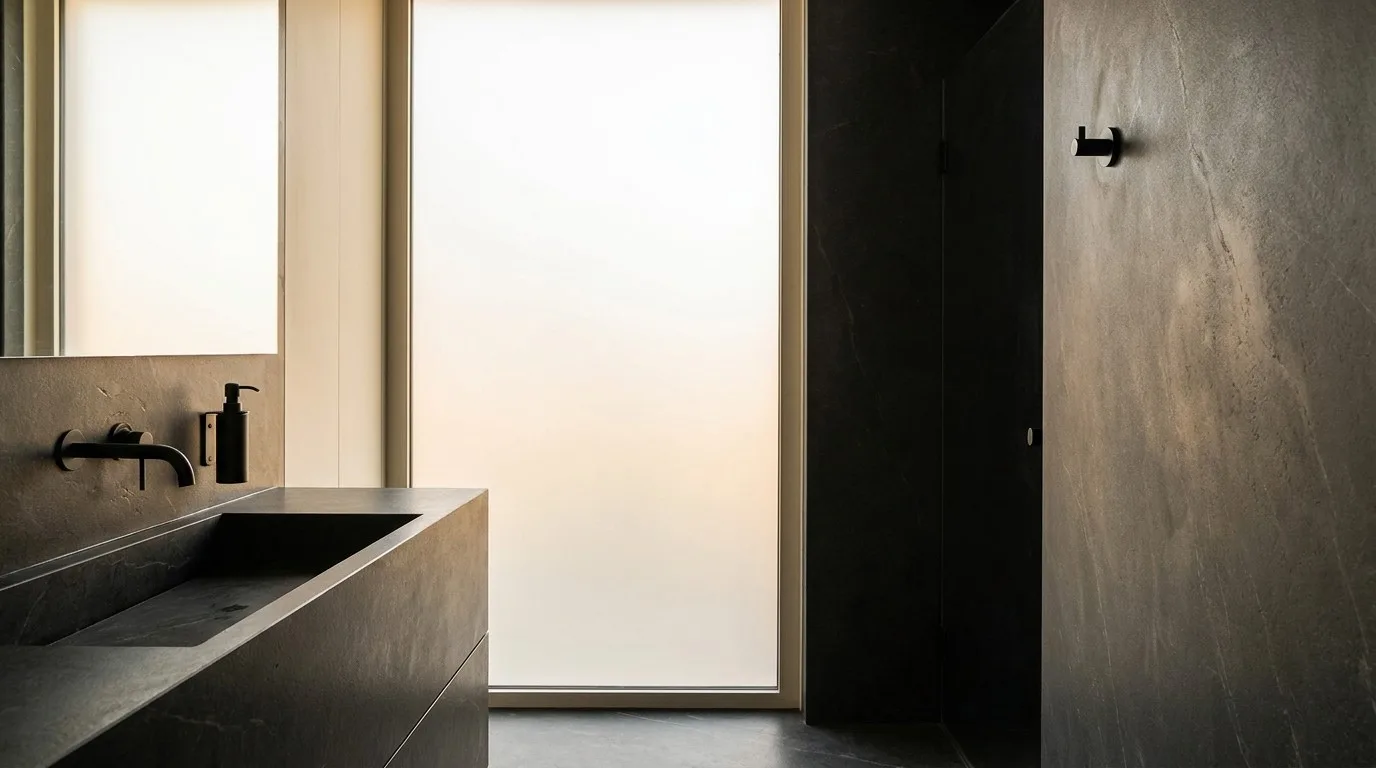
Black PVD stainless steel bathroom accessories: a UK specification guide
Black PVD gives bathroom accessories a dark architectural finish, but approval should cover the stainless grade, coating evidence, fixing details and cleaning regime.
-
 Accessories
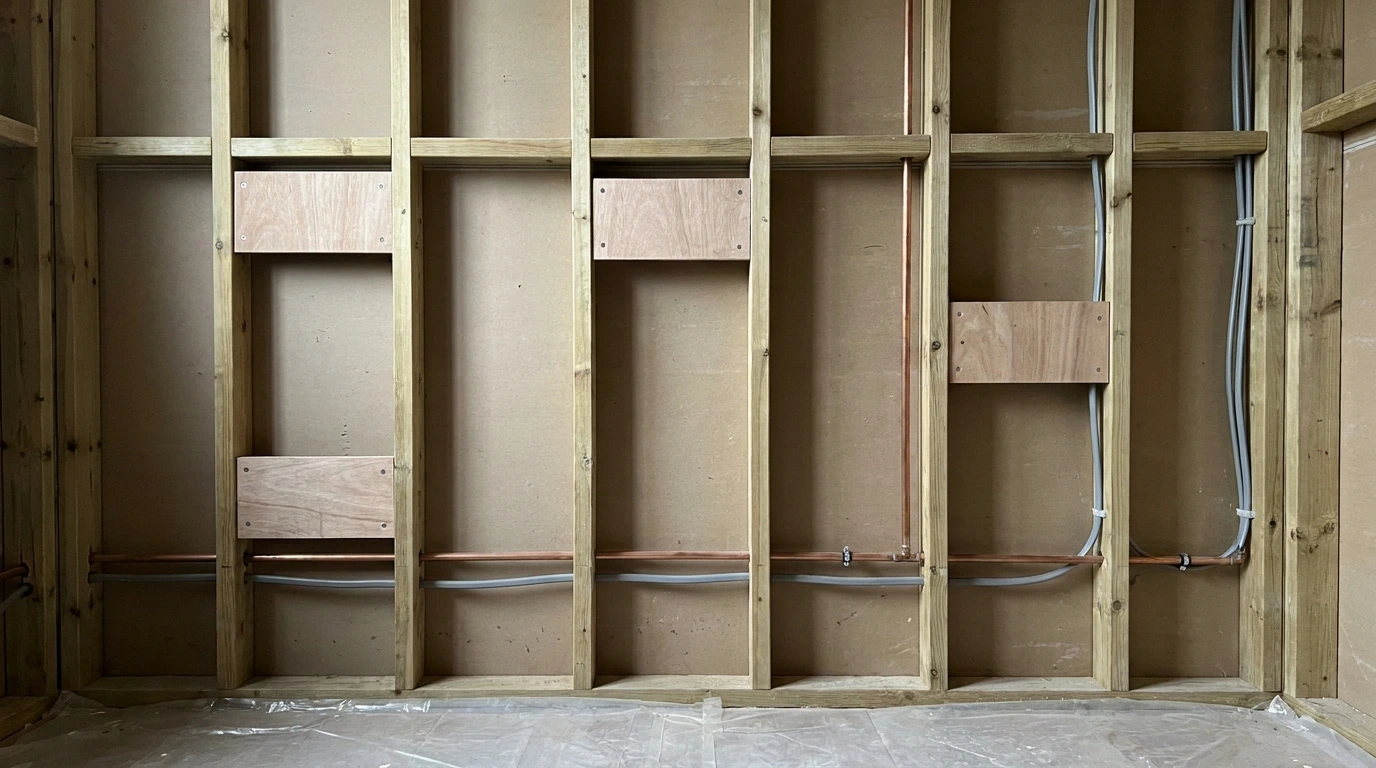
How to Fix Bathroom Accessories: Wall Backing and Stainless Fixings
Plan wall backing, substrates and stainless fixings before installing towel rails, robe hooks and shelves in hotel or rental bathrooms.
-
 Accessories
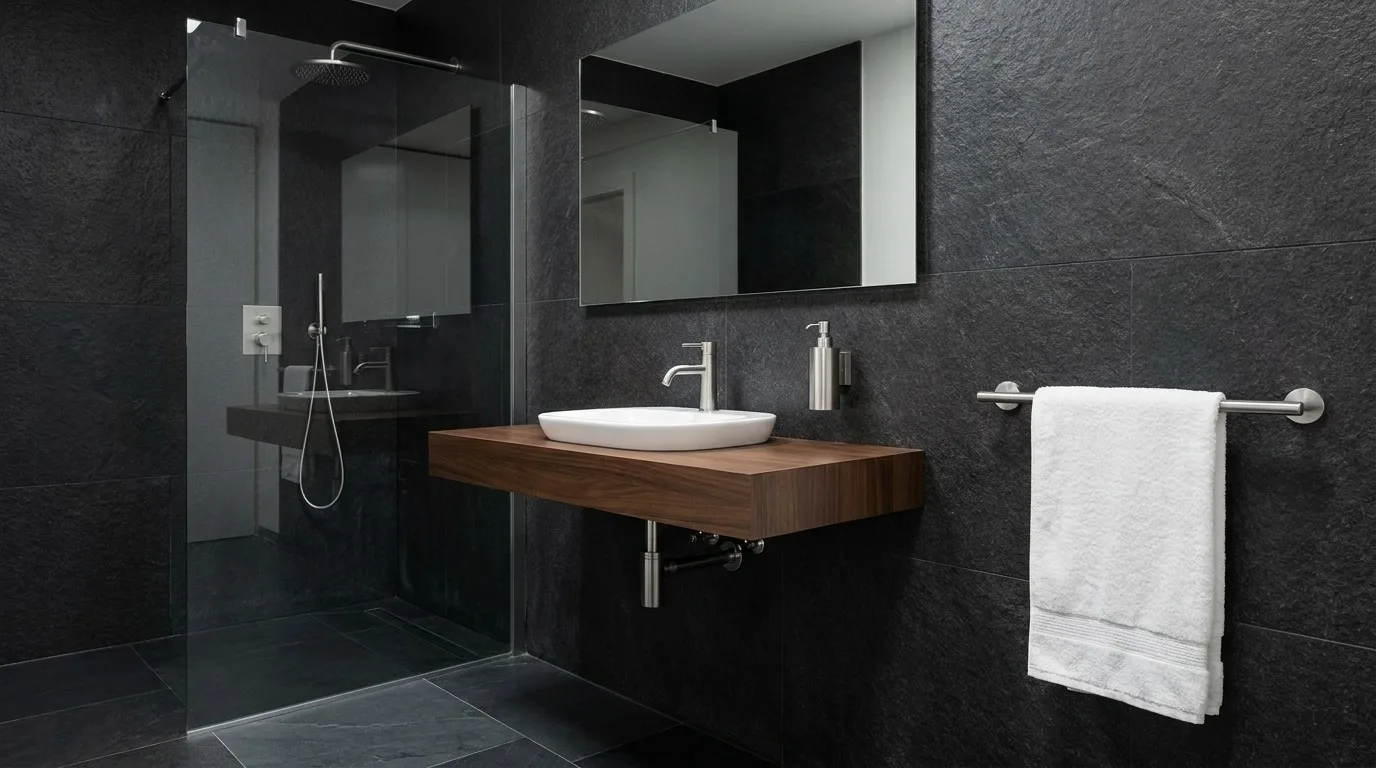
Stainless steel vs chrome bathroom accessories: how each one fails
Chrome-plated brass fails once the plating is breached. Solid 316L stainless has no plating layer to lose. See how each one fails in a UK bathroom.