 ONTEA
ONTEA
A hospitality fit-out is not a house multiplied by forty. A guest bathroom is a low-traffic, well-looked-after room; a staff washroom, a bar back-of-house or a public restroom is a different piece of engineering entirely, attacked several times a day by concentrated cleaning chemistry and operated by people who will never read an operations manual. The tap you choose for each of those rooms should reflect that difference, but the difference is almost never described in the terms a buyer actually needs, so most taps get scheduled by price and finish alone.
This post is about that decision. It sets out what genuinely separates a range built for commercial service from one built for residential use, how cycle life and chemical resistance are measured, and the point at which the commercial grade earns its extra cost. It is about the commercial-versus-residential decision itself. The related topics are handled elsewhere: the cartridge-level mechanics of cycle life are in ceramic cartridge types and cycle life, and the guest-bathroom questions of flow rate and thermostatic safety are in specifying taps for a hotel bathroom.
Key Takeaways
- No mainstream tap standard sets a separate "commercial" endurance class. ASME A112.18.1 tests lavatory and sink fittings to 500,000 cycles and bath or shower fittings to 250,000, classifying by fitting type, not by whether the room is commercial or domestic.
- The real commercial distinction in the standards is exposure, not word count. The same standard subjects exposed coated surfaces (Service Condition 2) to a 24-hour acetic-acid corrosion test while concealed parts (Service Condition 1) see 8 hours, and it caps a public lavatory fitting at 1.9 L/min against 8.3 L/min for a private one.
- Steel is attacked by chemistry far more than by wear. Chloride-based cleaners pit stainless steel, concentrated hypochlorite is corrosive, and a warm evaporating aerator defeats the temperature thresholds that make steel look safe.
- Maintenance access, not the finish, usually decides the whole-life cost. A commercial fitting that cannot be isolated and serviced will be quietly substituted, and after substitution none of your specification describes what is actually in the building.
The distinction is exposure, not a label
Before anything else, one correction to the vocabulary most buyers are given. The idea that a "commercial" tap is a tap certified to survive more cycles than a "residential" one is largely marketing shorthand, and a specifier who expects a standards document that says so will be disappointed.
ASME A112.18.1, the North American plumbing supply fitting standard, is the clearest published example because its life-cycle table is open and specific. Table 3 sets the number of cycles a fitting must survive, and it classifies by fitting type rather than by residential or commercial service. A lavatory or sink fitting is tested to 500,000 cycles, a bath or shower fitting to 250,000, a self-closing faucet to 150,000, and a supply stop to 2,000. The word "commercial" appears in the table only once, for a commercial pre-rinse spray valve, because that is a distinct product type (ASME A112.18.1-2018/CSA B125.1-18, Plumbing supply fittings, Table 3, Life cycle test).
What that means for a buyer is that the cycle number follows from the fitting you have chosen, not from the room it goes in. A basin mixer is a 500,000-cycle fitting whether it serves a hotel vanity or a home basin. If a supplier tells you their tap is "rated for commercial, 500,000 cycles" as though that were an upgrade over a residential equivalent, the honest reading is that they have quoted you the standard figure for a basin mixer and attached a marketing adjective to it.
So where does the genuine commercial versus residential split live? In two places that are easy to miss. The first is exposure. The same ASME standard classifies coated surfaces into service conditions. Service Condition 1 covers the coated surfaces of concealed fittings and the concealed parts of exposed fittings; Service Condition 2 covers the coated significant surfaces of exposed fittings. In the corrosion test, an SC-1 part faces an acetic-acid spray for 8 hours, while an SC-2 part faces 24 hours (ASME A112.18.1-2018/CSA B125.1-18, Clauses 3.1, 5.2.2.2.1). A fitting a guest can touch and a cleaning operative sprays every day is an SC-2 item under three times the coating corrosion duty of one buried in a wall cavity.
The second is flow. ASME Table 1 caps a public lavatory fitting, defined as a fitting intended for non-residential bathrooms exposed to walk-in traffic, at 1.9 L/min, against a maximum of 8.3 L/min for an ordinary lavatory (ASME A112.18.1-2018/CSA B125.1-18, Table 1, and the definition of public lavatory fitting). This is the clearest published example of a commercial washroom genuinely being specified differently from a domestic one, and it is a flow and usage-class distinction rather than a durability one.
How cycle life is actually measured
Because the standard sets the number rather than the label, the useful question is not how many cycles a tap lasts but how the endurance test is run, and whether a given figure survives contact with a real building.
The endurance test conditions are deliberately harsh. In ASME A112.18.1 the specimen is run at a speed of 1500 plus or minus 150 cycles of operation per hour, with water supplied at a flowing pressure of 345 plus or minus 35 kPa and a supply pressure of 550 kPa maximum. Hot water is at 66 plus or minus 6 degrees Celsius and cold water at 10 plus or minus 6 degrees Celsius, so every cycle swings the fitting through a wide thermal range at pressure and speed (ASME A112.18.1-2018/CSA B125.1-18, Clause 5.6.2.2). A mixed-supply tap is temperature-cycled, with hot water supplied to both supplies and then cold water supplied to both supplies every 1,000 volume-control cycles (ASME A112.18.1-2018/CSA B125.1-18, Clause 5.6.2.3).
The European standard EN 817 works on a comparable philosophy. Its scope includes endurance as a tested characteristic and states that the tests are type tests in a laboratory, not production quality control, and its endurance programme runs the mixing valve through 70,000 cycles under hot water at 65 plus or minus 2 degrees Celsius, cold water at 30 degrees or below, and a defined pressure, flow and cycle speed (DIN EN 817, Standard on mechanical mixing valves for water installations, scope and endurance programme).
Two honest caveats belong with any cycle figure. First, a cycle count is a laboratory result on a test rig under a fixed protocol, not a warranty or a service-life prediction for a specific building. Test conditions are standardised on purpose; a real washroom adds limescale, debris, aggressive cleaning chemistry and supply pressure swings that the rig does not model. The correct reading of a cycle count is "this fitting was tested to this standard under these conditions", never "this fitting will last N years".
Second, the highest published durability figures in the trade are almost all component-level rather than assembled-tap-level. GROHE, for instance, publishes that its cartridge test criteria include actuation force, lever play, precision and water tightness with robots turning a faucet on and off 210,000 times and from hot to cold 140,000 times (GROHE Project Planning, life testing in the Black Forest laboratories). Duravit, by contrast, describes testing whole products, stating that in its laboratories the functions, mechanics and materials of its products are tested up to 200,000 times (Duravit, DuraLAB technical developments). The distinction matters because a cartridge tested on a bench is a different claim from a tap tested as an assembled product with its handle, spout and connections.
None of this tells a buyer which of their own taps will outlast the others, and it is worth saying so plainly. This article supplies no cycle-life figure for any product in our range, and none should be inferred from it. Where a specification needs one, the right move is to ask a supplier for the standard, the conditions and the tested configuration, and to judge the answer against the figures set out above.
What real service volume looks like
Before you can convert a cycle count into years, you need to know how many operations a room actually generates. This is where a lot of commercial-versus-residential advice goes wrong, because the intuitive answer (staff washrooms are hammered, guest rooms are not) is only half of it, and the honest answer for the numbers most often quoted is that they come from water-use datasets, not from tap testing.
The ASHE and City Energy Project water audit guidance publishes default fixture-use metrics for exactly this purpose. For commercial buildings it lists lavatory use at 3 uses per day per full-time-equivalent staff member over a 302-second duration, and for its residential table it splits hotels, hospitals and prisons out from multifamily housing, giving hotel and hospital lavatory faucets 15 uses per day at 30 seconds, against multifamily lavatory faucets at 5 uses per day over 60 seconds. The guidance is explicit that these are defaults: if a facility has more specific data available, that data should be used in place of the standard metrics (ASHE and City Energy Project, Water Audit Guidance for Commercial Buildings, April 2019, Tables 8 and 9).
The honest limit of that source is that it measures water use, not tap actuation, and its figures are defaults to be replaced with site data rather than measurements of your property. A measured study from the National Institute of Standards and Technology, which logged actual events at two lavatories in a cafeteria restroom over several weeks, recorded 152 events (range 81 to 205) at one and 71 events (62 to 80) at the other, with mean durations of 23 and 77 seconds respectively (NIST, Research on Fixture-Level Peak Probability of Water Use in Commercial Buildings). The same study notes that the fixture-use dataset it relies on is drawn from the residential sector, which is a candid admission that commercial fixture-use data is thinner than residential.
The practical conclusion for a fit-out buyer is that the widely quoted "commercial taps see 500,000 cycles" figure is a laboratory endurance class, not a promise about your building, and that no single published cycles-per-day figure by UK room type exists to convert one into the other. Rather than lean on a manufactured-looking conversion, treat cycle life as evidence that a fitting was tested to a standard, and size the actual replacement risk from your own usage data and maintenance plan.
Chemical resistance is the real differentiator
Cycle life is the number specifiers ask for first, but in a commercial washroom it is rarely the mechanism that ends a tap's life. A tap that is operated 200 times a day and lasts fifteen years fails at the seals and the cartridge. A tap operated 20 times a day in a room cleaned with the wrong chemistry fails in two, from pitting. The second failure is more common and more avoidable, because it is a chemical decision rather than a mechanical one.
Stainless steel is not immune to cleaning chemistry, it is merely better at it than the alternatives. The British Stainless Steel Association is blunt about the chloride problem: chloride-containing solutions, including hydrochloric-acid-based cleaning agents and hypochlorite bleaches, cause unacceptable surface staining and pitting on stainless steels and should not be allowed to contact them. A frequent cause of staining and micropitting is splashing with undiluted bleach solutions and mortar cleaners, and soaking stainless in dilute bleach for long periods such as overnight is not advisable (BSSA Information Sheet No. 7.20, Care and Maintenance of Stainless Steel). The concentration matters: commercially concentrated sodium hypochlorite is around 15 weight percent and household bleach is around 5.25 percent, and pitting or crevice corrosion can occur on most stainless grades in a 5 percent solution at ambient temperatures (BSSA, Selection of Stainless Steels for Handling Sodium Hypochlorite).
The attacks that matter most in a tap are the two that concentrate rather than rinse. Crevice corrosion is a localised attack where the passive layer breaks down in crevices or beneath surface deposits, and alloys tend to be susceptible to it at lower bulk chloride concentrations than those needed to start pitting, because the chloride ion migrates into the crevice, forms metal chloride, hydrolyses to hydrochloric acid, and drops the local pH until the passive film is breached. BSSA ranks common stainless grades in decreasing crevice resistance with 316 above 304, and 6 percent molybdenum austenitics and superduplex at the top (BSSA, Principles and prevention of crevice corrosion). A tap is full of crevices by design: the gap under an aerator, the seam where a spout meets a body, the seal behind a lever.
The second is chloride stress corrosion cracking, and the temperature threshold is widely misread. When stainless steels are fully immersed it is rare to see chloride stress corrosion cracking below 60 degrees Celsius, which is why 60 degrees is quoted as a safe line. But that figure assumes full immersion, and evaporating conditions defeat it. Under severe evaporation, stainless steels can crack at temperatures well below the thresholds measured under full immersion, and a few parts per million of chloride in a bulk solution can concentrate to hundreds of parts per million at the point of evaporation, such as a wet or dry interface or a film of solution in contact with a hot surface (Specialty Steel Institute, chloride stress corrosion cracking). A tap aerator is exactly that geometry: a warm surface, evaporating solution, and chloride concentrating right at the outlet. The 60 degree line is not a safety margin for a tap.
The cleaning regime itself is where the specification is really made. UK health and safety guidance classifies disinfectants as hazardous substances and warns that hypochlorites form irritant nitrogen halide vapours in contact with amines such as quaternary ammonium compounds and should be stored separately, and that chlorine-based disinfectants release toxic chlorine gas on contact with acid or oxidising detergents (HSE, Disinfectants in the food industry). HSE also treats hypochlorite and organic chlorine-releasing compounds as corrosive in concentrated form and as eye and skin irritants when diluted, and recommends thorough pre-cleaning with neutral detergent before a disinfectant clean (HSE COSHH Essentials, Safe use of disinfectants). The operational implication for a hotel is simple: the tap survives or fails on the dilution and the rinse step in the cleaning cupboard, not on the specification that preceded it. A written dilution instruction and a rinse step belong in the handover pack.
One further practical consequence runs the other way, into the drainage. Where a stronger acid or alkaline product is used in a washroom, rinse water can pick up pH and temperature that a sewerage undertaker constrains. Thames Water sets a normal permitted pH range of 6 to 11 and a standard temperature limit of up to 43.3 degrees Celsius for trade effluent, while noting that toilets at commercial premises, and hotels generally, do not normally require a trade effluent consent for ordinary domestic discharge (Thames Water, Trade effluent). The point for a specifier is that the cleaning regime you choose for corrosion reasons has a wastewater consequence the moment it moves from neutral detergent to an acidic or alkaline concentrate, and that is a conversation with the building operator rather than with a tap supplier.
Finish durability under abuse
The finish is what a guest touches and a cleaning operative sprays, so it carries the abuse, and the finish decision is the one most often made on looks alone.
For a coated finish, the governing document is ISO 23100, whose scope is worth reading in full because it is narrower than most buyers assume. It specifies the performance and test methods of decorative physical vapour deposition coatings on kitchen and sanitary ware fittings, and it is applicable to performance evaluation for those decorative PVD coatings (ISO 23100, Decorative physical vapour deposition coatings on kitchen and sanitary ware fittings, scope). Two phrases in that sentence matter. "Decorative" sets expectations about whether the coating is a structural surface or a cosmetic one, and "performance evaluation" frames the document as a way of testing a coating rather than as a pass or fail materials specification it applies to everyone equally. It is a useful document to have in a conversation, and a specifier should read the exposure it actually tested rather than assume it means a decorative coating is fragile.
For solid stainless, the surface finish itself changes how the metal behaves. BSSA, drawing on BS EN 10088-2, notes that the coarser finishes may limit the corrosion resistance of the steel in severe applications where the grade is operating close to the limit of its corrosion resistance. Its finish table gives the brushed or dull-polished finish a typical surface roughness range of 0.2 to 1.5 micrometres, the widest spread of the special finishes, against a satin finish below 0.5 and a bright polish below 0.1 (BSSA, Specifying finishes for stainless steel flat products, sheet and plate). The range matters in a specification: "brushed" without a roughness limit is an appearance instruction, not a durability one, and a coarse brushed surface holds more deposit in its texture than a fine one. This is the kind of detail that decides whether a finish specification is defensible, and it is the reason a guest-bathroom finish and a staff-washroom finish need not be the same finish even in the same material.
Where the commercial grade earns its cost
The honest answer is that the premium is not really for cycle life, because cycle life follows from the fitting type and every credible supplier tests to a comparable standard. The premium buys three things that show up in the operating years rather than the purchase order.
Serviceability, which usually pays first. In a commercial room the tap will be maintained by a facilities team or a trade account, not by whoever lives there. What determines cost is whether the fitting can be isolated and a cartridge or seal changed without breaking out a wall. That is a design decision made at first fix, and it is irreversible once the wall is tiled.
Reduced exposure to the cleaning regime. A 316L body, a stainless finish that tolerates the right chemistry, and a written dilution and rinse instruction in the O&M pack protect against the single most common cause of early commercial tap failure, which is chemical attack rather than mechanical wear.
One scheme that survives a substitution. A range whose concealed valves, mixers and finishes are all available as matched pieces can be repaired part by part for years. A cheap tap that cannot be matched when one fails in 200 bathrooms forces a wholesale replacement of a whole room, and that is where the real cost of a genuinely cheap tap lands.
Against that, a commercial grade does not earn its cost in a quiet guest bathroom with light housekeeping. A well-made basin mixer on a hotel vanity is the same 500,000-cycle class fitting as anything else, serviced occasionally and wiped with a neutral detergent. Spending heavily on cycle life there buys little. The money belongs in the rooms and the zones that get hit hardest: staff and public washrooms, bar and kitchen back-of-house, pool and spa change areas, and any room where a cleaning operative sprays a strong product and walks away. The right answer for a hospitality fit-out is not a single grade everywhere, but a deliberate split: a durable, serviceable, chemically robust grade where the cleaning is aggressive and the volume is high, and a finish-led guest-bathroom grade where it is not.
Choosing the fittings that suit the room
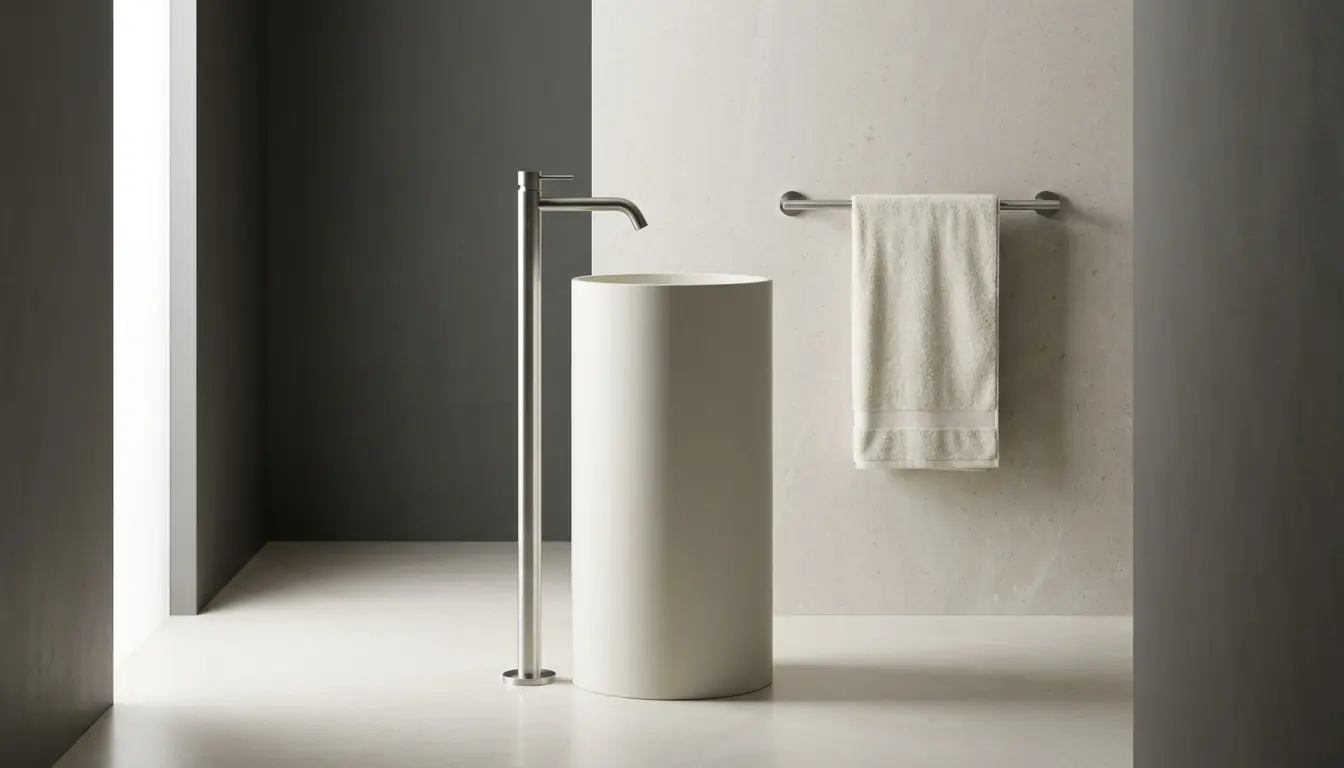
Whichever grade you settle on, the fitting itself should make the room easier to run. A freestanding basin mixer removes the tap hole from a stone or solid-surface bowl entirely, so a countertop can be fabricated without drilling a hole that would weaken it or let a basin be replaced without touching the worktop. That suits a high-turnover washroom where basins get replaced more often than taps.
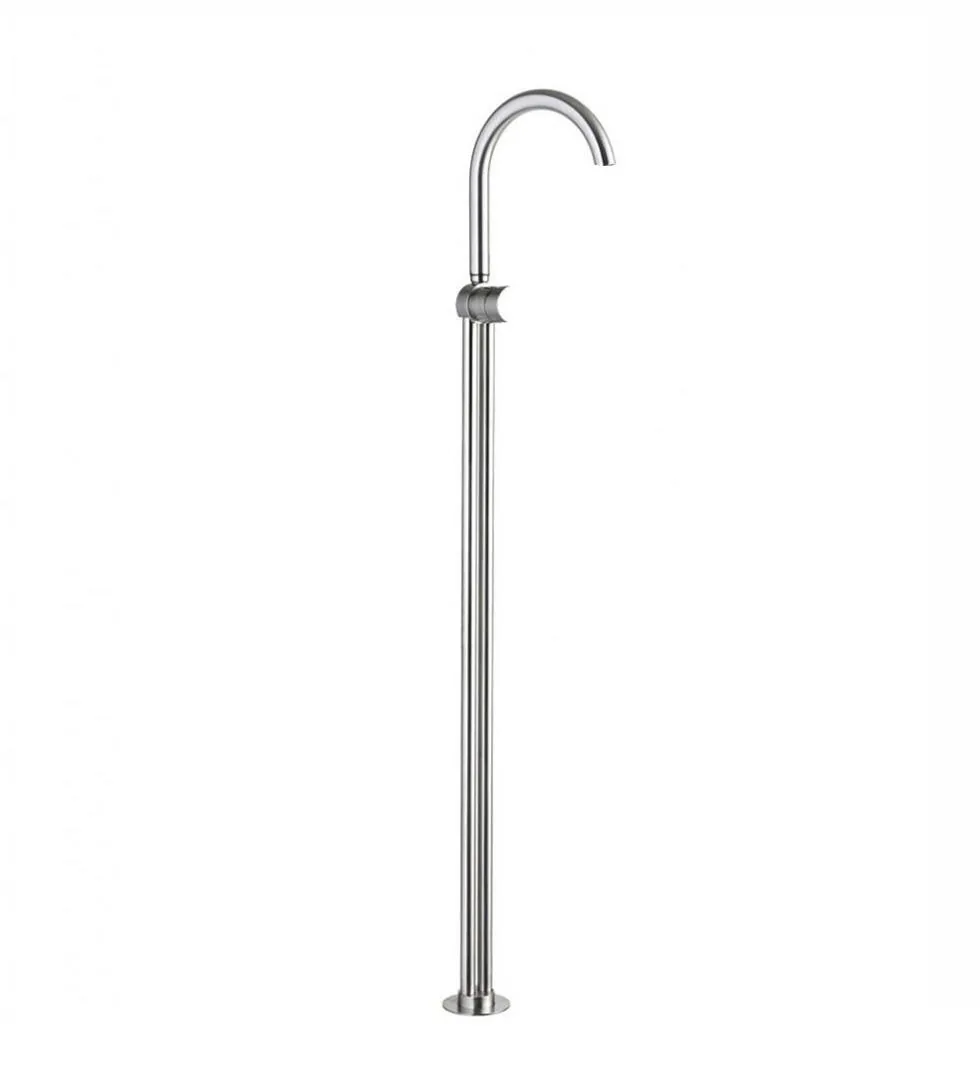 ProductFreestanding Basin Mixer, AISI 316L2SOI42159X-BSUpright control set through the worktop, ordered as the control alone to pair with a spout of the same family. Five finishes.View in catalogue →
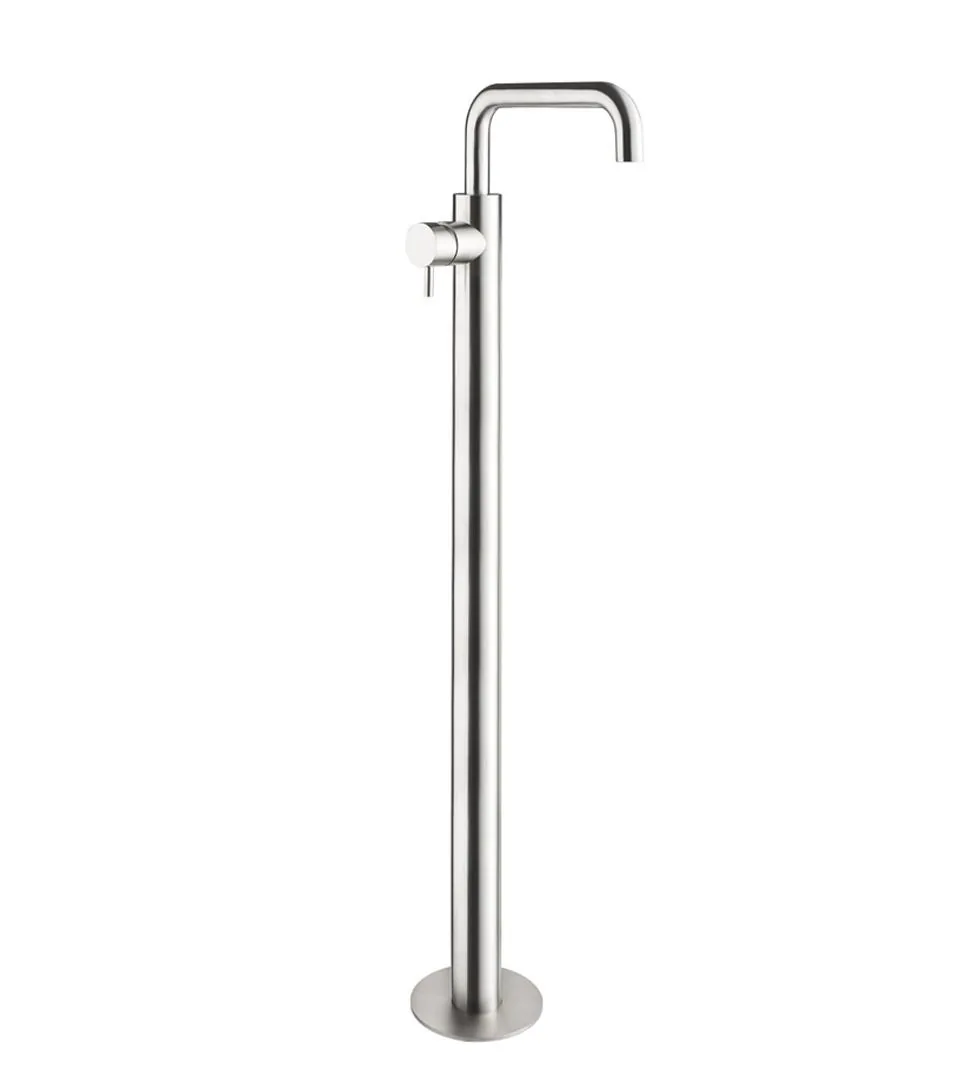 ProductFloor Standing Washbasin Mixer on a Column, AISI 316L2LI8523Z-BSHot and cold rise through the floor into one column, so the basin carries no tap hole and the wall needs no chase. No height or reach is published.View in catalogue →
The second of these is the clearest example of a commercial decision that has to be taken before tiling. Its supply route, floor build-up and position are settled at first fix, because the column is fixed through the finished floor. The same principle runs through the whole commercial schedule, and it is why maintenance access is the first thing to resolve and the last thing that can be changed.
Where an outlet has to be maintained, the isolation should be part of the design rather than an afterthought. A shut-off valve set upstream of a concealed shower or basin run lets a zone be isolated and a cartridge or seal changed from an access panel rather than by breaking out the tile, and a thermostatic set with individual shut-off valves does the same for a run of outlets behind one control.
 ProductConcealed Wall Mounted Half Inch Shut Off Valve, AISI 316L2ACJX738-BSSet behind a fixed access panel to isolate a shower or basin zone for cartridge servicing. Half inch connections.View in catalogue →
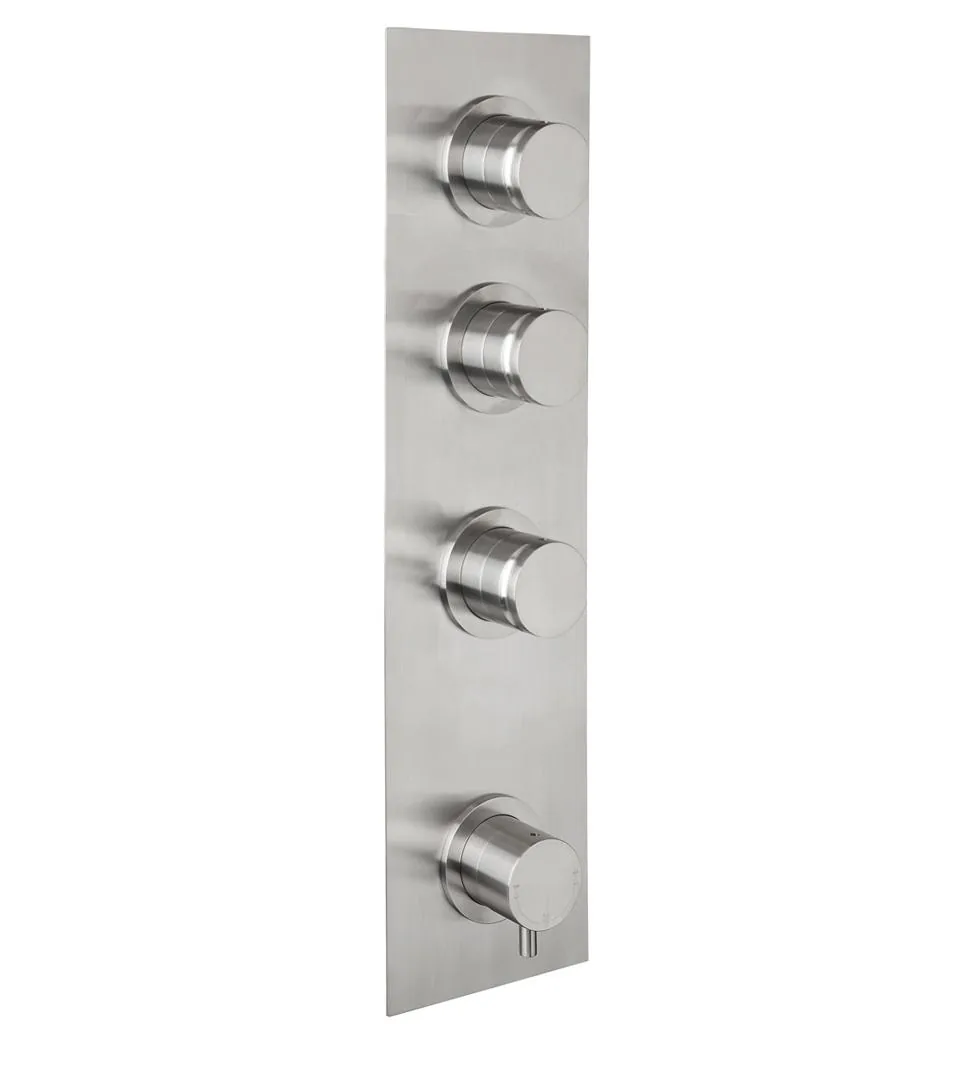 ProductThermostatic Shower Set With Three Shut Off Valves, AISI 316L2SO99S6-BSOne thermostatic mixer with three individual shut-off valves, so each outlet can be closed in turn. Wall mounted on half inch connections.View in catalogue →
For a commercial or wellness shower the same logic extends to the floor-standing set, where a diverter and a handset on one column reduce the number of separate outlets to maintain and replace.
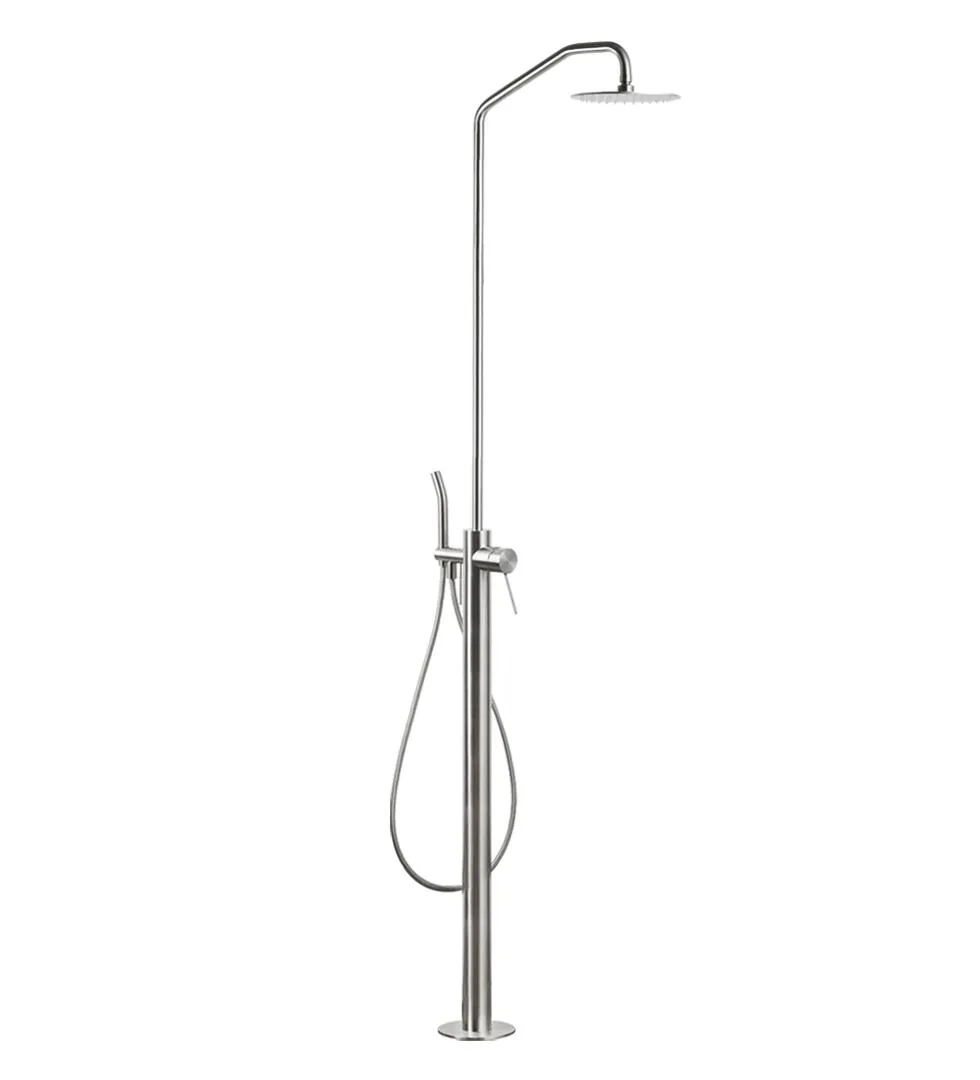 ProductFreestanding Shower Set With Diverter, Handshower And 200 mm Head, AISI 316L2SL33128157Z-BSFloor-standing mixer, 200 mm rainfall head, diverter and handshower on one column, in five matching finishes.View in catalogue →
A concealed set gives the same three-way isolation with the whole assembly buried in a tiled recess, which is the normal arrangement for a shower built into a commercial washroom or a spa.
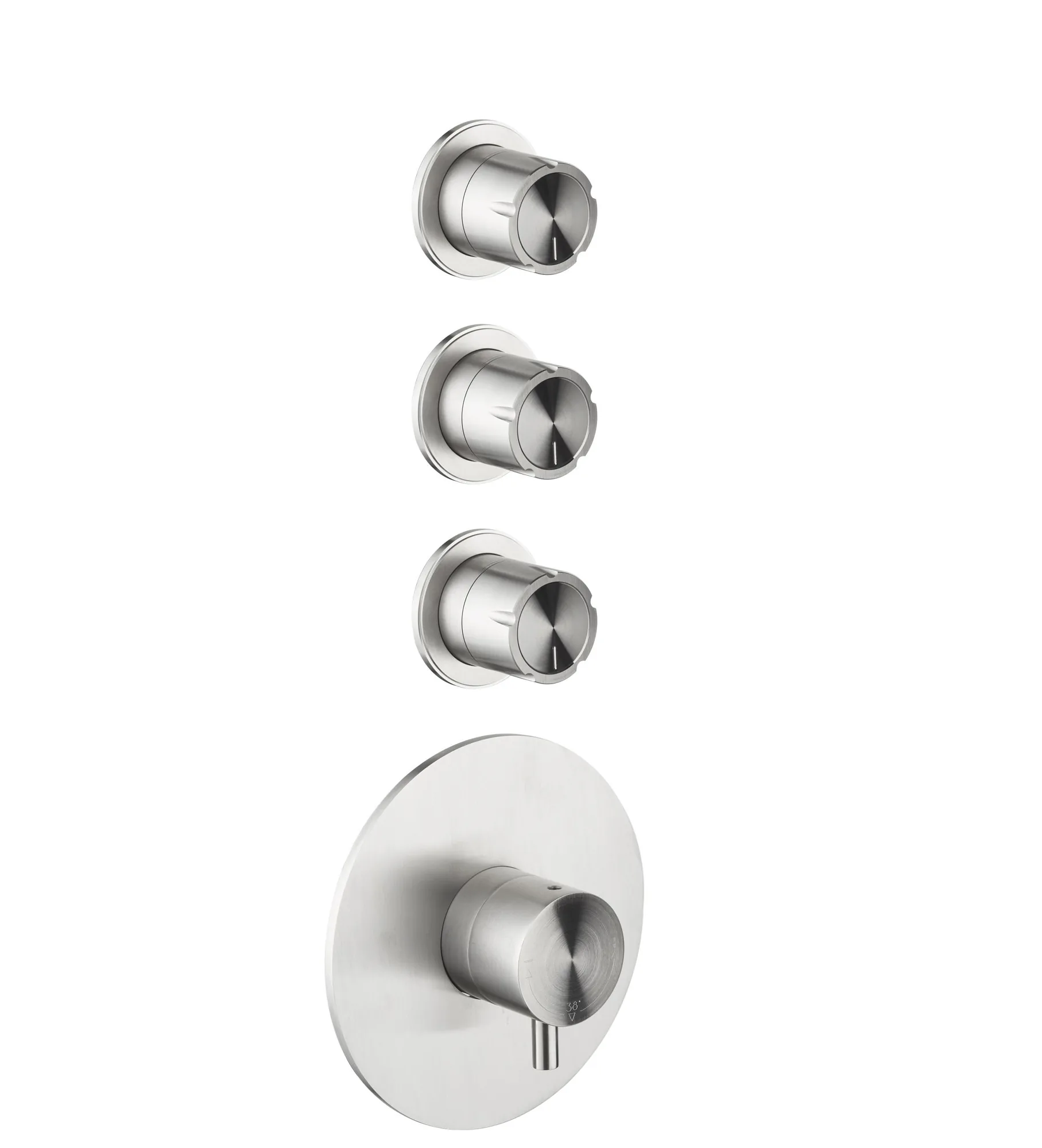 ProductConcealed Thermostatic Set With Three Shut-Off Valves, AISI 316L2AC66S6-BSConcealed body for a tiled recess, with three isolatable outlets behind one thermostatic control. No numeric dimensions are published.View in catalogue →
For the guest-bathroom end of a scheme, the same decisions are made on appearance and finish rather than abuse, but the maintenance logic still applies: a deck-mounted mixer that can be changed without disturbing the basin is worth more than one that cannot.
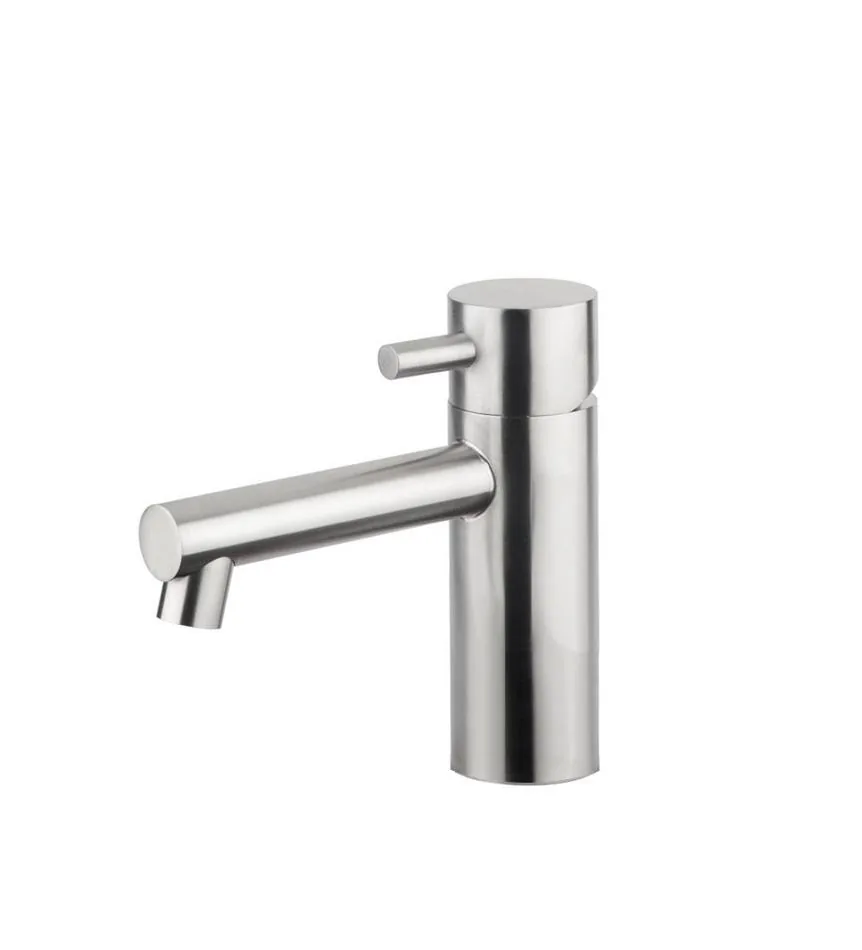 ProductDeck Mounted Basin Mixer Supplied Without Waste, AISI 316L2LIOK5415-BSSupplied without a waste so the drain can be matched to the basin. Dimensions, connection sizes and flow figures are not published; confirm against the basin.View in catalogue →
A checklist for the fit-out buyer
Six questions, each answerable, that together separate a commercial-grade schedule from a cheap one. None of them requires you to take a supplier's word for anything.
- Which standard does the cycle figure come from, and what were the conditions? A figure with no standard and no conditions is a headline. Ask for both together, and judge the answer against the conditions in the standards named above.
- Is the fitting exposed or concealed, and has the coating been tested for that exposure? Ask whether the corrosion evidence covers the service condition the product will actually be in, since the standard tests exposed and concealed parts differently.
- What does the cleaning regime do to the metal, and who owns that decision? Name the chemicals, their dilution and the rinse step, and put the written instruction in the O&M pack. For coated finishes, read what the decorative PVD performance document actually tested.
- What surface finish is specified, with what roughness? "Brushed" without a limit is an appearance instruction. A coarse brushed finish and a fine one hold different amounts of deposit and will not age the same way.
- What can a facilities team isolate, and what must they break out a wall to reach? This is decided at first fix and is the item most often lost. Check that every outlet to be maintained has an isolation point behind an access panel.
- Can every part be replaced individually, in the same finish, years from now? A range that can be repaired part by part costs less over twenty years than one that cannot, and that is usually where the commercial premium actually pays back.
For the wider specification picture, browse stainless steel taps and the AISI 316L material range, or read the material and finish arguments behind this post in AISI 304 vs 316L stainless steel taps and brushed vs PVD vs chrome. For the cartridge question that sits behind every cycle figure, see ceramic cartridge types and cycle life.
Specify it from the catalogue
Every fitting mentioned here is stocked and specified in the FONTEA trade catalogue: full technical data, finishes and wholesale tiers.
Related reading
-
 Specification
Ceramic cartridge types and cycle life: what trade buyers should ask suppliers
Ceramic cartridge on a spec sheet says very little. Here is what the common cartridge types are, how cycle life is actually measured, and the questions that separate a tested figure from a marketing one.
-
 Specification
A tap and fitting spec-sheet checklist for architects writing a schedule
A practical checklist for specifying taps and fittings: the fields a schedule must state, what to ask a supplier to confirm, what gets left out and causes site problems, and how to spot a complete submittal.
-
 Specification
Specifying Taps for a Hotel Bathroom: Flow Rate, Thermostatic Safety and Finish Durability
What actually decides a hotel bathroom tap specification: flow rate for comfort and water duty, where thermostatic safety is required by regulation, and finishes that survive commercial cleaning.