 ONTEA
ONTEA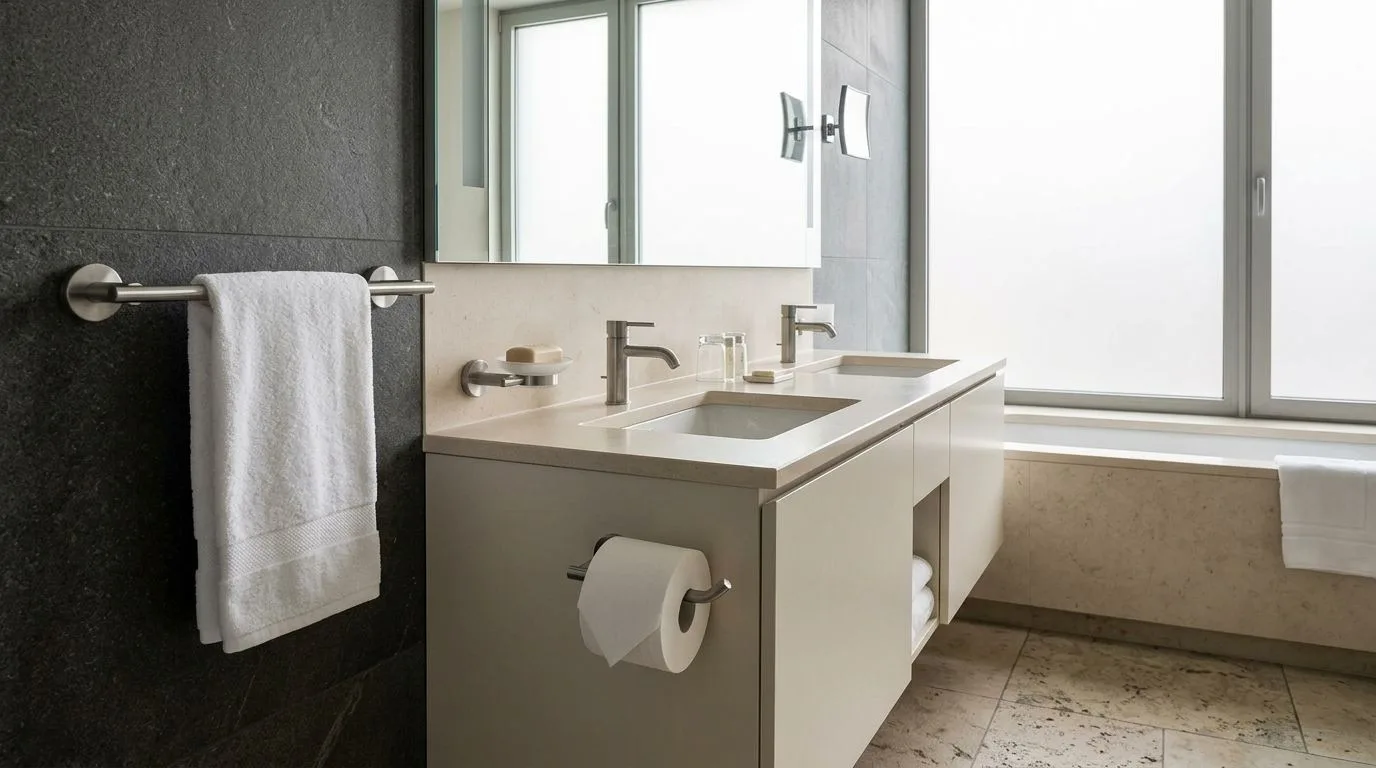
A cleaning product labelled for bathrooms is not automatically suitable for every stainless steel accessory or finish. Follow the care instructions for the selected item and the chemical maker's label, avoid unapproved abrasive methods, and prevent residues from drying on surfaces. A written room-care protocol helps housekeeping apply the same process and report early signs of staining or damage.
Key Takeaways
- Approve cleaning agents against both the accessory care guidance and the chemical product instructions.
- Specify dilution, application, contact time, rinsing and drying rather than relying on a generic “bathroom cleaner” label.
- Record damage and test proposed changes safely before introducing them across rooms.
Identify the material and finish first
A schedule should state the accessory, material grade and finish so the operator can find the relevant care instructions. Stainless steel is not a single finish, and the visible surface may have product-specific care requirements. Do not assume that advice for one polished or coated surface applies to another.
The product pages below identify these examples as AISI 304. The grade alone does not establish that a specific cleaner is suitable. Ask for the selected product's maintenance information and retain it with the housekeeping procedure.
Control the whole cleaning process
A useful procedure names the approved cleaning products and their dilution, tools, application method, contact time, rinse requirements and drying step. Follow the manufacturer's directions for the chemical, including ventilation and personal-protection requirements: COSHH requires employers to assess the risks of hazardous cleaning substances, control exposure, and give staff the information, instruction and training, including gloves or eye protection, needed to work with them safely. Follow the accessory supplier's instructions where they are more specific to the surface.
Avoid improvisation. Do not substitute concentrated chemicals, abrasive pads or scourers unless the relevant instructions explicitly permit them: the British Stainless Steel Association warns that carbon steel wool, or pads previously used on carbon steel, should never touch a stainless surface, and that any abrasive treatment should first be trialled on a small, hidden area. Chloride-containing cleaners and residues deserve particular care on stainless surfaces, because chloride ions can locally break down the steel's passive oxide layer and start pitting or crevice corrosion; do not leave an unknown cleaner to dry in place. The same association also flags the specific risk of bleach (sodium hypochlorite) and hydrochloric-acid-based cleaners, such as brick and mortar removers, on stainless fittings. If product compatibility is unclear, pause and obtain guidance rather than testing it visibly on installed fittings.
A controlled change process
When housekeeping proposes a new agent, record its product name and instructions. Check compatibility information, then test only by a method approved by the supplier on a discreet sample or spare item where possible. Record the observation and approval before changing the site-wide routine. A small informal trial on a prominent installed surface can create a permanent mark before anyone recognizes the risk.
Catalogue examples for the maintenance schedule
 ProductWall mounted towel rail, 650 mmAISI 304, 650 mm bar on a wall stand-off, guide price £150.View in catalogue →
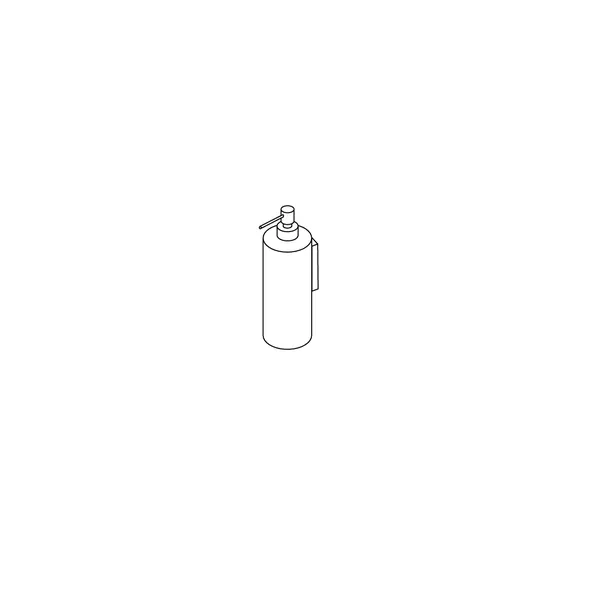 ProductWall mounted liquid soap dispenserAISI 304 wall-mounted dispenser, guide price £140.View in catalogue →
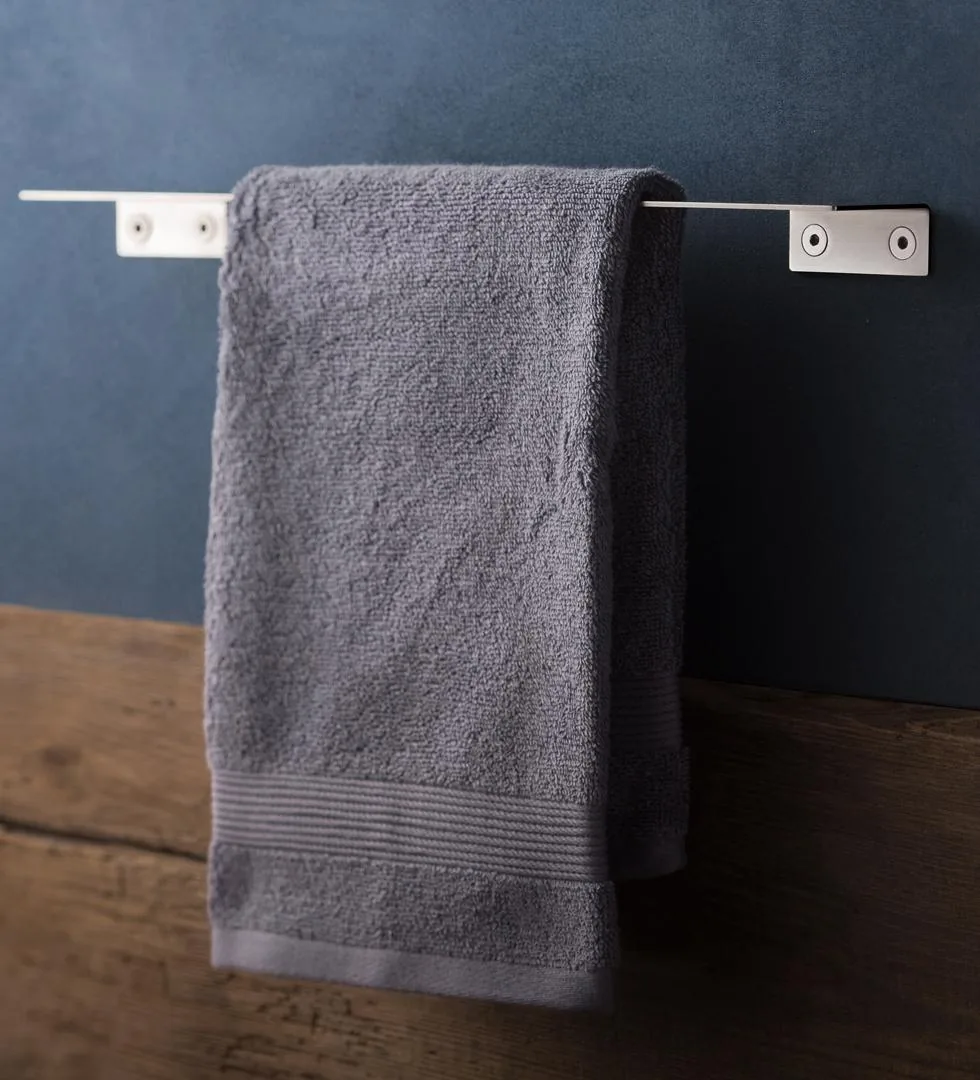 ProductWall mounted towel rail, 320 mmAISI 304, 320 mm bar for hand towels, guide price £115.View in catalogue →
The 650 mm bar and the 320 mm bar take different towel sizes, so both take different cleaning instructions, while the wall-mounted dispenser is a separate basin-zone item whose whole surface is handled every round. Include exact variants and finishes in the maintenance register, so a replacement or new cleaning product is checked against the right instructions.
A room-by-room care card
A short card can turn the policy into a repeatable routine:
- Remove loose dust or grit before wiping, so particles are not dragged across the surface.
- Apply only an approved cleaning agent at its instructed dilution and contact time.
- Rinse residues where the cleaner or accessory instructions require it.
- Dry the fitting and inspect edges, joints and mounting points.
- Record unusual staining, pitting, looseness or finish change and escalate it.
The sequence is a practical template, not a substitute for the selected products' instructions. Adapt it to the actual cleaner, accessory and site procedures. Staff should know where the current care sheet is kept and whom to contact when a mark does not clear with the approved routine.
Inspect and respond consistently
Train supervisors to distinguish routine deposits from changes that need investigation. Record the room, fitting, cleaning agent used, dilution if known, time observed and any action taken. Avoid aggressive spot treatment before the surface and residue are identified. If the fitting is damaged, retain the cleaner details and photographs for supplier review.
A consistent log also helps identify patterns: repeated issues in one area may point to a specific cleaning process, exposure or maintenance condition. It does not prove a cause on its own, but it gives the maintenance team useful information for a proper assessment.
For a related material-selection discussion, see how to compare 304 and 316 for office washrooms. Finish sample and batch controls can also help teams define the appearance to inspect during routine care. Before specifying a grade for a site with heavy chemical use, salt spray test reports for stainless steel bathroom accessories explain how that corrosion resistance is actually measured.

Specify it from the catalogue
Every fitting mentioned here is stocked and specified in the FONTEA trade catalogue: full technical data, finishes and wholesale tiers.
Related reading
-
 Commercial projects
Who Buys Bathroom Accessories on a Build-to-Rent or Hotel Project?
Assign accessory selection, procurement, backing, installation and handover responsibilities explicitly across FF&E and construction packages.
-
 Procurement
Finish Consistency Across Hundreds of Rooms: Sample Approval and Batch Control
Set a repeatable finish-approval process for bathroom accessories with physical samples, controlled schedules, first-room checks and recorded batch inspections.
-
 Commercial projects
Grade 304 or 316 for High-Traffic Office Washrooms?
Choose bathroom accessory grade from exposure, cleaning regime, product specification and maintenance expectations, not traffic volume alone.