 ONTEA
ONTEA
A tap and fitting schedule is complete when every item carries enough information for a supplier to price it, an installer to fit it and a building owner to maintain it, without anyone having to phone back. That means material and grade, finish, fixing and connection details, flow rate, dimensions, and the warranty and spares information a buyer needs to keep the room running. This checklist sets out those fields, what a supplier must be asked to confirm in writing, what routinely gets left out and causes problems on site, and how to tell a complete submittal from an incomplete one.
Key Takeaways
- A complete submittal states material and grade, finish, connection and fixing, flow rate, dimensions, and warranty and spares. A submittal missing any of these is not a complete one, however polished it looks.
- A flow rate you cannot compare is not a flow rate. Approved Document G sets maximum consumption per fitting for new dwellings, so ask for the figure at the pressure your design actually runs at.
- Finish availability is published per product, not per brand, so the grade and finish must be confirmed on the exact reference you are ordering, not assumed for the range.
- Connection size and fixing detail are first-fix decisions. Get them on the schedule before the wall closes, or a change later costs a strip-out.
- Write down what a supplier will not publish. An honest "not published, confirm before ordering" is a usable answer; a guessed figure is not.
What a schedule has to state, field by field
The purpose of a schedule is to move every decision that would otherwise be made on site to the drawing stage. Each field below is one of those decisions. Read it as the minimum content for each line of the schedule, whichever tap or fitting is on it.
Material and grade. State the alloy and its grade, not just "stainless steel". The catalogue's AISI 316L material page is the grade described for damp chases, wet rooms and coastal exposure, while AISI 304 is described for everyday bathroom condensation. The grade is a decision about the environment the fitting sits in, not a default.
Finish. Name the finish the supplier publishes for that reference. A tap with a brushed body and a gold PVD body are different orders. The catalogue publishes finish availability per product rather than per brand, so confirm the finish on the exact reference.
Fixing and connection. How the fitting is fixed, through what, and to what it connects. Deck mounted through a single hole in the basin deck; wall mounted from the finished wall face with supplies chased behind. The connection size is not a detail, it is the field that decides whether the fitting can be installed at all.
Flow rate. The consumption of the fitting at a stated pressure. See the next section for why the pressure matters.
Dimensions. Projection, reach, height and any dimension that a drawing or a tiled wall has to accommodate. A wall spout's projection sets how far water is thrown, so it is set before the grout goes down.
Warranty and spares. What the guarantee covers, for how long, and how a cartridge or a worn part is replaced. This is the field most often missing, and the one the building owner needs most.
What a supplier must confirm in writing
A submittal is an offer to supply a defined thing. These are the confirmations that turn a brochure into something a buyer can accept or reject.
- The exact reference. The product's own catalogue reference, not a family name. A range name such as "basin mixer" is not a submittal.
- Grade and finish on that reference. Confirmed against the specific item, not the range.
- Published figures. Flow rate, pressure range and dimensions, with the conditions they were measured under, and the standard the figure comes from. A performance number quoted without its standard cannot be compared, because the same figure can come from different tests. Where a figure is not published, the supplier should say so rather than supply an estimate.
- Which standard applies to the product. For a mechanical basin or shower mixer, the relevant product standard is EN 817, "Sanitary tapware, Mechanical mixing valves (PN 10)". The current edition is covered by SS-EN 817:2024/AC:2025, whose scope covers the dimensional, leaktightness, pressure resistance, hydraulic, endurance and acoustic characteristics a mixer must meet, and makes clear those tests are laboratory type tests rather than manufacturing quality-control checks. Knowing which standard a figure is drawn from is what makes it comparable.
- Fixing and connection detail. Including any component supplied with the product and any consumable or accessory not included.
- Lead time and the spares position. How a replacement cartridge or part is ordered, and what is held as a spare.
Where a product connects to the water supply, it is a "water fitting" under UK regulation.
Flow rate: the field that quietly decides compliance
Flow rate is where a schedule most often records a number that cannot be used. A consumption figure quoted without a pressure is not a specification, because the same fitting delivers different flow at different pressures.
For new dwellings in England, Approved Document G sets maximum consumption per fitting under the fittings approach. Table 2.1 gives a basin tap a maximum of 6 l/min, a shower 10 l/min and a sink tap 8 l/min. Under the optional requirement level, Table 2.2 tightens the basin tap to 5 l/min and the shower to 8 l/min. Where the chosen fittings exceed those values, the water efficiency calculator must be completed instead. The point for a specifier is that a flow figure on a submittal should be one you can drop into that method, which means it needs the pressure it was measured at as well as the number itself.
The fields routinely left out, and what each one costs
Each of these is a small omission with a disproportionate cost, because each is a decision deferred to site or to the end of the contract.
- Waste and ancillary items. A basin mixer supplied without a pop-up waste leaves the drain to be specified. If the schedule does not close that loop, the drain is chosen on the day. The deck mounted basin mixer without pop-up waste makes the point directly: the waste is chosen to suit the basin and the tap finish.
- Set contents. A shower set may arrive as one matched group of mixer, hand shower, hose, support and diverter, or as separate items. The schedule should say which, or the installer matches finishes by eye. The concealed wall shower set is described as the whole shower wall in one order for that reason.
- Fixing heights and rough-in. Concealed and wall-mounted fittings are set at first fix, before the wall closes. Heights and pipe positions left to the installer are decisions made after it is too late to change them cheaply. The concealed wall mounted mixer sets its valve body at first fix and trims out after tiling.
- Isolation and access. Every branch that should be isolable needs an isolation point that can be reached. Planned at first fix it is a small part; omitted, it is a broken wall later. Our guide to stop valves and water inlets covers this in full.
- Spares and consumables. A cartridge is a wearing part. If the schedule says nothing about how it is replaced, the owner finds out when the tap stops. See ceramic cartridge types and cycle life for what to ask about the part itself.
How to tell a complete submittal from an incomplete one
This is the practical test. Take the submittal and run it against the seven fields above. A complete one answers all seven for the exact reference. An incomplete one is easy to spot because it fails in recognisable ways.
- It names a range rather than a reference, so grade and finish cannot be pinned to an item.
- It quotes a flow rate with no pressure.
- It shows a product photograph but no dimensioned drawing, so the installer is guessing at projection and reach.
- It lists a "stainless steel" body with no grade.
- It omits the waste, the hose or the diverter and leaves the buyer to assume they are included.
- It says nothing about warranty or how a spare is ordered.
- It carries a certification mark or approval claim with no certificate reference, because an approval for one size or finish does not automatically cover a variant.
How to check a water regulation claim, explained
Two legal terms do the work. Under the Water Supply (Water Fittings) Regulations 1999, a water fitting is a fitting that conveys or receives water from a water undertaker. Regulation 3 restricts installing or using a water fitting in a way that causes, or is likely to cause, waste, misuse, undue consumption or contamination.
Schedule 2 sets the construction and installation requirements. Paragraph 2 restricts materials that cause or are likely to cause contamination. Paragraph 3 requires every water fitting to be immune to or protected from corrosion and to resist external loads and pressure surges. Paragraph 7 is the one a specifier feels most: it states that a fitting designed to be operated or maintained, or which consists of a joint, is not to be a concealed water fitting, and that a concealed fitting or backflow prevention device must be of gunmetal or another material resistant to dezincification. Paragraph 15 requires every water system to contain a backflow prevention device appropriate to the highest applicable fluid category downstream.
The government guidance on the specifications approved by the regulators explains that the Regulations set the requirements and that approved specifications and Test Code Sheets set out how to comply. It also notes updated specifications applying from 6 May 2027, which is worth knowing when a submittal cites a specification by number.
So the correct reading of a submittal is: the regulations set the requirement, and an approved specification or test is how compliance is shown. Understanding what a scheme covers lets a buyer interpret a submittal rather than accept a mark on a brochure.
The product lines this checklist applies to
The same fields apply whatever the fitting, and the catalogue groups its range so a schedule can be written product by product. The Fontea range covers bathroom taps, showers, kitchen mixers, wellness and technical fittings. For a basin zone, the wall mounted basin set places a straight spout and a separate control on the wall, leaving the worktop clear.
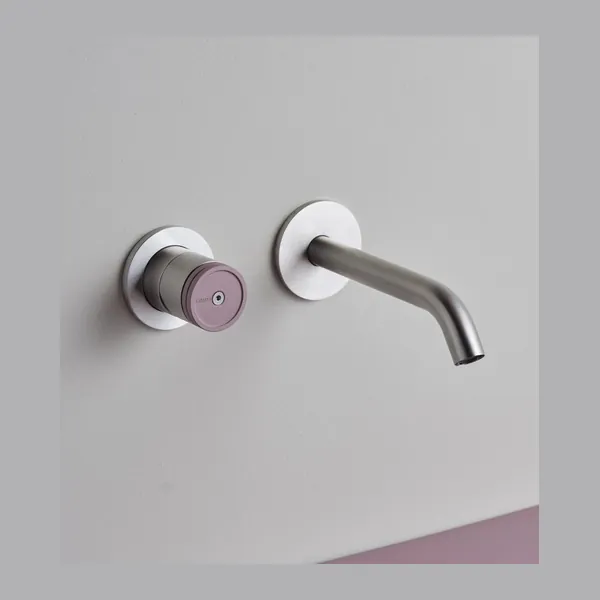 ProductWall Mounted Basin Set, 160mm Spout, AISI 316L160mm spout reach with an 18mm outlet, AISI 316L. Control and spout ordered together so the finish matches. Both halves fix to the finished wall after tiling.View in catalogue →
For a shower zone, a concealed mixer and a matching wall spout are specified together so the visible parts agree.
 ProductConcealed Wall Mounted Mixer in AISI 316L Stainless SteelValve body set at first fix, trim fitted after tiling. AISI 316L stainless steel in brushed, polished, deep grey, gold PVD and Tinta.View in catalogue →
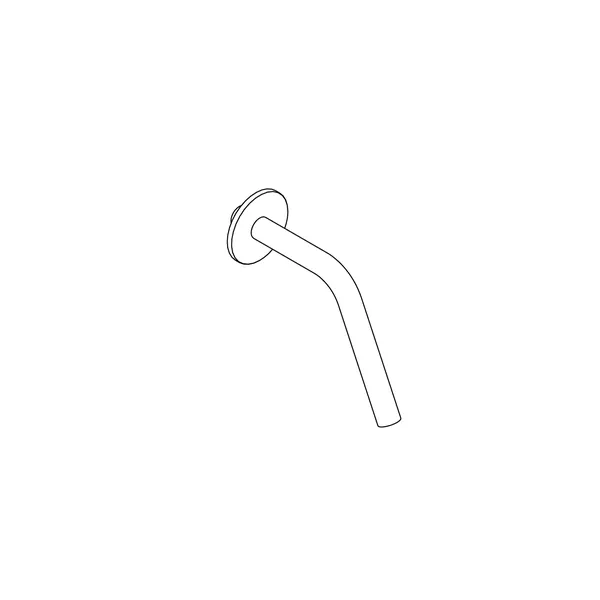 ProductWall Mounted Spout in Brushed to Gold PVD FinishesAISI 316L stainless steel, fitted at second fix once the wall is tiled. Projection sets how far the water is thrown, so the position is set before the grout goes down.View in catalogue →
A full field-by-field reference for each product above, with catalogue reference, material, finish, published figures and the facts the catalogue does not publish, is in the product sheet that accompanies this article.
Frequently asked questions
What is the minimum a tap submittal should contain?
At minimum the exact catalogue reference, the material and grade, the finish on that reference, the fixing and connection detail, the flow rate with the pressure it was measured at, the dimensions, and the warranty and spares position. A submittal missing any of those is not complete.
Is a flow rate without a pressure acceptable?
No. The same fitting delivers different flow at different pressures, so a number without its test pressure cannot be used in a water efficiency calculation. Ask for the figure and the pressure it was measured at.
Does the finish have to be stated for every item?
Yes. Finish availability is published per product rather than per brand, so the finish must be confirmed on the exact reference. An item quoted in brushed steel may not be the item supplied in gold PVD.
What should a buyer ask about spares?
Ask how a worn part such as a cartridge is replaced, what is held as a spare, and what the warranty covers and for how long. If the supplier does not publish these, record that they are unconfirmed rather than assuming.
How should a buyer treat an approval mark on a submittal?
An approval for one size, finish or connection does not automatically cover a variant, which is why the named model, size and finish are the parts that matter.
Specify every field before the wall closes
A schedule earns its keep when it removes a decision from site. Material and grade, finish, fixing and connection, flow rate at a stated pressure, dimensions, and warranty and spares, each on the exact reference, is what leaves nothing to guess. Write down the figures a supplier does not publish as unconfirmed, and close them before the order is placed. That is the difference between a submittal you can approve and one you can only query.
For a hotel, rental block or commercial fit-out, send FONTEA your fixture schedule, quantities and finish requirements through the contact page, or browse the stainless steel taps and technical accessories once the specification brief is clear.
Specify it from the catalogue
Every fitting mentioned here is stocked and specified in the FONTEA trade catalogue: full technical data, finishes and wholesale tiers.
Related reading
-
 Specification
Stainless Steel Bathroom Fittings for Coastal and Seafront Developments: A Salt-Air Corrosion Guide
What actually governs whether bathroom fittings survive a seafront elevation: the chloride gradient, finish, joint design, drainage and ventilation, how corrosion appears, and what to schedule.
-
 Specification
Commercial vs residential taps: why cycle life and chemical resistance matter for hospitality fit-outs
Where the money genuinely belongs on a hospitality fit-out. How cycle life is measured, why exposed coatings see a harsher corrosion duty than concealed ones, and what a specifier should refuse to accept without a test standard.
-
 Specification
Ceramic cartridge types and cycle life: what trade buyers should ask suppliers
Ceramic cartridge on a spec sheet says very little. Here is what the common cartridge types are, how cycle life is actually measured, and the questions that separate a tested figure from a marketing one.