 ONTEA
ONTEA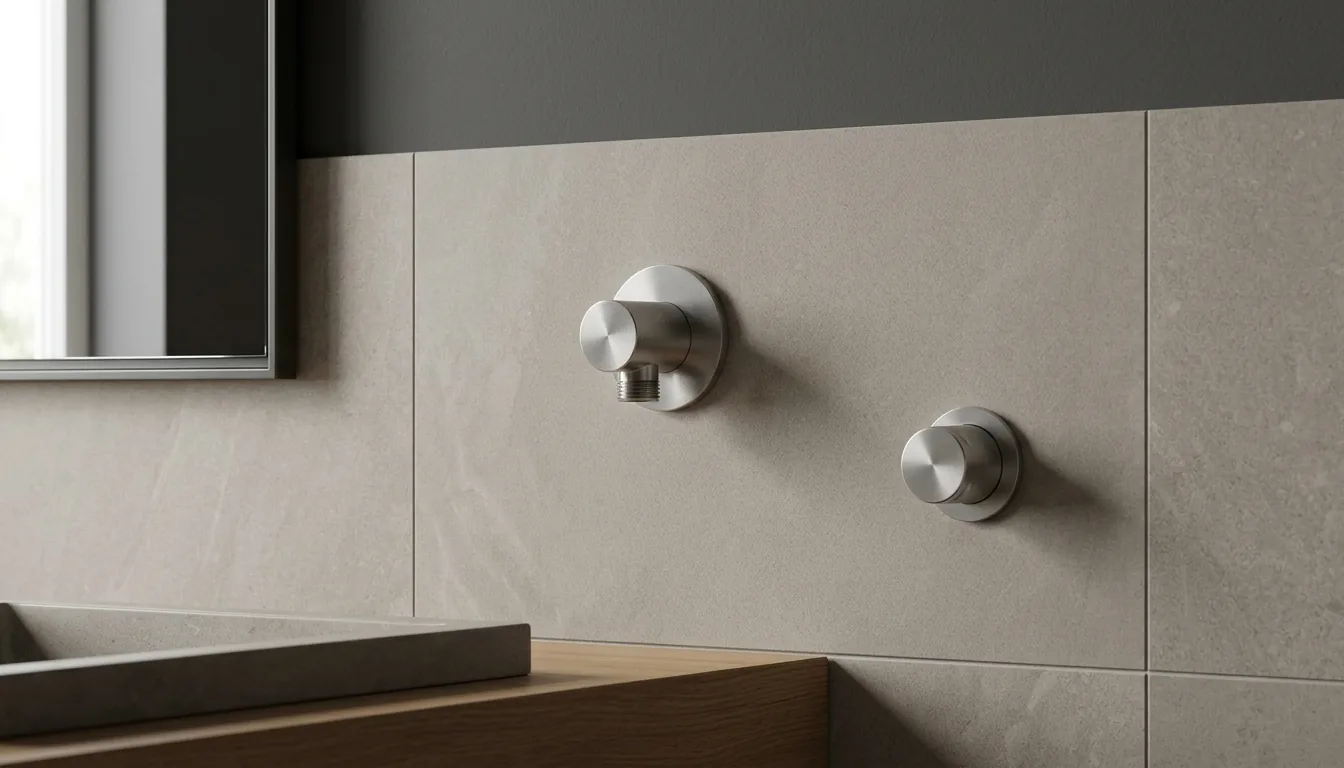
A stop valve is the fitting that lets you switch off the water to one tap, shower or concealed cistern without shutting down the rest of the property, and a water inlet is the fitting that carries supply from inside the wall to the tap or hand shower sitting proud of it. Both do one small, essential job, both are usually hidden after the wall is tiled, and both decide whether a leak or a failed cartridge is a five-minute repair or a strip-out. That is why a buyer specifying stainless steel technical accessories should treat them as planned parts of the installation rather than items to add at the end.
Key Takeaways
- A stop valve isolates a single branch of the supply so one fixture can be serviced without draining or isolating the whole room or property.
- A water inlet is the through-wall connector that finishes where the concealed pipe meets a wall-mounted tap or hand shower, covering the pipe stub-out.
- Both are fitted before tiling or wall closure, so a missing isolation point becomes expensive to add later, if it can be added at all.
- Choose the bore size and body material for the actual run and exposure: half inch and three quarter inch serve different branches, and 316L suits damp, coastal and wet-room conditions.
What a stop valve does
A stop valve, also called an isolating valve or a stopcock, sits in the supply line and closes to stop water flowing to the fixture it serves. Fitted on its own branch, it isolates that branch, and only that branch. Its purpose is practical rather than decorative: when a concealed mixer cartridge fails, a filling valve sticks or a joint starts weeping, the supply to that one fitting can be closed at a point an installer can actually reach, without turning off the shower next door or the whole incoming main.
This matters because the alternative is a supply-wide shutdown. Turning off the whole property to change one cartridge means every outlet is unusable until the work is finished, and in a hotel, a rental block or a hospital wing it means the room or area is out of use. One valve per branch turns a whole-building disruption into a local repair. The catalogue's half inch branch isolating valve describes exactly this role: it "isolates one branch so the rest of the shower stays live during servicing."
A stop valve is also the difference between a repair and a strip-out. If the isolation point is behind the tile and was never fitted, a technician has to break the wall open to reach the supply. If it was planned in at first fix and remains reachable, through a duct access panel or a wall-mounted body, the same repair happens without touching the finish.
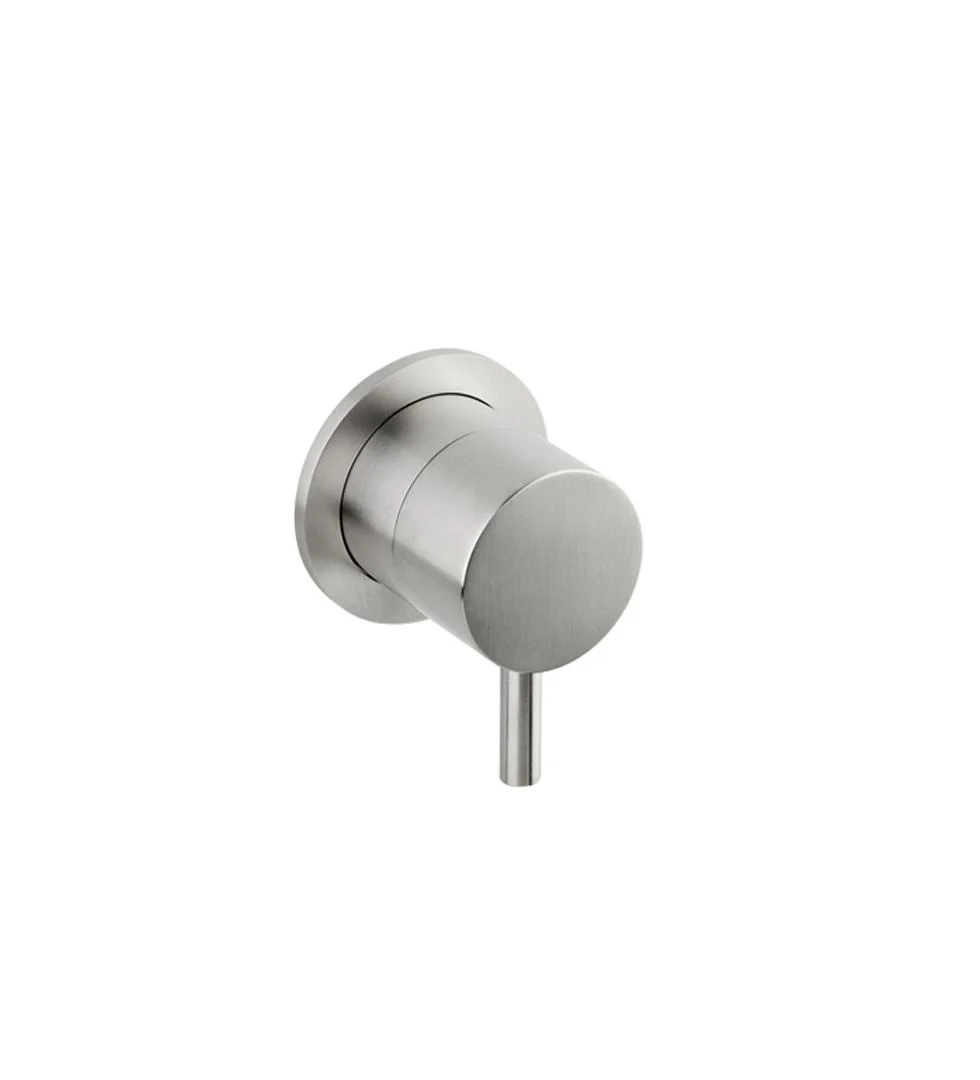 ProductHalf inch wall shut-off valve for isolating a branchCast in AISI 316L; isolates a single branch so the rest of the shower stays live during servicing. Confirm flow and pressure figures against the supply pipework before ordering.View in catalogue →
What a water inlet does
A water inlet is the connector where the supply pipe stops inside the wall and the fitting that sits above the tile line begins. It carries the water the last short distance through the wall face and presents a threaded connection to a wall-mounted tap, a shower valve or a hand shower. Where a stop valve controls flow, a water inlet completes the route through the finished surface.
Its most visible job is cosmetic but not trivial: it covers the hole where the pipe emerges. A wall inlet is described as a fitting that "finishes the point where a supply pipe emerges from the wall", its body sized to cover the opening without a wider cutout in the tile. Left bare, a supply stub-out looks unfinished and sits exposed to cleaning and moisture; dressed with a matching inlet, the wall reads as designed.
The second job is functional. The inlet must match the wall thickness and the pipe it meets, and its connection size must suit the fitting on top of it, or the joint will not seal. A water inlet is therefore not a generic plate: it is a threaded, size-specific part that has to be chosen with the tap it feeds.
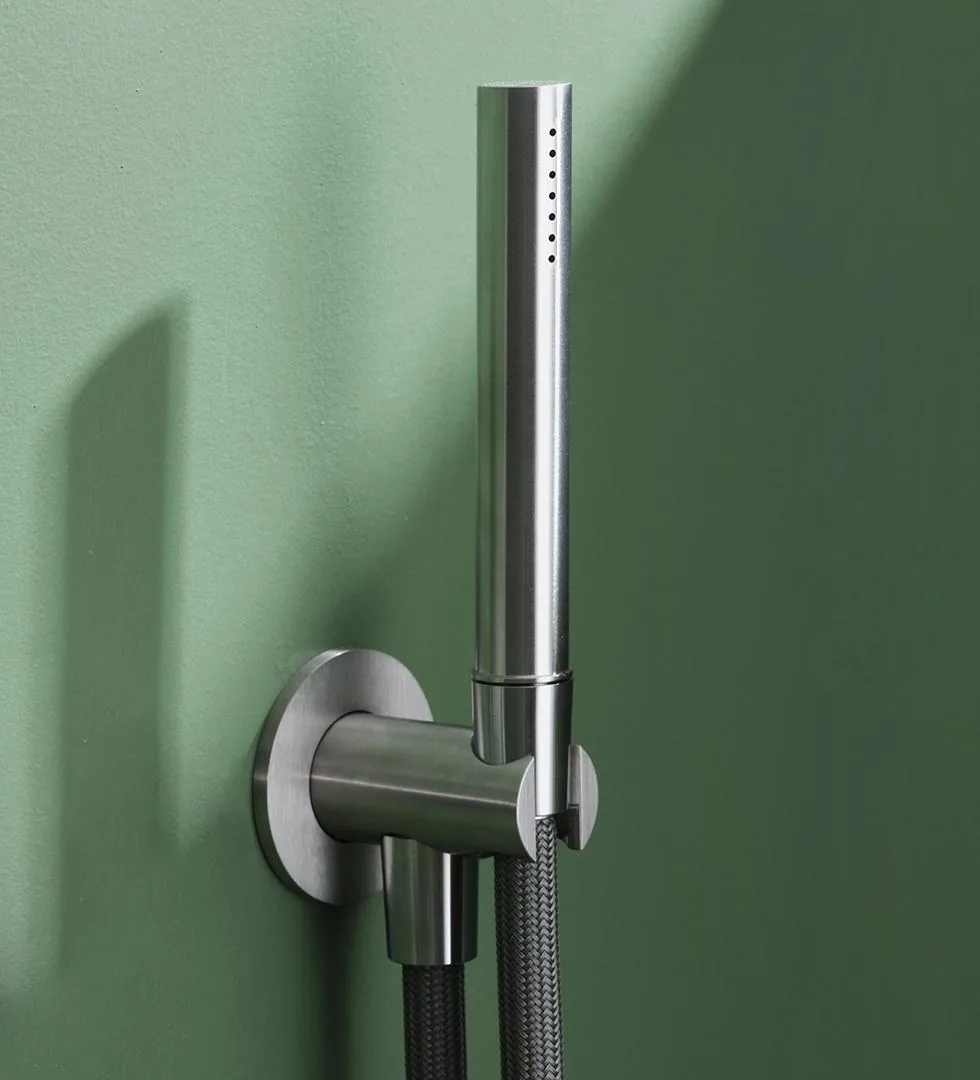 ProductHalf inch shower water inlet with wall cradleCast in AISI 316L on a half inch connection that takes a standard flexible inlet, with the hand shower cradle part of the same casting. Brushed stainless steel, deep grey, Tinta and gold PVD are offered.View in catalogue →
Where each one is fitted
Both fittings are installed at first fix, before the wall is tiled or boarded, because that is the only time the concealed run and the pipe positions can still be changed. Working backwards from a finished room, the sequence matters: set the valve and the inlet positions against the drawings, chase and install the supply, build and tile the wall, then fit the visible face of the valve and thread the tap or hand shower onto the inlet.
In short, a stop valve goes where it can be reached without breaking the finish, and a water inlet goes where the fitting it feeds meets the tile. The two decisions are taken together, at first fix.
| Fitting | Where it goes | When it is fitted |
|---|---|---|
| Stop valve | Inside a service duct, riser or behind a fixed access panel, reachable but clear of the splash zone | First fix, before the wall is closed |
| Concealed stop valve | Recessed into the wall, reached through a fixed access panel | Body at first fix; access panel after tiling |
| Water inlet | On the tiled wall, at the height and centre line of the tap or hand shower it feeds | Threaded to the supply, finished at the tile face |
 ProductConcealed wall mounted half inch shut-off valveHalf inch connections sized to isolate an individual tap or mixer; concealed in the wall behind a fixed access panel. Brushed stainless steel, polished stainless steel, deep grey, gold PVD or Tinta.View in catalogue →
The bore size follows the branch. A half inch valve suits a single concealed mixer, a cistern or one shower branch; a three quarter inch valve is for a larger concealed feed or a run serving several outlets. The catalogue keeps these as separate products for that reason, and the three quarter inch wall shut-off valve is described as the point where "being able to isolate one zone matters" on communal or commercial installations.
Why isolating one fixture matters
The value of a stop valve is measured in what it does not disturb. Isolating one fixture instead of a whole supply turns a disruptive shutdown into a targeted one, and it is the difference between servicing a room and closing a wing. On a multi-occupancy or commercial installation, per-branch isolation is what allows one unit to be maintained while the rest of the building keeps running, and the M10x1 isolating valve for rigid supply is described in exactly those terms: "close one fixture without touching the rest of the property, which is what lets a hotel room or a hospital wing be maintained one unit at a time."
It also protects the finish. A repair that does not require opening a tiled wall or lifting a basin keeps the bathroom intact, keeps the downtime short, and keeps the room lettable or usable. Without a planned isolation point, the cheapest valve in the world cannot help, because the branch cannot be closed without breaking into the run.
The connection type matters too, because not every supply is rigid pipework. The M10x1 isolating valve takes a flexible connection, which takes up the small alignment error that occurs in fixed pipework, and it is compact enough to sit inside a plinth or a ducted void rather than needing its own duct.
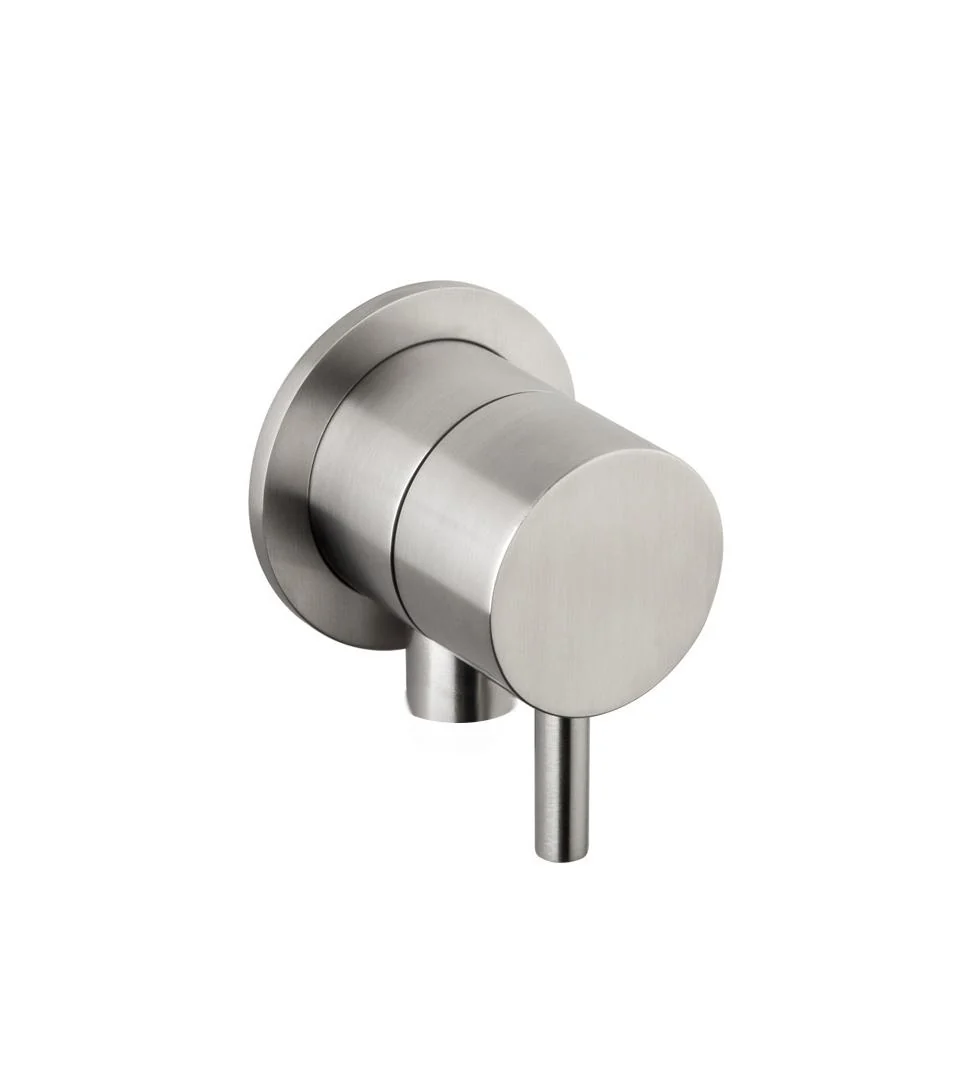 ProductM10x1 isolating valve for rigid supplyIsolates a single fixture so a room can be serviced without a shutdown; thread length and hose length are not published, so confirm both before ordering volume.View in catalogue →
What goes wrong when they are fitted badly or omitted
The failure modes are well understood, and every one of them traces back to a decision made before the wall closed.
- Omitted isolation point. The fitting fails, and closing the supply means breaking open the tiled wall or the duct to reach a valve that was never installed.
- Wrong position. The valve is installed but sealed behind the tile or inside a duct with no access panel, so it cannot be reached without damaging the finish.
- Wrong bore size. A valve sized below the branch it controls restricts flow or is simply not compatible with the pipework, and the whole run has to be altered.
- Undersized cover plate. A water inlet whose cover does not span the prepared opening leaves bare pipe or a wider cut-out than the escutcheon can hide.
- Material mismatch with the environment. A fitting specified for an ordinary bathroom left in a damp chase or a coastal wet room can corrode where it sits out of sight, long before it is ever operated.
Some of these are visible during the build and cost nothing to fix at first fix. That is the argument for specifying them with the rest of the schedule rather than treating them as a late addition.
Material is the exception that hides best. A valve and an inlet both sit out of sight for most of their life, so the grade is chosen for the environment rather than for the swatch. The catalogue describes AISI 316L as the grade that resists chloride in wet rooms and suits a chase that stays damp, and AISI 304 as suited to everyday bathroom condensation rather than the heavier coastal work. Our guides to stainless steel versus chrome accessories and to 316L accessories for coastal properties cover the decision in more detail.
What these fittings are under UK water regulation
Two legal terms do most of the work in this area, and both are worth stating plainly before anything else.
Water fitting. The Water Supply (Water Fittings) Regulations 1999 use this term for the fittings that convey or receive water supplied by a water undertaker. A stop valve and a water inlet connected to that supply are both water fittings. Backflow. The flow of fluid upstream, against the intended direction, within or from a water fitting. Schedule 2 of the Regulations is largely about preventing it.
Stop valves and water inlets that connect to a water undertaker's supply are therefore regulated. Regulation 3 restricts installing or using a water fitting in a way that causes, or is likely to cause, waste, misuse, undue consumption or contamination of the water. Regulation 4 requires every water fitting to be of an appropriate quality and standard, suitable for its circumstances, and to comply with Schedule 2, and to be installed in a workmanlike manner.
Schedule 2 is where backflow prevention sits. Paragraph 15 of Schedule 2 states that every water system shall contain an adequate device or devices for preventing backflow of fluid from any appliance, fitting or process, and that the device must be appropriate to the highest applicable fluid category downstream before the next such device. It is that requirement, not the fitting's appearance, that governs whether a given installation needs backflow protection and of what type.
In practice this lands on the installation rather than on the fitting's appearance: a valve installed where it can be reached, joints sealed workmanlike, and a backflow device of the right type in the right place in the run.
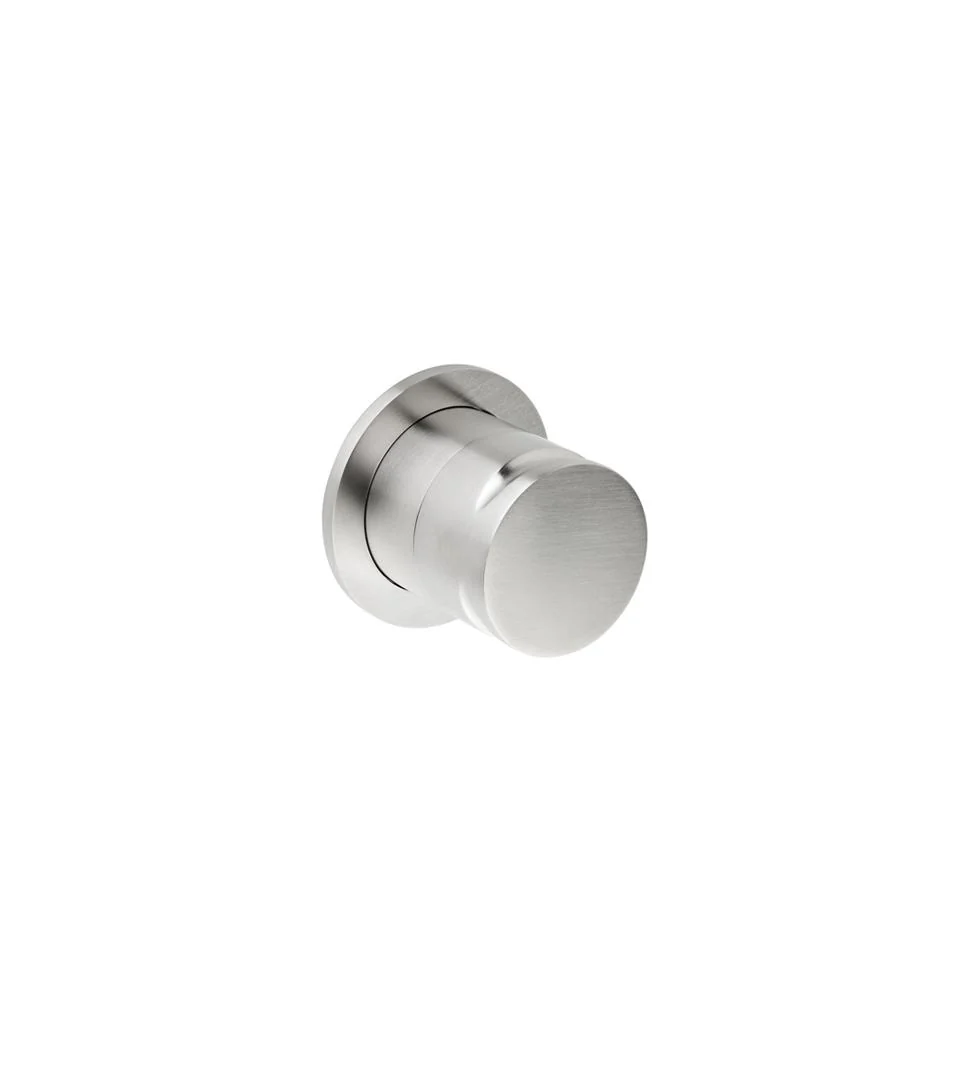 ProductHalf inch wall shut-off valveHalf inch connections sized for a single concealed mixer or cistern; fitted in the access zone of a duct, riser or duct panel so the isolation point stays reachable.View in catalogue →
 ProductHalf inch wall water inlet with integrated shower cradleRuns off a flexible half inch connection between the concealed supply and the fitting proud of the wall, sealing to the tile or plaster with a supplied gasket; AISI 316L.View in catalogue →
How to judge a supplier's paperwork, in general
Any fitting that carries water is covered by rules that assume somebody can show their working. As a buyer, the useful skill is not memorising every rule but judging whether a supplier's documentation actually answers the question you are asking. The same reasoning works for any manufacturer, any fitting and any market, so it is worth stating on its own terms.
Three habits do most of the work. First, match each document to a specific item: read which model, size, finish and connection the paperwork names, and set it against the exact part on your schedule. Paperwork written for "a range" tells you nothing about the single unit your installer is holding. Second, ask what a document is and is not. A statement covering a design, a standard or a routine of testing is not the same as one covering a particular finished item, and treating the two as interchangeable is the most common way a buyer ends up holding paperwork that does not reach the part in front of them. Third, keep the record. Whatever a supplier sends belongs in the project file next to the drawings, so that whoever maintains the building later can trace a decision back to its source.
None of this depends on any one scheme, registry or badge. It works the same whether a supplier's evidence arrives as a certificate, a test report, a declaration or a line in a catalogue, because the questions stay constant: does this document name my exact item, and what does it actually say. If the answer to either is unclear, that is a question for the supplier, not something to be inferred from the fact that a document exists.
What a specifier should ask a supplier
Before releasing a technical accessories package, ask these questions and record the answers in the schedule:
- Connection sizes. What bore and thread does each valve take (half inch, three quarter inch, M10x1), and does it match the supply pipework on the drawing?
- Body material. What grade of stainless steel is the body, and is it suited to the exposure? The AISI 316L material page covers the grade described for damp chases and wet rooms, while AISI 304 is described for everyday bathroom condensation. Confirm the grade on the exact product.
- Access. Where does the valve sit, and can an installer reach it through a defined access panel without removing tile or sanitaryware?
- Cover and finish. Does the cover plate or rosette span the prepared opening, and does the finish match the tapware in the same room? The brushed stainless steel finish page and the brushed and black PVD pages show how the same body is offered across finishes.
- Published data. Which flow, pressure and dimensional figures are published, and what must be confirmed against the installation? Where the catalogue publishes none, treat them as unconfirmed and verify before ordering.
Record the product reference, finish and position of every valve and inlet on the duct and wall drawings, and photograph the open wall before it closes. Our guide to fixing bathroom accessories and wall backing covers how to document the build-up behind the tile, which applies equally to the duct that houses a valve.
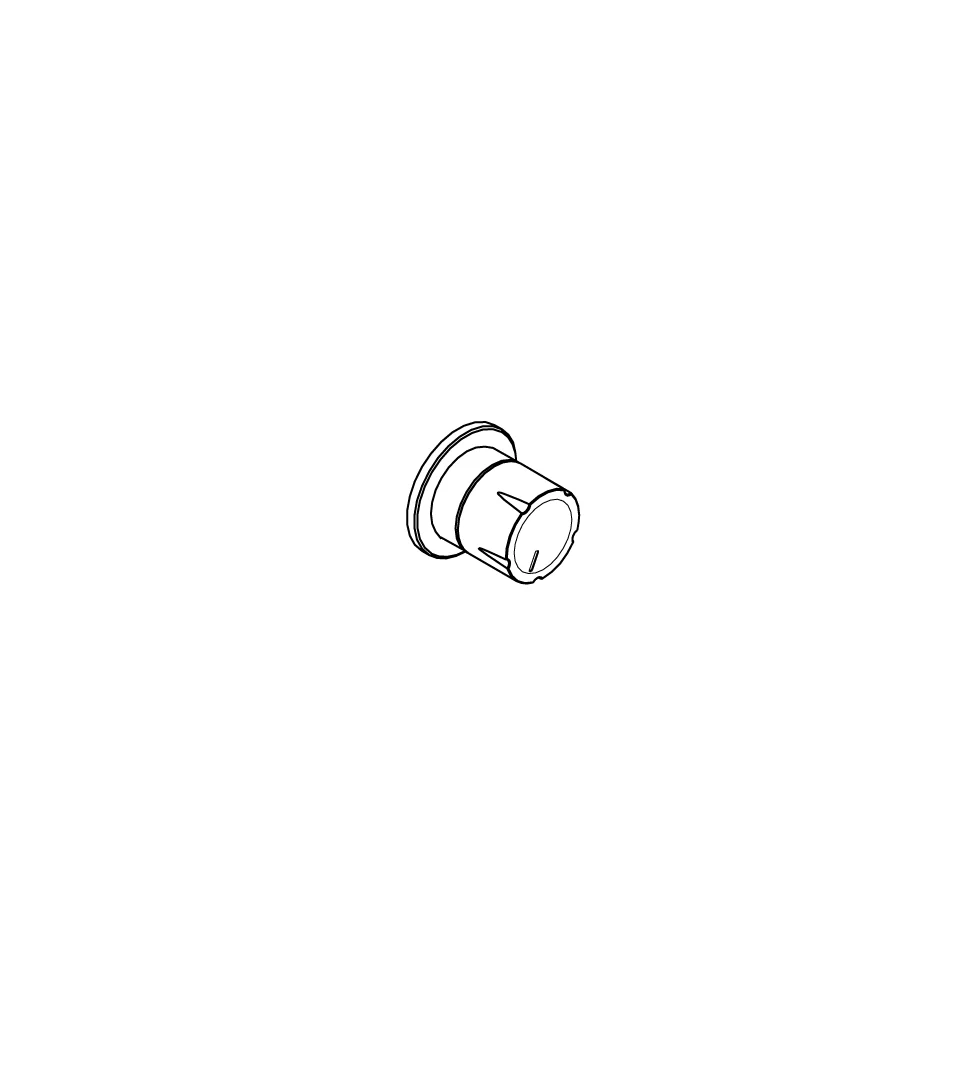 ProductConcealed wall mounted half inch shut-off valveSet upstream of a concealed shower or basin run behind a fixed access panel, so a zone can be isolated for cartridge servicing without breaking out the wall.View in catalogue →
Frequently asked questions
What is the difference between a stop valve and a water inlet?
A stop valve controls flow: it opens and closes a branch of the supply to isolate a fixture. A water inlet completes the route through the wall: it carries supply from inside the wall to the fitting above the tile and covers the pipe stub-out. One is a control, the other is a connection and a cover.
Is a stop valve the same as a stopcock?
Yes. "Stopcock", "stop valve" and "isolating valve" are names for the same idea: a valve fitted to close off a supply. A "service valve" or "isolator" on a duct serves the same purpose.
Where should a stop valve go?
Inside a service duct, riser or behind a fixed access panel, at a reachable height but out of the direct spray, on the branch it controls. It is installed at first fix, before the wall is tiled, so the branch and the access can be planned together.
Do I need a stop valve for every fixture?
Not necessarily every fixture, but every branch you might need to isolate without shutting off the rest of the supply. The practical rule is that if closing one fixture should not stop the others, that branch needs its own isolation point. On communal or commercial installations this becomes a maintenance requirement rather than a convenience.
Is a water inlet just a cover plate?
It is a cover and a connection. The plate covers where the pipe emerges, but the inlet is threaded and carries water through the wall to the tap or hand shower, so its size and thread must match the fitting above it.
Does a stop valve need to match the finish of the tap?
For appearance, yes, which is why concealed valves and inlets are offered in the same finish range as the taps. For function, the finish does not matter; the connection size and body material do.
Can I add a stop valve after the wall is tiled?
Usually not without opening the wall. That is the reason it is a first-fix decision: once the tile and duct finish are on, an isolation point that was not planned in is very hard to add.
Specify these fittings with the room, not after it
A stop valve and a water inlet are small parts with an outsized effect on whether a bathroom can be maintained. A stop valve decides if one fixture can be isolated without shutting down everything else; a water inlet decides how cleanly the supply meets the finished wall and how reliably it seals. Both are fitted before the wall closes, so the decisions that matter are made at first fix, alongside the tapware and the finish.
For a hotel, rental block or multi-room refurbishment, send FONTEA your room schedule, your valve and inlet quantities and your finish requirements through the contact page. Browse the technical accessories and the wider bathroom accessories catalogue once the isolation and connection brief is clear, or start from the Fontea range and the Tevere collection where you want the valve and the tapware it serves to match.
Specify it from the catalogue
Every fitting mentioned here is stocked and specified in the FONTEA trade catalogue: full technical data, finishes and wholesale tiers.
Related reading
-
 Specification
Stainless Steel Bathroom Fittings for Coastal and Seafront Developments: A Salt-Air Corrosion Guide
What actually governs whether bathroom fittings survive a seafront elevation: the chloride gradient, finish, joint design, drainage and ventilation, how corrosion appears, and what to schedule.
-
 Materials
Is Marine-Grade 316L Stainless Steel Worth It for a UK Bathroom?
Sometimes. 316L earns its premium where chlorides genuinely reach the fittings, and wastes money on a standard inland bathroom. Here is how to tell which situation you are in before you pay.
-
 Tap Systems
Will European taps work on UK low-pressure and combi boiler systems?
European-style taps are often built to a higher pressure than a UK gravity-fed or combi system delivers. Here is what actually determines whether one will run properly, and how to check before you specify.