 ONTEA
ONTEA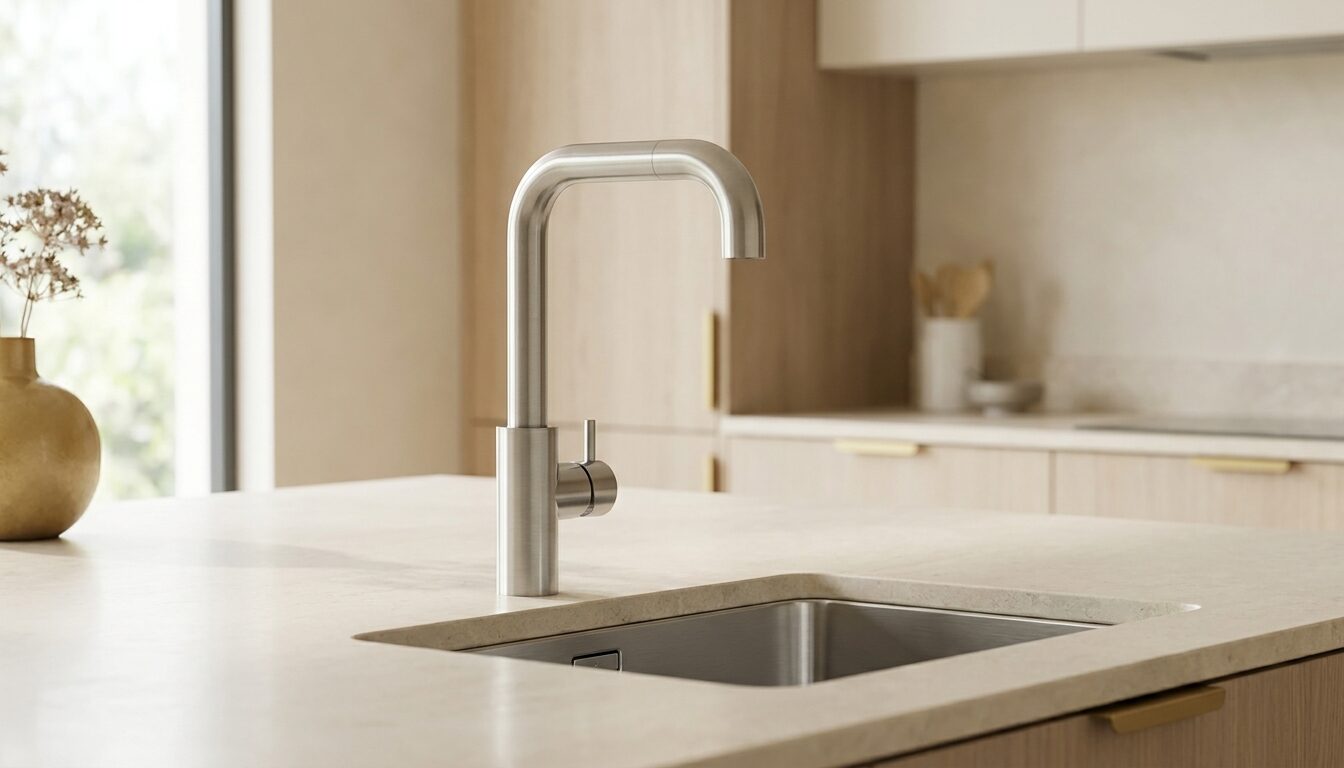
The answer is conditional rather than yes or no: a European-style tap will usually work on a UK system, but it will only deliver its advertised performance if the pressure and flow the manufacturer rated it for are actually available at that outlet. Whether they are depends on your water system, its position on the mains and the pipework feeding it, not on where the tap was made.
The two things that decide it
Every question about a tap and a water system comes down to two numbers. The first is the pressure available at the tap when the tap is open, measured as dynamic pressure because that is what the tap actually feels. The second is the flow rate, measured in litres per minute, which is what comes out of the spout.
A tap is not rated for a single number of litres per minute at every pressure. It has a flow curve: at low pressure it delivers a reduced flow, and as pressure rises the flow rises until the tap's own limiter or aerator caps it. This is why the same tap can feel anaemic on a gravity-fed cold feed at the top of a house and perfectly strong on a combi at the bottom of the same house, with no change to the tap itself.
The practical consequence is that "will it work" means "does the system deliver enough dynamic pressure for this tap to reach a usable flow at this outlet". That is a measurement you can take before the tap goes on the order.
What a UK system actually delivers
UK installations are built around two very different pressure regimes, and a tap bought for one of them can disappoint on the other.
Gravity-fed, low pressure
In a gravity-fed system a cold water storage cistern in the roof or loft feeds the taps below it. The pressure at any tap is produced purely by the height of the water above it, and it falls as you move down the building and as pipe runs and elbows add resistance. At the tap itself this is low pressure: modest dynamic pressure, and a flow rate that varies with how much height is available.
A cold feed from a loft tank is the classic case where a tap that feels fine in a showroom disappoints. There is no pump and no mains pressure behind it, only the head of water in the tank.
Combi boiler
A combi boiler takes cold water from the mains and heats it on demand, so it delivers hot water at mains pressure. This is normally a much higher and more stable pressure than a gravity-fed cold feed. However the hot side of a combi is the constraint: the boiler's flow rate limits how fast it can deliver heated water, and when hot is drawn at a high rate it can temporarily fall back toward the cold feed pressure, which on a combi shared with other hot outlets can dip noticeably.
So even on a combi, hot water at a distant outlet can see lower dynamic pressure than the boiler's nominal working pressure suggests. That is a flow and pressure limitation of the boiler, not a fault in the tap.
The UK's regulator sets a floor for what a water company must deliver, which frames the low end of the range. Ofwat's Guaranteed Standards Scheme requires a company to maintain a minimum pressure in the communication pipe of seven metres static head (0.7 bar), and a payment is due automatically if pressure falls below that on two occasions each lasting more than an hour within 28 days. That is the guarantee at the boundary of the property, not a guarantee of a strong flow at every tap inside.
What a tap actually needs
The regulation sets the background a fitting sits inside, the performance requirement is what decides whether a particular tap runs properly, and a supplier's documentation is what tells you which of the two a given product has addressed.
The performance question: flow and pressure a tap needs
There is no single UK regulation that sets a required litres-per-minute figure for a kitchen or bathroom tap, because a tap's usable flow depends on the system it is fitted to. The requirement comes from the manufacturer, published as a minimum dynamic pressure, and the answer you get in litres per minute depends on where the supply sits in that range.
For a sense of what a modern fitting is designed around, the Energy Saving Trust's Energy Technology List sets a shower valve and shower head requirement of a maximum available flow rate of 9 l/min, and then tests pressure independence: the flow rate at a lower pressure of 1.5 bar must be at least 60 per cent of the flow at the reference pressure of 3 bar. That single requirement is the whole subject of this article in one line. It says a shower fitting should not collapse when the pressure drops, and it sets the ratio a buyer can test a product against.
Two specific figures are worth holding on to:
- 0.06 litres per second, which is 3.6 litres per minute, is the threshold that appears in the Water Supply (Water Fittings) Regulations. Schedule 2 says that where a wash basin or washing trough has a waste outlet incapable of accepting a plug, the requirement to provide a plug is waived only if water is delivered "at a rate not exceeding 0.06 litres per second exclusively from a fitting designed or adapted for that purpose". It is a narrow case, but it is the clearest indication in the regulations of the order of flow a fitting is expected to deliver.
- 9 l/min is the shower flow the ETL uses as its maximum available flow for valves and heads. A basin tap is a different job from a shower head, but the figure shows the scale a UK buyer is working to.
A tap rated for, say, 1 bar minimum dynamic pressure and published to deliver its flow at that pressure will run below its published figure on a weak gravity-fed cold feed, and can run poorly. That is the answer to "will it work": it depends on the system and the tap, and the two numbers to compare are the tap's published minimum dynamic pressure and the pressure actually available at that outlet.
The regulation question: water fittings
Whatever the flow, a tap connected to a water undertaker's supply is a "water fitting" under the Water Supply (Water Fittings) Regulations 1999. Regulation 4 is the one that governs the tap itself. It requires every water fitting to be "of an appropriate quality and standard" and "suitable for the circumstances in which it is used", to comply with Schedule 2, and to be installed "in a workmanlike manner".
That is the general frame, and it is worth knowing because it explains why a tap carries a published minimum pressure at all. The requirements come from the regulation, and the figures that follow come from the manufacturer.
Why "rated for a higher pressure" matters
The phrase "rated for a higher pressure than your system delivers" usually sounds like a fault, but it is often just a mismatch of test conditions. A tap is tested and its flow published at a defined pressure. If your system delivers less, the tap still runs, but at a lower flow than the datasheet figure, because it is on a lower point of its flow curve.
What this looks like in practice:
- Reduced flow. The tap works but feels slow, and takes longer to fill a basin or a kettle.
- Sprays and jets that weaken. A tap with two spray modes, or a pull-out spray, delivers less force than expected at low pressure.
- Thermostatic valves that struggle. A thermostatic mixer holds temperature by balancing hot and cold. Below its minimum pressure it cannot balance properly, which is exactly why UK buyers see the pressure requirement on the valve stated clearly.
The right reading is not "this tap is faulty" but "this tap's published figures were measured at a pressure your system does not reach, so discount the figure accordingly".
The standards split that explains European versus UK fittings
This is where the genuinely European part of the story sits, and it is a real technical difference rather than a matter of taste.
European tapware is commonly built to standards written for a higher pressure supply, and UK low-pressure installations are governed by fittings built for a different regime. In the UK the two relevant thermostatic standards are split by pressure class. BSI's record for BS EN 1111 describes it as "Sanitary tapware. Thermostatic mixing valves (PN 10). General technical specification": it is a PN 10 standard, a pressure class that assumes a supply well above low pressure. The companion low-pressure standard is BS EN 1287, "Sanitary tapware. Low pressure thermostatic mixing valves", and BSI's record shows it as a distinct standard with its own scope.
The difference in one sentence: a PN 10 valve is designed to work within a mains-pressure supply, and a low-pressure valve is designed to work at the reduced pressure a gravity-fed or combi-fed system actually delivers. They are both correct products for their own system. The failure mode is only when one is specified for the other.
The Energy Technology List makes the split explicit by requiring shower valves to comply with both EN 1111 (PN 10) and EN 1287 (low pressure), "as applicable", which is a concise statement of the same point from a UK scheme: the correct standard depends on the system.
What a buyer or installer should check
This is the practical list. Each item is a number or a document you can actually get hold of before ordering.
- The tap's minimum dynamic pressure. Take it from the datasheet and write it into the specification. If the site cannot meet it, either change the tap or change the system; do not hope.
- The pressure available at that specific outlet. Measure dynamic pressure with a gauge on the actual outlet, ideally with the boiler running and with other hot outlets open, because that is the realistic low point. A pressure reading at the boundary of the property tells you very little about a first-floor basin.
- The flow rate the tap publishes, and at what pressure. A figure quoted without its test pressure is not a specification. Ask for the flow at the minimum pressure as well as at higher pressures.
- Whether the tap has a flow limiter or aerator. A tap with an integrated limiter will cap its flow on a high-pressure mains supply, which is a benefit on a combi, and a limiter combined with a weak supply can leave it feeling underpowered. Know which you have.
- The standard the valve is built to. For a thermostatic shower valve, check whether it is a PN 10 (EN 1111) fitting, a low-pressure (EN 1287) fitting, or qualified for both. That single question resolves most of the "will it work" debate.
- For hot outlets on a combi, the boiler's flow rate. A combi that cannot deliver its rated hot flow rate will not let a tap reach its published figure, no matter which tap it is fitted to.
The Fontea range covers both ends of this range, and the two products below make the point from opposite sides. The concealed wall mixer, high flow, is a deliberately high-flow valve for filling a bath quickly or feeding several outlets, and its own installation note is the point of this article: because it runs at a higher flow, confirm the supply and pipework are sized to feed it before the wall is closed. Its catalogue entry records that no flow figure is published for it, so its performance is confirmed against the installation rather than assumed. That is the right instinct on any high-flow valve.
 ProductConcealed Wall Mixer, High Flow, in 316L Stainless SteelA high flow concealed wall mixer for filling a bath quickly or feeding several outlets, in five finishes. Because it runs at a higher flow, confirm the supply and pipework are sized to feed it before the wall is closed. No flow figure is published, so confirm the performance against the installation.View in catalogue →
At the other end, a thermostatic shower valve is where the standard matters most, because a thermostatic mixer holds temperature by balancing flow, and it cannot balance properly below its minimum pressure. Half inch connections suit the concealed pipework commonly run behind a shower wall, though the pipe positions have to be fixed before tiling.
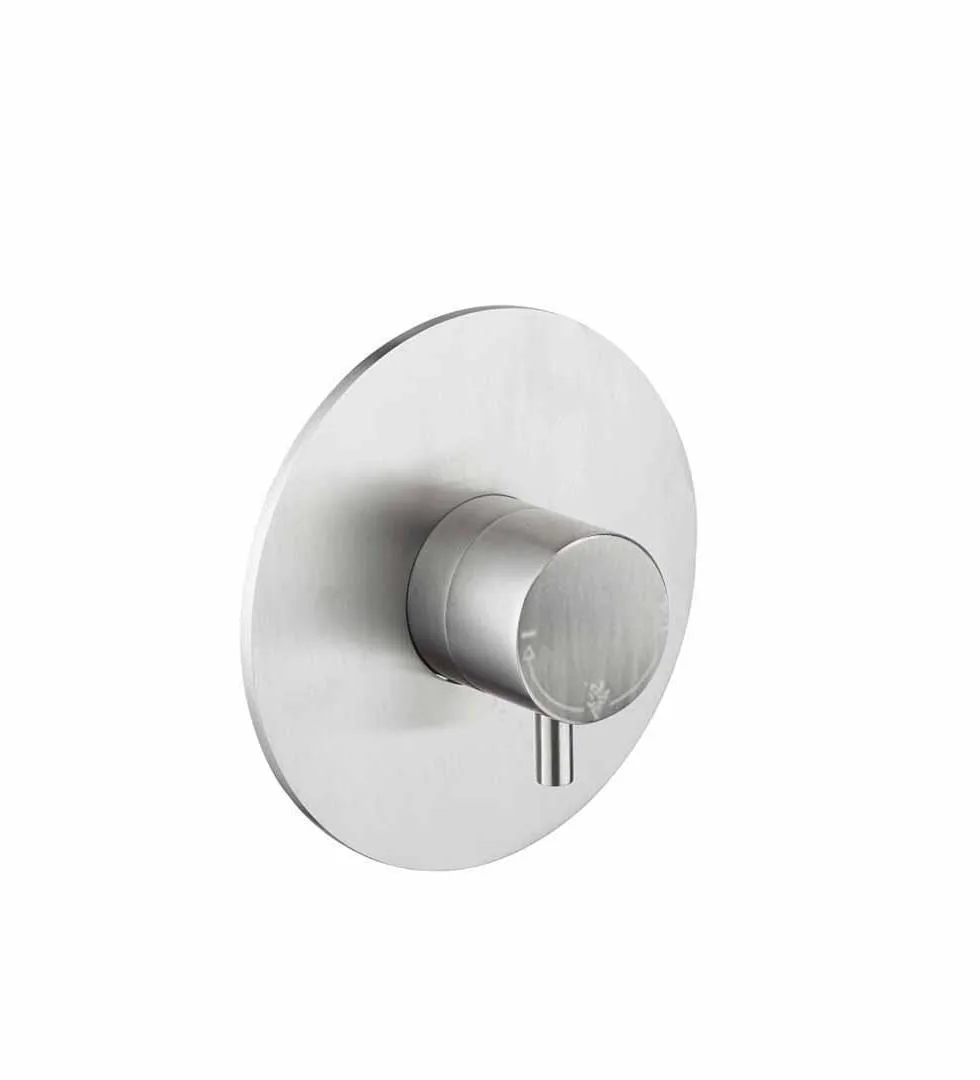 ProductWall Mounted Thermostatic Shower Mixer, Half InchAn exposed wall mounted body, reachable for servicing without breaking the tiles. Half inch connections suit the concealed pipework commonly run behind a shower wall. Order it in brushed or polished stainless steel, deep grey, gold PVD or Tinta.View in catalogue →
For basin and kitchen outlets the same questions apply at a smaller scale, and the tap chosen should be matched to the pressure available rather than to the look of the room. The basin mixers and kitchen mixers in the catalogue cover the range of bodies and spout types a UK system has to work with.
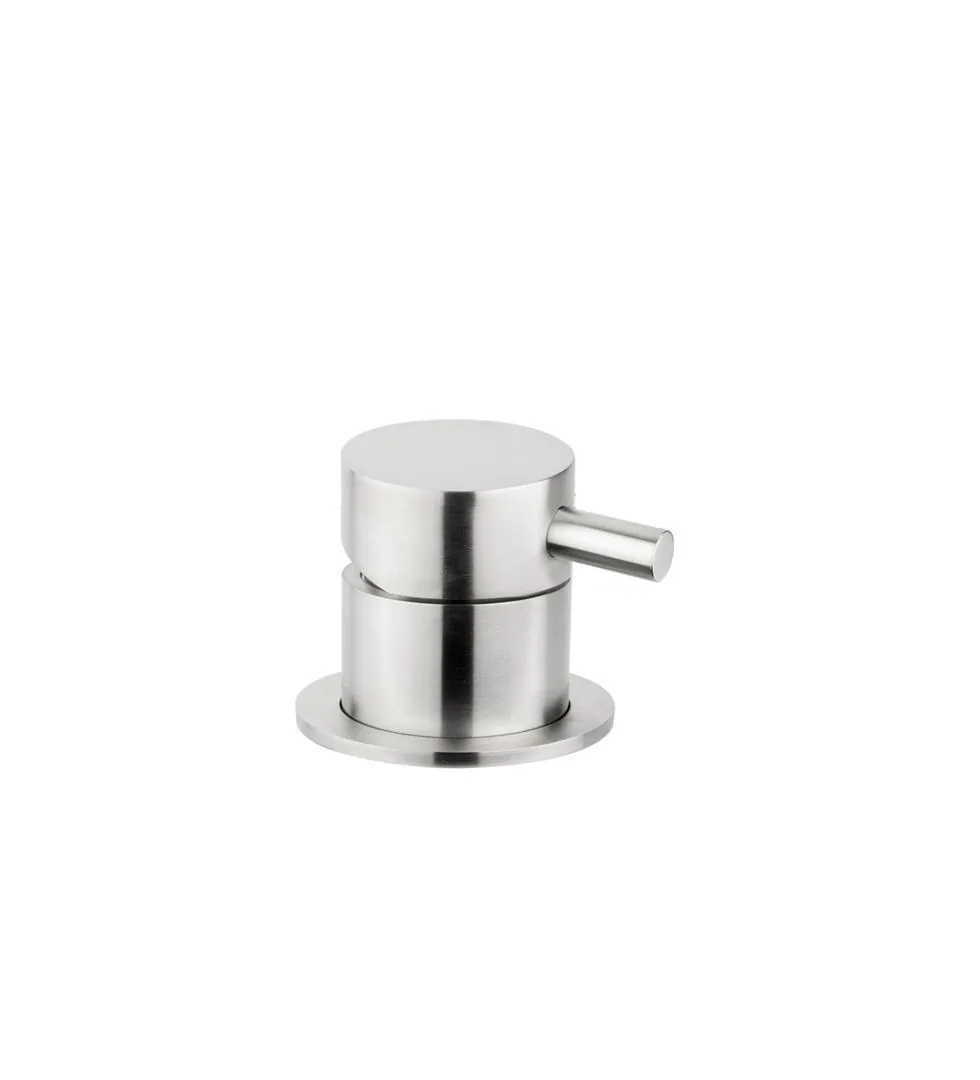 ProductDeck Mounted Basin Mixer Without Drain, 316LA single deck hole, supplied without a drain so the waste suits the basin, in four finishes for fitted worktops. Check the outlet's available pressure against the tap's published minimum before specifying on a low pressure feed.View in catalogue →
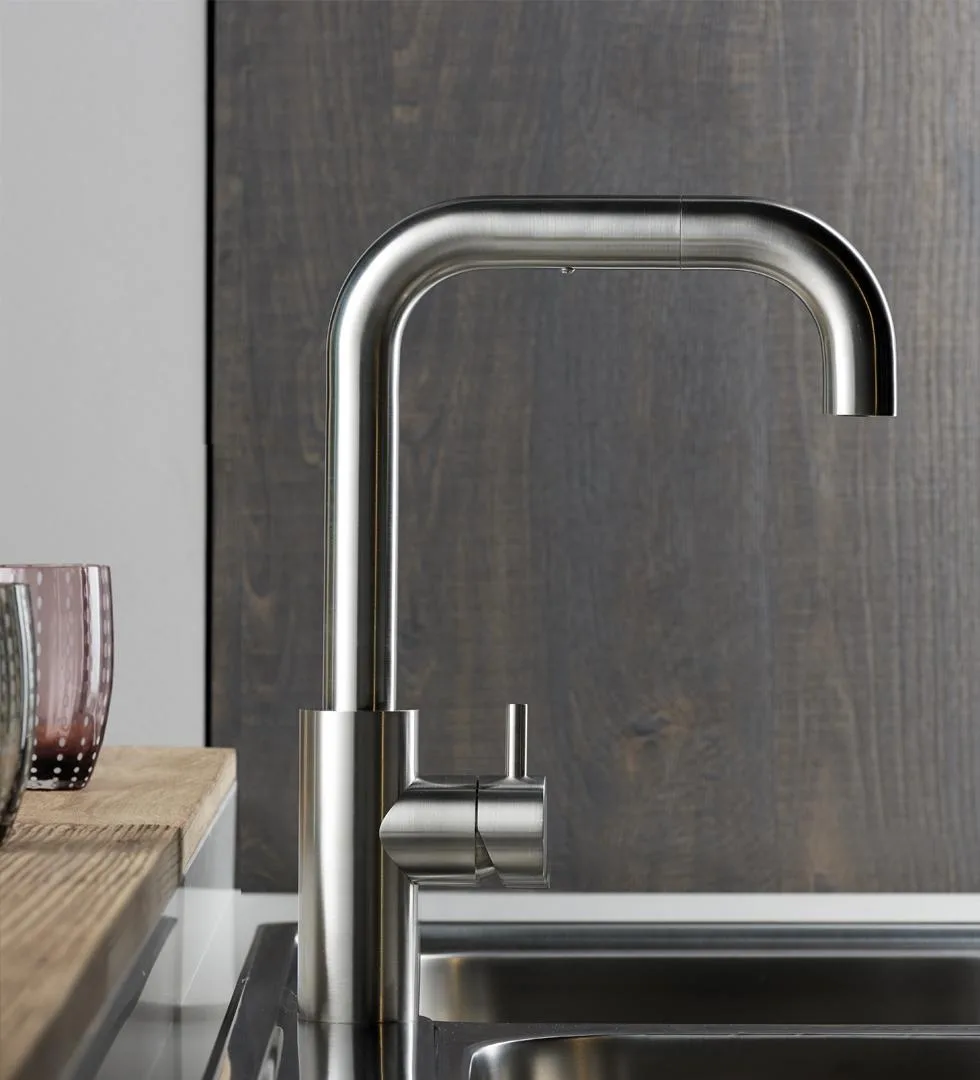 ProductSingle Lever Pull Out Kitchen Sink Mixer, 316LA pull out and swivelling spout that reaches past the sink rim and round the bowl, in five finishes. Mounts on the worktop through a single hole behind the bowl with the fixings concealed beneath. Pair it with a bowl and waste that suit the spray pattern.View in catalogue →
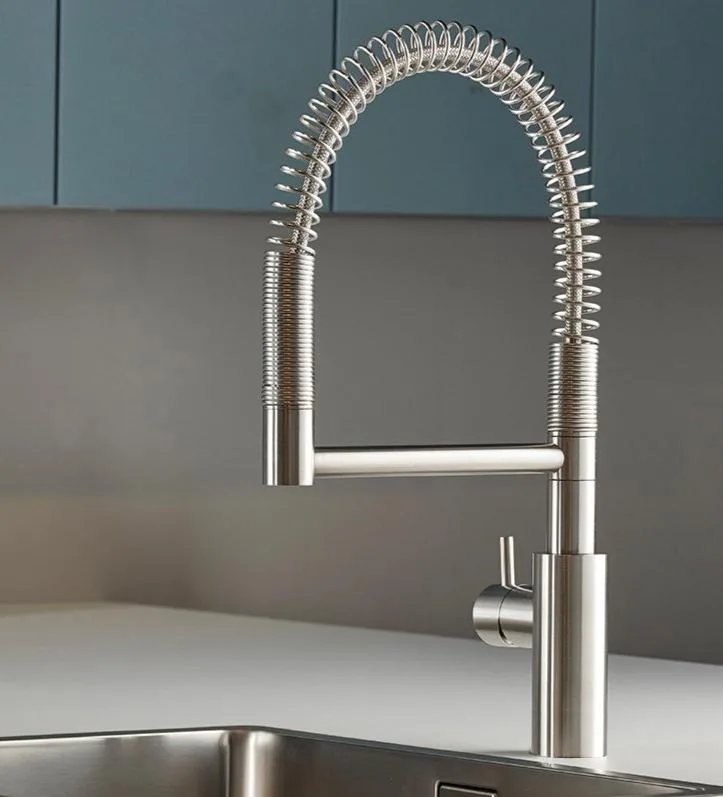 ProductSingle Lever Sink Mixer With Swivel Spout, 360 DegreeOne hole, one fitting, with a spout that swivels through 360 degrees to cover both bowls and the drainer. Mounts over the existing sink aperture and runs hot and cold up from below, keeping the isolation valves reachable.View in catalogue →
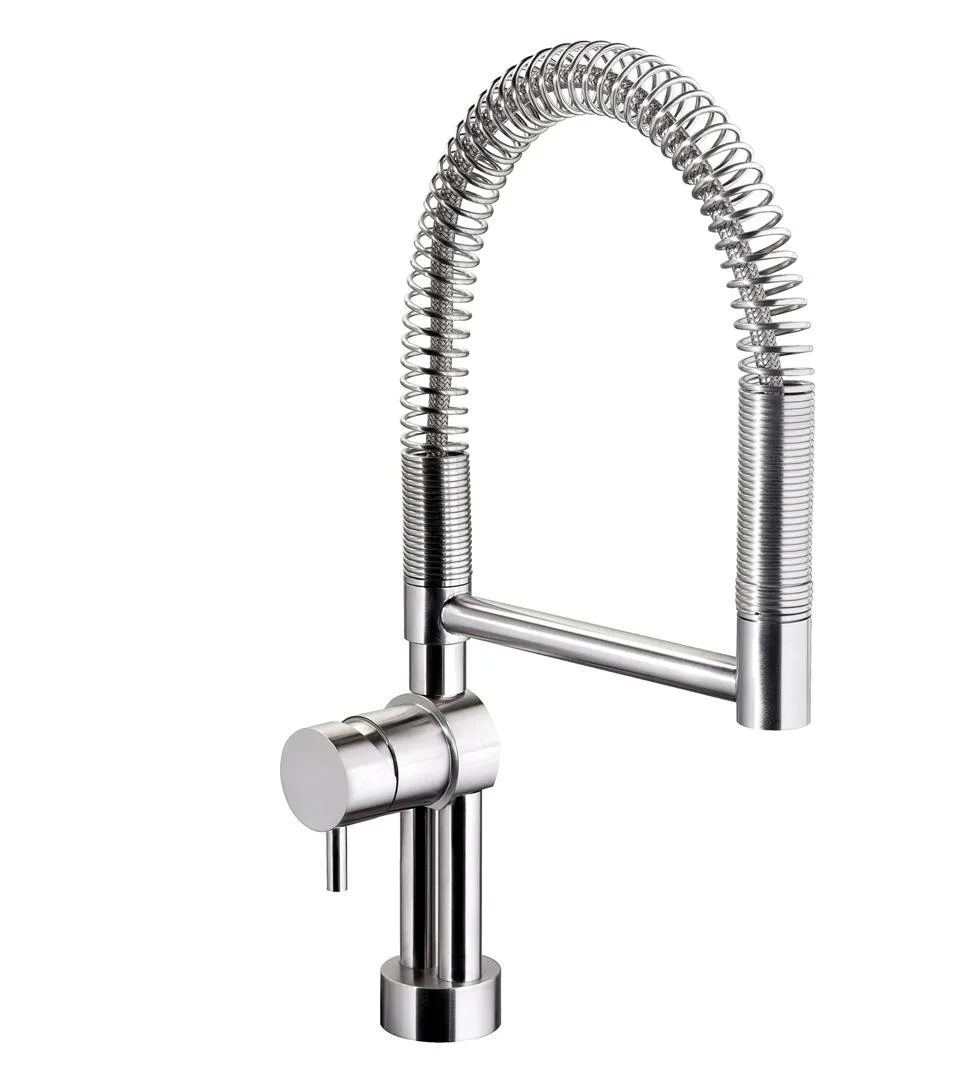 ProductSingle Lever Sink Mixer For Kitchen WorktopsA single lever control for flow and temperature, two jets on one handle, and a 360 degree swivel spout serving both bowls and a drainer. Brushed or polished stainless steel, selected to match the sink.View in catalogue →
How to evaluate a supplier's documentation
A tap's paperwork matters as much as its datasheet, and the useful skill is knowing what a piece of documentation actually tells you before you rely on it.
Start with what the document is for. A test report speaks for the samples it covered, on the date they were tested, against the standard named on it. A declaration speaks for the product it describes. Neither one travels to a different model, a different size or a different finish, because those are different physical articles with different surfaces and different parts. A document that covers "a 316L basin mixer" is telling you about a family of products, not about the one in your hand.
Three habits make this quick. First, match the identifying details on the document against the ones on the product: the model, the size and the finish. Second, check the date, since a document has a shelf life and a scheme can revise what it accepts. Third, and most often skipped, ask what the document does not cover. Test reports carry exclusions in small print, and an exclusion is the part that will matter on a job with a warranty attached to it.
None of this is exotic. It is the same reasoning you would apply to any supplier's paperwork, in any category of product, and it is worth more than a logo on a brochure.
One thing this article deliberately does not do is tell you that anything in a particular range holds any particular piece of documentation. That is a question to put to a supplier about a specific model, and the answer belongs to them rather than to a general guide.
Frequently asked questions
Do European taps work on UK combi boilers?
Usually yes, because a combi delivers hot water at mains pressure rather than the low pressure of a gravity-fed cold feed. Whether it reaches its published flow is the question, and it depends on the tap's published minimum pressure and on the combi's own hot flow rate at that outlet.
Do European taps work on a low pressure gravity-fed system?
That is the harder case, because a gravity-fed cold feed delivers lower dynamic pressure than a European high-pressure fitting is usually rated for. A tap will still run, but it will deliver a reduced flow. A low-pressure standard fitting such as a BS EN 1287 thermostatic valve is designed for this regime, whereas a PN 10 valve is not.
What is the minimum water pressure for a tap?
There is no single UK figure for a kitchen or bathroom tap. The requirement is the manufacturer's published minimum dynamic pressure, which varies by product, and you compare it with the pressure actually available at that outlet. A thermostatic valve will state its minimum more strictly than a simple lever mixer because it has to balance flow to hold temperature.
Will a tap rated for a higher pressure than my system damage the system?
No. A tap rated for a higher pressure than the system delivers still works. It simply sits lower on its flow curve and delivers less water per minute. The mismatch shows up as lower flow and a weaker spray, not as damage.
What is the pressure difference between UK low pressure and a combi boiler?
A gravity-fed system produces pressure from the height of a cold water storage tank above the tap, so it is low and varies with height and pipework. A combi boiler delivers hot water at mains pressure, which is higher and steadier, but its hot output is limited by the boiler's flow rate and can dip under heavy demand.
Does a flow limiter help on a low pressure system?
A flow limiter caps the maximum flow, which is useful on a high-pressure mains supply to reduce waste. On a weak supply it can make a tap feel underpowered, because the limiter is reached sooner and there is little pressure to drive more flow. It does not raise pressure.
Specify against the system, not the packaging
Whether a European-style tap works on a UK system is decided by three things: the dynamic pressure available at that specific outlet, the minimum dynamic pressure the tap is published to need, and the flow rate the manufacturer claims at that pressure. None of them is on the front of the box, and none of them is settled by where a tap was made.
For a UK buyer, the sequence is short. Get the tap's minimum dynamic pressure and its flow-at-pressure curve from the datasheet, measure the real dynamic pressure at the outlet on the actual system, and compare the two. If the outlet cannot meet the minimum, choose a low-pressure-rated fitting or a different system rather than discovering the problem behind a tiled wall.
FONTEA's stainless steel kitchen mixers and taps are specified to take the system into account. Send us your system type, the outlets you are fitting and your pressure and flow requirements through the contact page, or start from the Fontea range and our guide to kitchen sink mixer materials to match the tap to the water it will actually run on.
Specify it from the catalogue
Every fitting mentioned here is stocked and specified in the FONTEA trade catalogue: full technical data, finishes and wholesale tiers.
Related reading
-
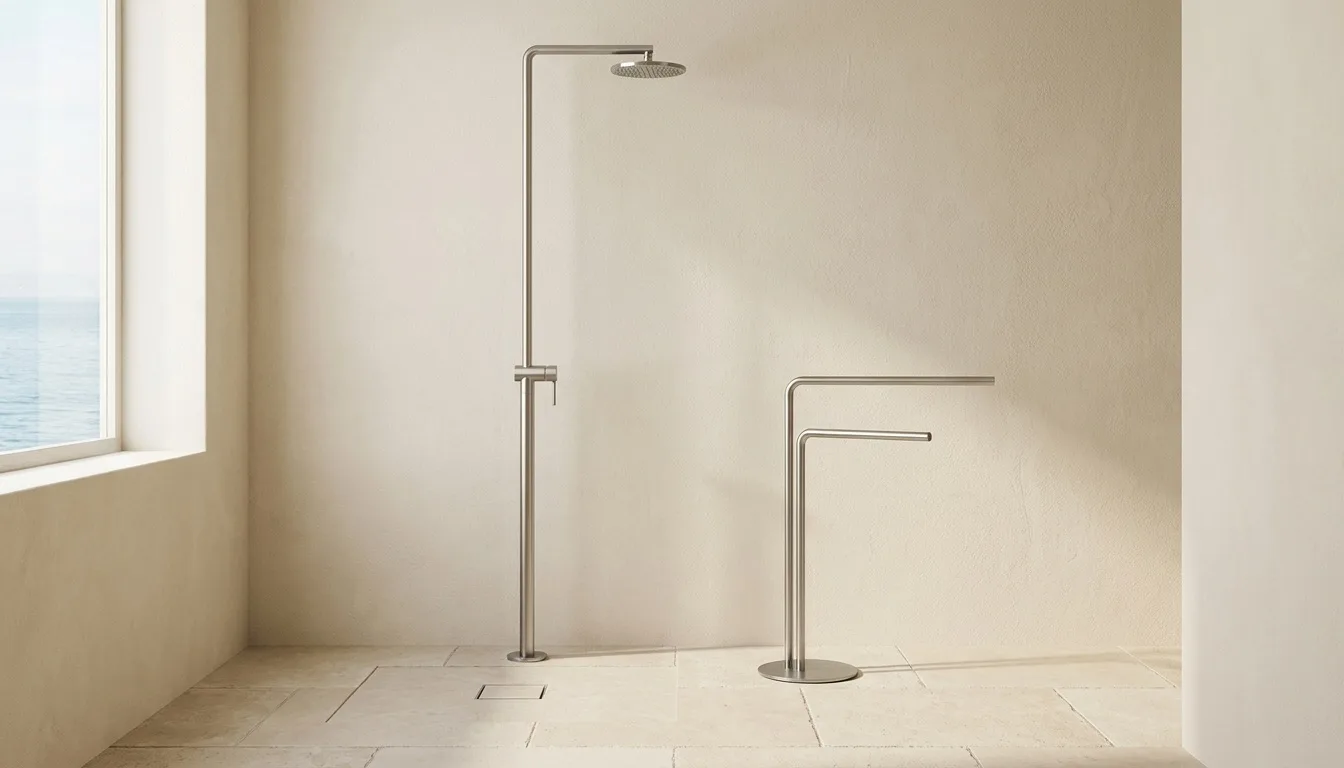 Specification
Stainless Steel Bathroom Fittings for Coastal and Seafront Developments: A Salt-Air Corrosion Guide
What actually governs whether bathroom fittings survive a seafront elevation: the chloride gradient, finish, joint design, drainage and ventilation, how corrosion appears, and what to schedule.
-
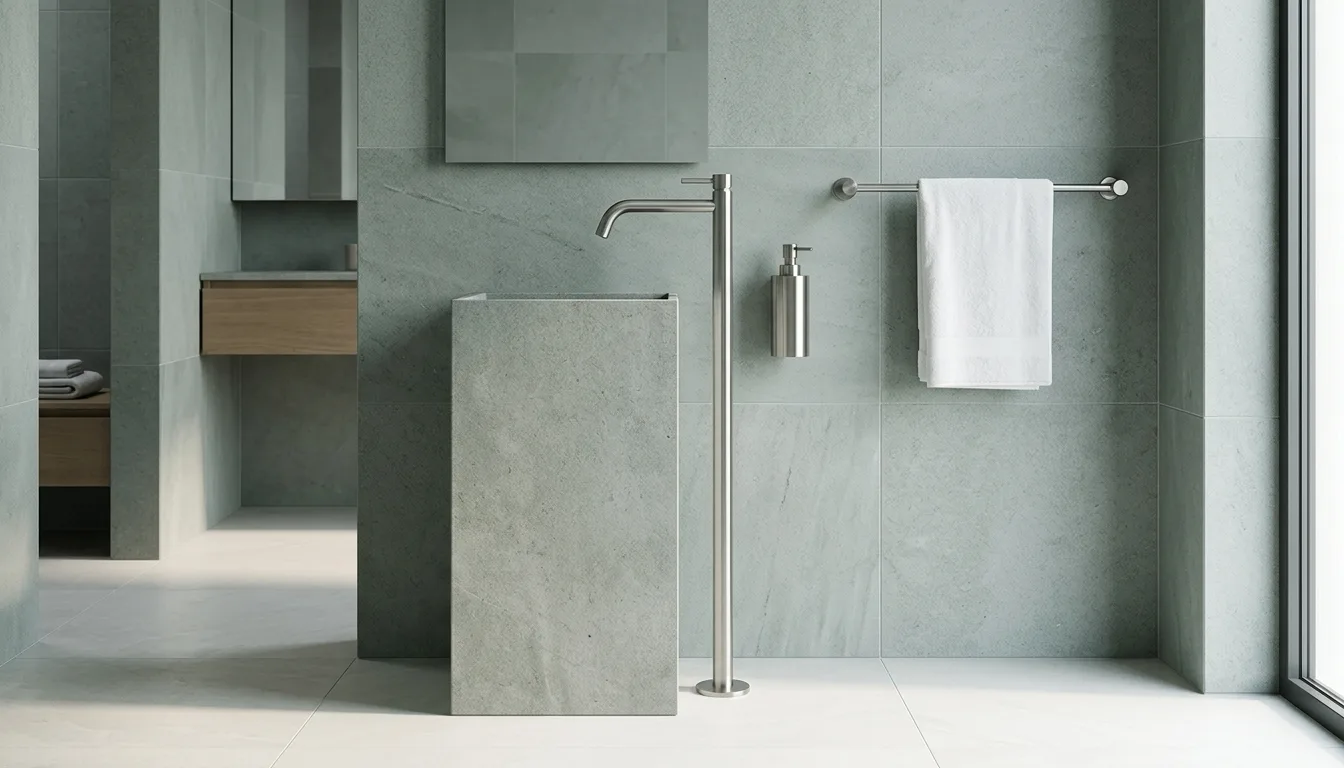 Materials
Is Marine-Grade 316L Stainless Steel Worth It for a UK Bathroom?
Sometimes. 316L earns its premium where chlorides genuinely reach the fittings, and wastes money on a standard inland bathroom. Here is how to tell which situation you are in before you pay.
-
 Materials
Kitchen Sink Mixer Materials: Why Food-Grade AISI 304 Rather Than Brass
A kitchen mixer is handled all day and splashed with fat, detergent and food acids. Here is why solid AISI 304 stainless is the right default there, where brass is a fair choice, and when to step up to 316L.