 ONTEA
ONTEA
316L stainless steel is a strong specification choice for bathroom accessories in coastal and seafront properties because its molybdenum content improves resistance to chloride-driven pitting compared with 304 stainless steel. It is not corrosion-proof. Salt deposits, standing moisture, unsuitable cleaners, crevices and incompatible fixings can still damage stainless steel.
For coastal hotels, apartment developments, holiday lets, spas and high-end homes, specify the complete accessory assembly rather than only its visible surface. Confirm the material grade, brackets, concealed fixings, finish, cleaning method and replacement reference before approval.
Browse the FONTEA journal and catalogue when building a project schedule.
Key Takeaways
- 316L is a sensible starting point for coastal bathroom accessories because molybdenum improves resistance to chloride-driven pitting.
- Specify the complete assembly, including brackets, screws, concealed parts, finish and fixing substrate.
- 316L is not corrosion-proof. Fresh-water rinsing, mild detergent, drying and suitable design still matter.
316L stainless steel bathroom accessories at a glance
| Specification question | Recommended direction |
|---|---|
| Material | Solid AISI 316L stainless steel |
| Environment | Coastal, seafront and marine-influenced interiors |
| Finish | Brushed, satin, electropolished or suitable PVD |
| Fixings | Match accessory material where possible |
| Design | Minimise crevices and water traps |
| Maintenance | Fresh-water rinse, mild detergent and a dry cloth |
| Main limitation | 316L resists corrosion but does not eliminate risk |
316L should be specified as a complete accessory assembly, not only as the visible front surface. A 316L body can still be paired with less suitable screws, brackets or concealed components. Those parts may be exposed to condensation, wet towels, cleaning chemicals or salt deposits.
A good schedule identifies:
- Material grade for visible and concealed components
- Finish name and sample reference
- Fixing method and substrate
- Cleaning instructions
- Product SKU and catalogue link
- Replacement or spare-part reference
Why coastal bathrooms create a corrosion risk
How salt air affects bathroom fittings
Salt-laden air can carry chloride deposits onto nearby surfaces. The British Stainless Steel Association describes marine sites as places where wind-borne sea spray or mist may be present, and notes that chlorides can concentrate as surface moisture evaporates. Open windows, balconies, promenades and direct sea exposure can increase the amount of salt reaching a bathroom.
The British Stainless Steel Association explains that 316 is more resistant than 304 in marine environments, but remains vulnerable to localised pitting and crevice corrosion. That distinction matters for coastal interiors. A seafront bathroom is not the same as equipment immersed in seawater, but it can still experience chloride deposits and repeated wetting.
Why non-plumbed accessories still need consideration
Accessories are not connected to the water supply, but they remain part of the room's exposure conditions. Towel rails, robe hooks, toilet-roll holders, soap dispensers, shelves and technical accessories are handled frequently and may remain wet after use.
Wet towels can hold moisture against a rail. Soap residue can collect around a dispenser. Concealed wall fixings can trap dampness. Cleaning teams may also use products that are unsuitable for stainless steel. These are separate risk points from those associated with taps or shower fittings.
For a demanding coastal scheme, assess the whole bathroom, including:
- Distance from shower spray and open windows
- Ventilation and drying conditions
- Salt exposure at the building elevation
- Cleaning chemicals used by housekeeping teams
- Wall construction and fixing access
- Contact between dissimilar metals
What does 316L add over 304 stainless steel?
The role of molybdenum
316L contains molybdenum, an alloying element that improves resistance to chloride-induced pitting. Chlorides are present in sea salt and can attack the passive film that protects stainless steel. The added molybdenum does not make 316L immune to corrosion, but it gives the grade a stronger margin in chloride-influenced conditions. The British Stainless Steel Association explains that molybdenum reduces the effectiveness of chloride ions in locally breaking down stainless steel's passive layer.
Use this comparison when setting a project brief:
| Grade | Where it may fit | Caveat |
|---|---|---|
| 304 | Sheltered internal bathrooms with limited chloride exposure and suitable maintenance | Do not treat it as a direct-seawater specification |
| 316L | Coastal and seafront interiors where chloride exposure is material | It still needs suitable design, cleaning and inspection |
The BSSA comparison states that 304 should not be selected for direct seawater exposure and that 316 can still suffer pitting and crevice corrosion. Use that guidance as a reminder to assess exposure and design, not as a guarantee for any particular accessory.
When 304 may still be suitable
304 stainless steel can be suitable for many internal bathrooms away from direct coastal exposure, particularly where ventilation is good, surfaces are cleaned correctly and chloride deposits are limited.
The appropriate grade depends on the room and building conditions. An inland bathroom, a sheltered coastal apartment and a seafront spa may not require the same specification. Where salt air, wet towels, frequent cleaning or direct exposure are material considerations, 316L is the more cautious direction.
Compare the AISI 304 catalogue page with the AISI 316L catalogue page when reviewing material schedules.
Why the “L” matters
The “L” identifies a low-carbon version of the 316 grade. Low-carbon stainless steels are commonly selected for welded assemblies because lower carbon content reduces the risk of sensitisation during welding. The relevance depends on how the accessory is manufactured, so request product-specific technical information where welded construction is important.
Specify the complete accessory, not only the visible face
Check brackets, screws and concealed fixings
A 316L accessory can still have vulnerable components if its brackets, screws or internal parts use a different material. Ask the supplier:
- What material is used for the accessory body?
- What material is used for brackets and screws?
- Are fixings included in the supply?
- Could dissimilar metals remain in contact in a damp location?
- Can concealed fixings be inspected or replaced?
- Is the fixing method suitable for the wall substrate?
Dissimilar-metal contact can create additional corrosion risks in the presence of moisture. The BSSA guidance on bimetallic corrosion explains why material pairing and isolation should be considered in design.
Look for cleanable, low-crevice designs
Smooth surfaces, clean welds and minimal gaps make routine cleaning easier. BSSA guidance notes that smoother finishes generally improve corrosion resistance and that finish selection becomes more critical as exposure becomes more corrosive. Avoid details that allow water or residue to stand behind a wall post, beneath a shelf or around a joint.
For wall-mounted accessories, review:
- Junctions between the accessory and wall
- Drainage around dispensers and shelves
- Access behind wall posts
- Horizontal surfaces where water can collect
- Gaps that housekeeping staff cannot reach
The BSSA advises avoiding stagnant conditions, crevices and standing seawater when using 316 in marine applications. Coastal bathroom accessories are a less severe application, but the design principle still applies.
Ask about surface treatment
Brushed and satin finishes provide an understated architectural appearance. Electropolishing can be relevant in demanding applications, but its suitability depends on the product and manufacturing process. PVD can provide coloured finishes over a stainless steel substrate, but finish performance and cleaning requirements remain product-specific.
Do not assume that every coloured finish has identical resistance. Request the manufacturer's care guidance and approve finish samples before ordering.
Which 316L bathroom accessories should coastal projects specify?
Organise the specification around how each accessory is used, where it is installed and how it will be maintained. For a concrete range, see the FONTEA brand page and confirm the grade on each product page.
One point to check early, because it decides which products you can put on the schedule at all. The FONTEA accessory range is not uniformly 316L. Several accessories in it are published as AISI 304, and the catalogue describes 304 as the workhouse grade for interior bathrooms. That is a defensible choice in a sheltered room, but a seafront bathroom is a different exposure case, and the grade sits on the product page rather than in the range name. Read the material line on each page before adding an item to a coastal schedule.
Towel rails and towel holders
Towel rails experience repeated contact with damp textiles and are often installed close to showers or baths. Confirm rail length, wall-fixing integrity, clearance from spray and compatibility with the room's finish schedule.
Toilet-roll holders, toilet brushes and technical accessories
Toilet-roll holders and toilet brush holders are frequently handled and regularly cleaned. Specify designs with accessible surfaces, secure wall fixing and a finish that coordinates with other accessories.
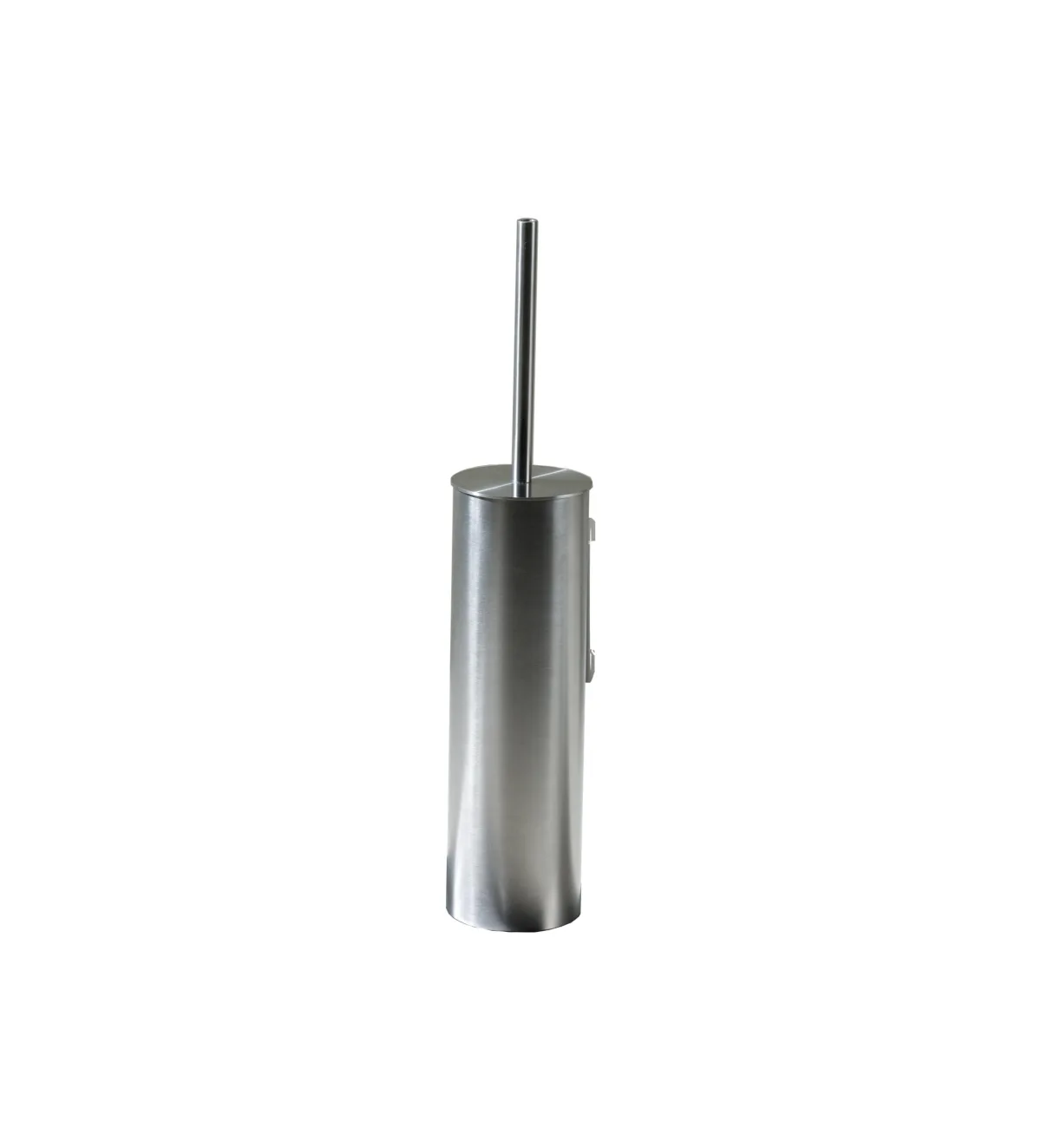 ProductWall Mounted Toilet Brush Holder2MS3536-BSAISI 304 stainless steel, brushed finish, indicative guide price £250 per unit ex VAT. Wall fixing keeps the floor clear, but confirm the fixing substrate. The catalogue does not record the fixing method, and this holder is published as 304 rather than 316L, so it is not a coastal-grade item on its own.View in catalogue →
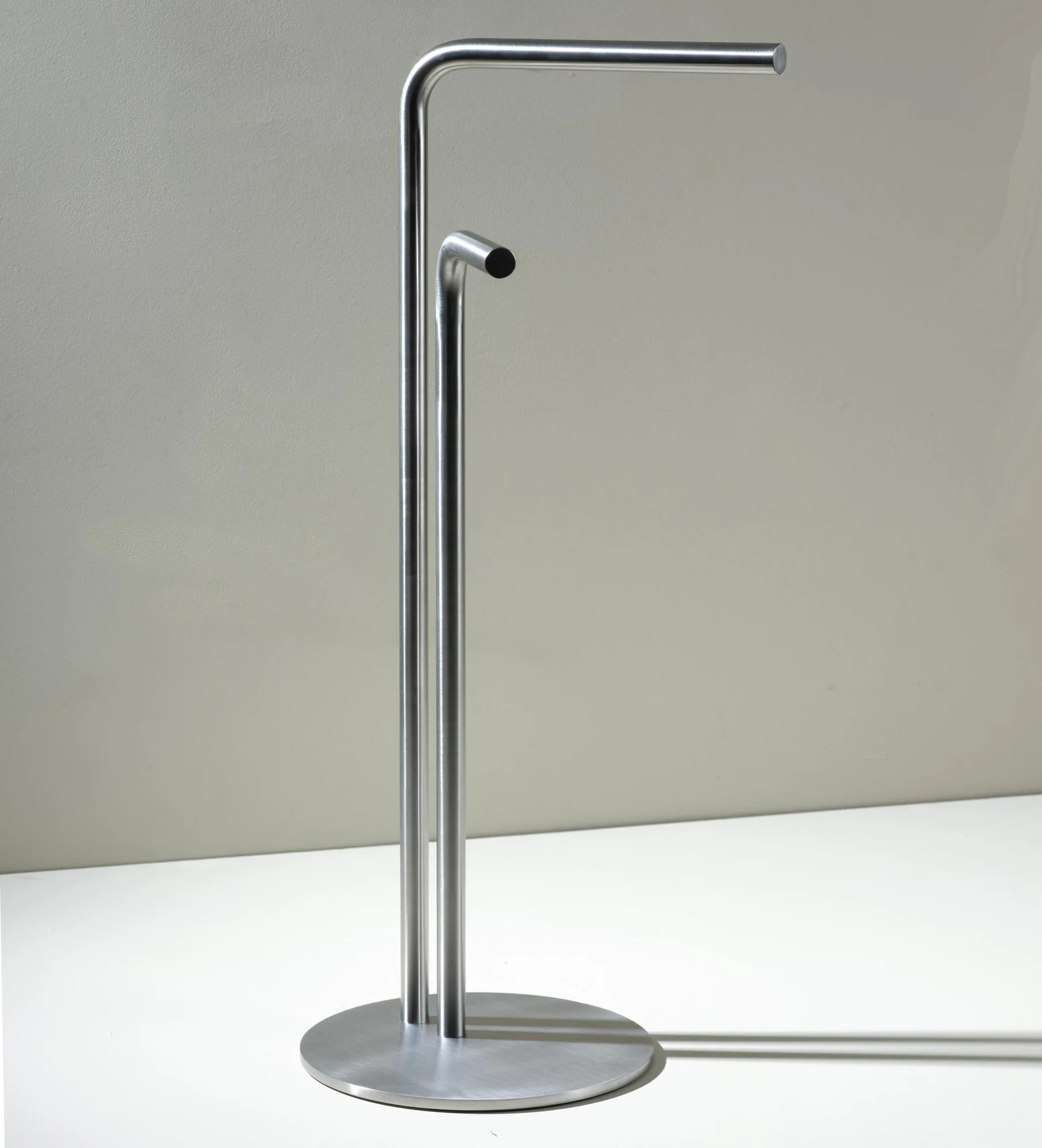
Where the brush has to live in a coastal or spa room, the same range carries a floor-standing unit in a molybdenum-bearing grade. The Freestanding Toilet Roll and Brush Holder Unit is published as AISI 316 stainless steel, reference 2MS3403-BS, indicative guide price £650 per unit ex VAT, and its catalogue page names coastal, spa and pool environments as the case it suits. It carries the roll and the brush on one stand and needs no wall fixing beside the pan, which is useful where a coastal room has tiled walls with no practical substrate behind them. Note the published grade is 316 rather than 316L. If the specification calls for the low-carbon grade specifically, confirm it on the current product data rather than assuming it.
Soap dispensers and shelves
Soap residue, water and cleaning products can collect around dispensers and shelves. Prioritise drainage, cleanable junctions and access for refill and inspection. Coordinate dispenser position with the basin and avoid placing shelves where water can remain trapped against the wall.
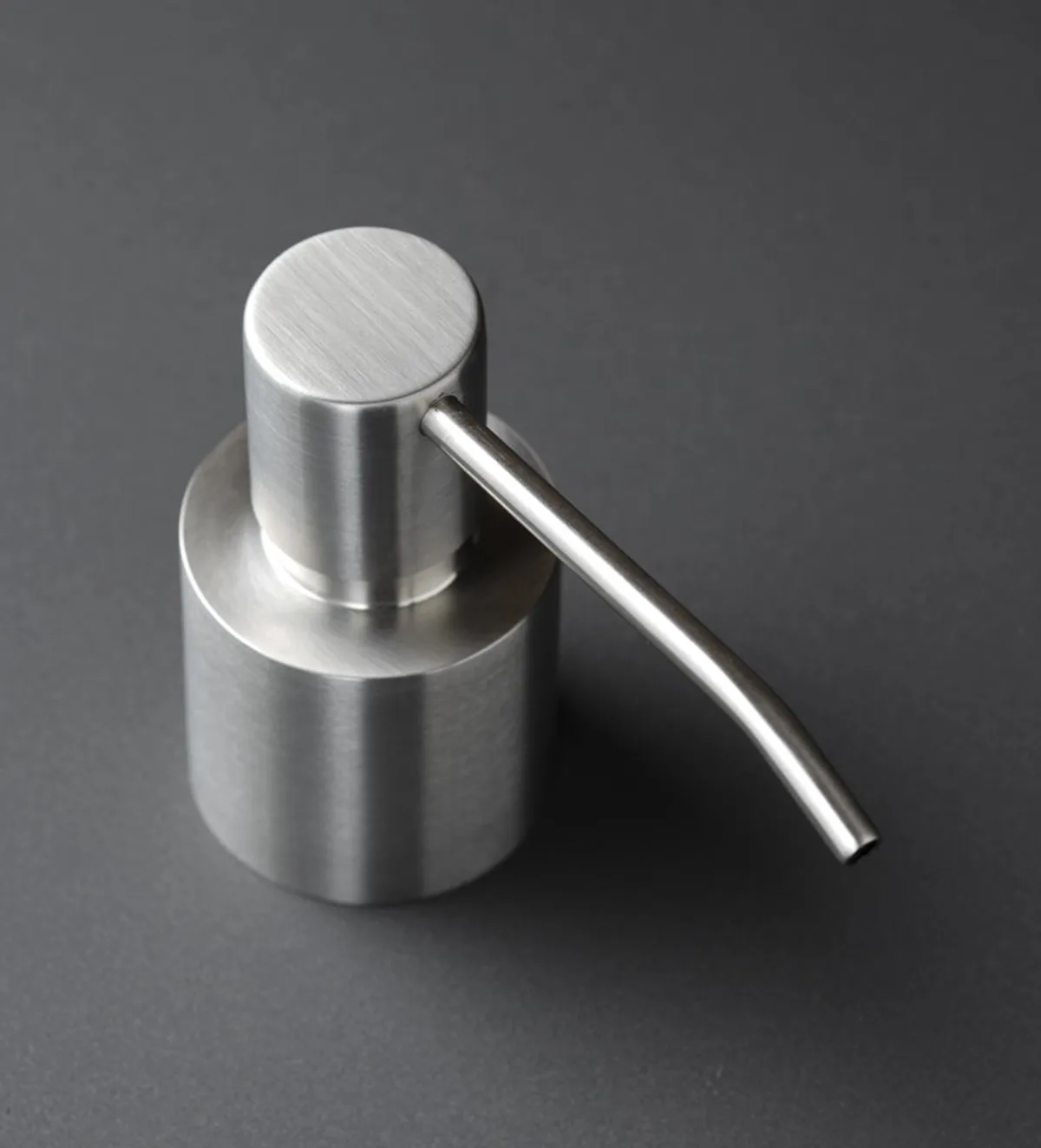 ProductDeck Mounted Stainless Steel Soap Dispenser2AE0314-BSAISI 316L stainless steel, indicative guide price £290 per unit ex VAT. Deck mounted, which lifts the unit out of the splash zone behind the basin, and press action so it works one-handed. Offered in brushed and polished steel, deep grey and gold PVD. The catalogue does not record the aperture size or reservoir volume.View in catalogue →
The mounting detail changes the specification, so it is worth being specific about which of the two you mean. This dispenser is fixed through the deck, so it suits a solid surface top, a tiled ledge or a basin deck where the layout is settled before the aperture is cut. Where the basin rim is the only fixing available, the same range publishes a second AISI 316L dispenser, the Deck Mounted Soap Dispenser at reference 2AE0315-BS, which mounts on the rim or an adjacent counter so the wet zone is finished without touching wall tiling. Either way, seal the fixing so no water tracks into the cabinet below. The catalogue also holds free-standing table-top dispensers, which avoid an aperture altogether, but they are a different product in a different mounting position: the Tubico example published as 316L stands on a 60 mm base and is 194 mm tall, and the FONTEA equivalent to that arrangement carries its own drainage and tipping questions. Apply the drainage argument above to whichever arrangement the drawing actually shows.
Robe hooks, grab rails and technical accessories
Robe hooks in wet areas should be reviewed for water exposure, fixing strength and cleaning access. Grab rails require a separate assessment of load, substrate and project requirements. Do not treat a decorative hook and a load-bearing support as interchangeable.
Review individual product data, fixing requirements and suitability for the intended use where accessibility or higher-load applications are involved.
Choosing finishes for coastal hospitality and residential schemes
Brushed or satin stainless steel
Brushed and satin finishes offer a quiet architectural appearance that can work with stone, timber and porcelain. They may show water marks differently from polished surfaces, so approve a sample under the project's lighting before finalising the schedule.
A consistent finish across towel rails, holders, dispensers and hooks also simplifies room-by-room procurement and replacement.
PVD finishes over stainless steel
PVD can coordinate accessories with taps, lighting and ironmongery in colours such as dark, gold or copper. The visible colour does not identify the underlying stainless grade, so confirm both the substrate and finish specification.
Ask for:
- Stainless steel grade
- Finish name and code
- Care instructions
- Sample approval
- Guidance on scratches, abrasives and chemical exposure
- Replacement availability
 CollectionFONTEA bathroom accessories catalogueUse the live catalogue to review available products, finishes and material filters. This link opens the brushed stainless steel filter, so the room's finish schedule can be set against real stock.View in catalogue →
Matching accessories across a development
For a hotel or apartment scheme, use one finish schedule and one accessory family where practical. Record product codes, approved samples, room locations and replacement references. This reduces ambiguity during procurement and gives facilities teams a clear route when an item needs replacement.
Cleaning and maintenance in salt-air environments
Recommended routine
A simple routine removes deposits before they dry and concentrate:
- Rinse salt and residue with fresh water.
- Clean with mild detergent and a soft cloth.
- Rinse thoroughly with clean water.
- Dry the surface with a clean cloth.
- Inspect more frequently near exposed elevations, open windows or direct spray.
The British Stainless Steel Association recommends soap or mild detergent, followed by rinsing and drying. Follow the product-specific care sheet where it differs.
Products and methods to avoid
Do not use steel wool, abrasive pads or cleaners containing hydrochloric acid or hypochlorite bleach on stainless steel. The BSSA warns that chloride-containing products can stain and pit stainless steel. Do not leave concentrated cleaning products on the surface.
If an unsuitable product splashes onto an accessory, rinse it promptly with plenty of fresh water and dry the surface. Record approved cleaning products in the handover information so housekeeping teams do not need to infer compatibility.
Handover and facilities documentation
Provide:
- Product schedule
- Material grade
- Finish name
- Cleaning instructions
- Inspection notes
- Catalogue links
- Replacement references
Coastal specification checklist for architects and developers
- Solid 316L confirmed for accessory body
- Brackets and fixings identified
- Finish sample approved
- PVD care instructions obtained, if applicable
- Product suited to room exposure
- Crevices and water traps reviewed
- Cleaning products checked
- Installation substrate confirmed
- Replacement products or spare parts identified
- Product schedule includes catalogue links and SKUs
- Handover information supplied to operator or homeowner
For product matching or trade pricing, send FONTEA your room schedules, finish requirements and project quantities through the contact page. You can also review the full catalogue.
FAQ: 316L accessories for coastal properties
Are 316L stainless steel bathroom accessories corrosion-proof?
No. 316L offers stronger resistance to chloride-driven corrosion than 304, but exposure, deposits, cleaning chemicals, crevices and installation details still matter.
Is 316L better than chrome for a seafront bathroom?
As explained in stainless steel vs chrome bathroom accessories, solid 316L does not rely on a decorative chrome layer that can chip or wear through. Compare complete products, including the body, fixings and care requirements, rather than comparing surface appearance alone.
Can 316L accessories be used in coastal hotels?
Yes, provided the material, finish, fixing, cleaning and maintenance requirements suit the project's exposure and operating regime. Seafront and spa environments need closer review than sheltered internal bathrooms.
Is brushed stainless steel better than PVD near the sea?
Neither should be treated as universally superior. Specify the stainless substrate, obtain finish-care guidance and assess exposure, cleaning practice and design requirements before approval.
Do towel rails and hooks need to be 316L?
For demanding coastal or seafront schemes, specifying the same corrosion-resistant grade across visible accessories can reduce inconsistency and simplify maintenance. The final choice should reflect exposure, fixing details and project requirements.
Specify for exposure, maintenance and whole-life consistency
316L is a sensible material direction for bathroom accessories in coastal and seafront properties. Its molybdenum content improves resistance to chloride-driven pitting compared with 304, but material grade alone is not enough.
Specify complete assemblies, compatible fixings, cleanable designs and finishes with clear care instructions. Include product codes and live catalogue links in the schedule, then give operators a practical cleaning routine at handover.
Review the FONTEA catalogue for coastal project requirements.
Specify it from the catalogue
Every fitting mentioned here is stocked and specified in the FONTEA trade catalogue: full technical data, finishes and wholesale tiers.
Related reading
-
 Specification
Stainless Steel Bathroom Fittings for Coastal and Seafront Developments: A Salt-Air Corrosion Guide
What actually governs whether bathroom fittings survive a seafront elevation: the chloride gradient, finish, joint design, drainage and ventilation, how corrosion appears, and what to schedule.
-
 Accessories
Black PVD stainless steel bathroom accessories: a UK specification guide
Black PVD gives bathroom accessories a dark architectural finish, but approval should cover the stainless grade, coating evidence, fixing details and cleaning regime.
-
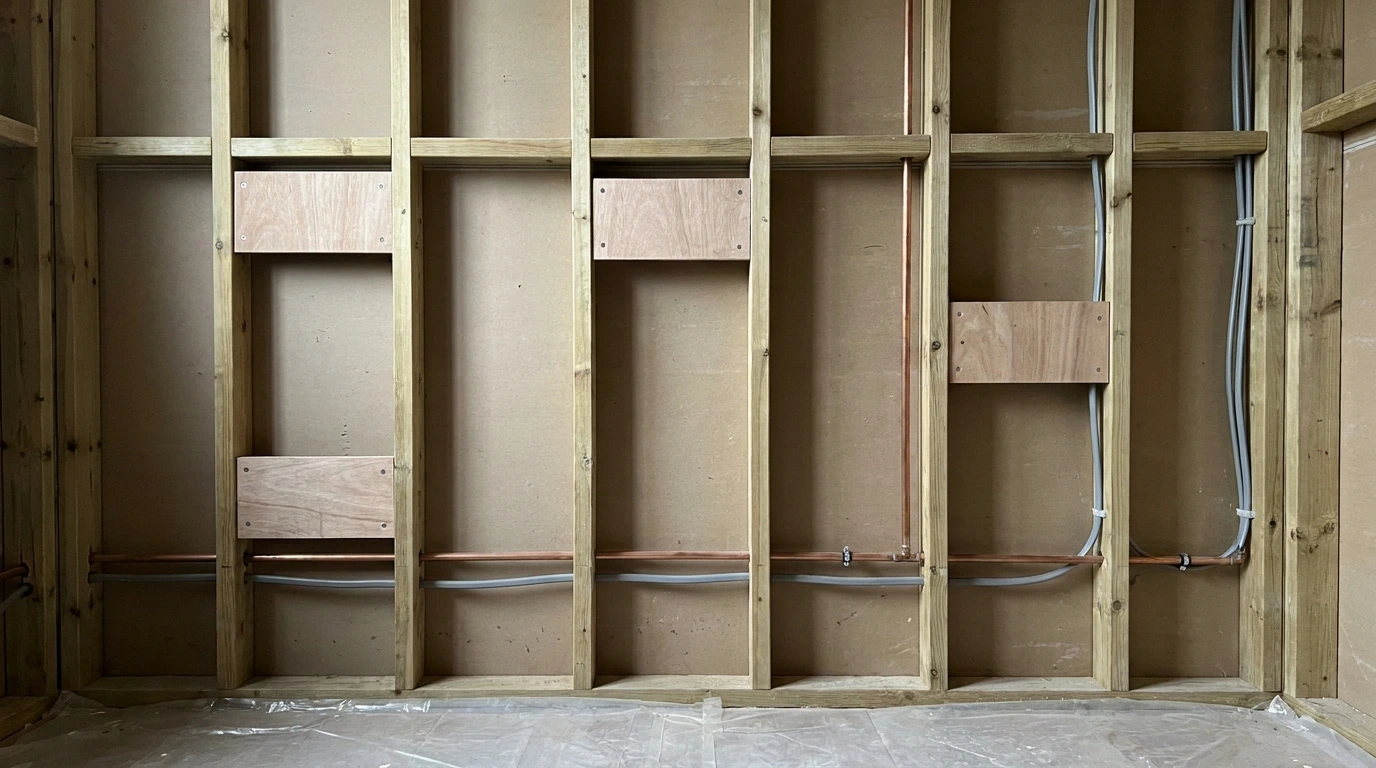 Accessories
How to Fix Bathroom Accessories: Wall Backing and Stainless Fixings
Plan wall backing, substrates and stainless fixings before installing towel rails, robe hooks and shelves in hotel or rental bathrooms.