 ONTEA
ONTEA
The figures on your FONTEA invoice depend on one line in the contract that names a delivery term. That term, an Incoterm, decides where responsibility for cost and risk passes from us to you, and therefore what is already inside the order price and what is billed to you separately on arrival. Read it before you compare two quotations, because the cheaper headline price is often the one that leaves the freight, the insurance or the customs clearance with you.
Key Takeaways
- An Incoterm is a three-letter delivery rule from the International Chamber of Commerce. The current edition, Incoterms 2020, entered into force on 1 January 2020 and ICC recognises it, with UNCITRAL, as the global standard for reading trade terms.
- Risk and cost do not always move together. Under CPT and CIP we pay the freight to your destination, but risk passes to you the moment the goods are handed to the carrier, not when they arrive.
- Duty and import VAT are almost always the buyer's responsibility under these terms and are never part of the Incoterm. They vary by destination country and are set by that country's own customs authority.
- A precise named place matters. Where a contract names only a city, the default lets the seller choose the exact point, and the ICC guidance is explicit that the buyer risks the seller picking a point just before where goods are lost or damaged.
- FONTEA does not publish fixed international shipping terms, prices or lead times. We deliver worldwide and quote the delivery for your country on request, so confirm the term, the freight and any duty on your specific order.
What a delivery term actually does
A delivery term is a rule that splits three things between the seller and the buyer: who pays for carriage, who carries the risk of loss or damage, and who handles export and import clearance. It does not set the price of the goods, and it does not decide what a customs authority will charge. The International Chamber of Commerce first published these rules in 1936 and now issues them as a set of eleven three-letter terms, and its Incoterms rules page states that UNCITRAL recognises them as the global standard for interpreting the most common terms in foreign trade. The current edition, Incoterms 2020, took effect on 1 January 2020. The definitions used throughout this article come from the official ICC text of each rule, not from a summary.
This matters more for an overseas buyer than a domestic one, because on a cross-border sale the distance between the two parties is exactly where the misunderstandings live. The goods are made in Europe, we are a UK importer, and you are buying in your own country. The term you agree fixes the point where our responsibility ends and yours begins, and it fixes the point where your money stops being ours and starts being freight, insurance and duty.
One thing to be clear about at the outset, because it is the single most common source of dispute: an Incoterm allocates costs and responsibilities contractually between you and us, but it does not override the customs and tax law of your country. The customs authority sets the duty rate and the import VAT rate for your destination, and it decides who is liable to it in law. The Incoterm only says which of us arranges the paperwork and which of us is expected to pay the bill.
 CollectionFONTEA worldwide deliveryWe deliver worldwide. Contact us with your country and order details and we will quote the delivery term, freight and lead time for that destination.Ask for a delivery quote →
The rules you are most likely to see
Bathroom fittings move by road, air and sea, so the rules that matter most are the seven that work with any mode of transport. For completeness, the other four (FOB, CFR, CIF and the sea-focused variants) are reserved for cargo moved by sea or inland waterway and are rarely the right choice for a parcel or container of fittings. The descriptions below are drawn from the official ICC text of each rule.
The single most useful thing to remember is the shape of the family. The first three groups describe how far the seller takes the goods and how much the seller carries the risk:
- Group one, the E and F rules, EXW and FCA, put responsibility at or very near the seller's premises. Delivery happens early, and the buyer takes over from there.
- Group two, the C rules, CPT and CIP, have the seller pay the carriage all the way to the destination but hand the goods to the first carrier along the way. Risk passes early; cost runs to the destination.
- Group three, the D rules, DAP, DPU and DDP, deliver to the destination itself. Delivery and arrival are the same moment, and the seller carries the risk right up to your door or unloading point.
Here is what each of the seven commonly used rules means in practice for a buyer of fittings, and where risk and cost pass.
EXW, Ex Works
Under EXW the seller places the goods at your disposal at a named place, such as a factory or warehouse, and that is where delivery, and therefore risk, happens. The official ICC text is explicit that delivery occurs when the goods are placed, not loaded, on any collecting vehicle, and that the seller does not need to load them or clear them for export. From that point the buyer arranges and pays for carriage, export clearance, insurance and import clearance. The ICC calls EXW the rule that imposes the least obligation on the seller, and warns buyers to use it with care because it can leave the loading itself, which the seller may still perform, awkwardly placed. In practice, for an overseas buyer, EXW is the term that hands you the most work: you take the goods from the factory gate and arrange everything, including getting them exported.
FCA, Free Carrier
FCA is the most common choice for a buyer collecting goods with its own carrier, or for containerised cargo delivered before loading onto a ship. Under FCA, when the named place is the seller's premises, delivery happens when the goods are loaded on the means of transport the buyer arranged, and the seller keeps the risk during that loading. That is the practical difference from EXW: with FCA at our premises, we load the goods and we bear the risk while we load. FCA also puts export clearance on the seller, which EXW does not. The buyer then pays for carriage from the named place, and for import clearance, duty and tax at the destination.
CPT, Carriage Paid To
CPT looks generous on paper and needs care in practice. The seller pays the carriage contract all the way to the named destination, but delivery, and therefore the transfer of risk, happens when the goods are handed to the first carrier. The ICC is blunt about this: once the seller has delivered in this way, they do not guarantee the goods will reach the destination in sound condition, in the stated quantity or at all. So if you buy CPT, the freight is our cost, but the risk of loss or damage in transit is yours from the moment the truck leaves. The seller pays for export clearance; the buyer pays for import clearance, duty and tax.
CIP, Carriage and Insurance Paid To
CIP is CPT with insurance. The seller pays carriage to the destination and also contracts cargo insurance against the buyer's risk from the point of delivery to at least the destination. The ICC notes that in the 2020 rules the seller must obtain extensive cover complying with Institute Cargo Clauses (A) rather than the more limited Clauses (C) previously used, so this is genuinely fuller protection for a buyer. Insurance must cover at least the contract price plus ten per cent, in the contract currency. Export clearance is the seller's; import clearance, duty and tax are the buyer's.
DAP, Delivered at Place
DAP is the "leave it at my door" term. The seller delivers the goods to the named place of destination, on the arriving vehicle and ready for unloading, and the seller bears the risk of getting them there. In this rule, delivery and arrival at destination are the same, which is what a buyer who wants a door delivery actually wants. The seller is not required to unload them. The important limitation is import clearance: DAP gives the seller no obligation to clear the goods for import or to pay import duty or tax. The buyer handles import formalities and pays duty and tax. The ICC is direct about the consequence: if the buyer fails to arrange import clearance, the goods will be held up at the port or terminal in the destination country, and the risk of loss while they sit there is the buyer's, because delivery has not yet occurred.
DPU, Delivered at Place Unloaded
DPU is DAP plus unloading. The seller delivers the goods to the destination and unloads them from the arriving vehicle before placing them at your disposal, so by the time risk passes to you the goods are already off the truck. The ICC describes DPU as the only Incoterms rule that requires the seller to unload goods at destination, and says that if the parties would rather the seller not bear the risk and cost of unloading, they should use DAP instead. As with DAP, import clearance, duty and tax are the buyer's. For a trade buyer receiving a pallet or several cartons, DPU is often the most balanced of the destination rules because it ends with the goods off the vehicle and inside your control.
DDP, Delivered Duty Paid
DDP is the maximum-obligation rule. The seller delivers the goods to the destination, cleared for import, on the arriving vehicle and ready for unloading, and the seller clears the goods for import and pays the import duty and tax. The ICC describes it as the rule imposing on the seller the highest level of obligation of all eleven. From a buyer's point of view, DDP means the landed cost is one number: the goods, the freight and the duty all sit with us and we quote you a single delivered, cleared price. The catch is that customs authorities hold the named importer of record liable for duty and tax in law, and the party who contracts to pay under DDP is not always the party the authority will pursue. That gap is why a DDP sale into some destinations needs care, and why for many overseas buyers a DAP or DPU order with the buyer named as importer is simpler and more predictable.
What is in the price and what is billed separately
Once you know where risk and cost pass, the invoice becomes easier to read. Under every rule the seller provides the goods and a commercial invoice, and packages and marks the goods for transport. The differences are in the freight, the insurance and the clearance. A useful way to read the table below is to look down the "who pays" columns.
| Rule | Seller pays | Buyer pays | Risk passes |
|---|---|---|---|
| EXW | Goods up to placing at disposal | Carriage, loading, export clearance, import clearance, duty, tax | At the named place, goods placed not loaded |
| FCA | Goods up to loading on buyer's carrier, export clearance | Carriage from named place, import clearance, duty, tax | At the named place, on the buyer's carrier |
| CPT | Goods and carriage to destination, export clearance | Import clearance, duty, tax | At the first carrier, before the destination |
| CIP | As CPT, plus cargo insurance to the destination | Import clearance, duty, tax | At the first carrier, before the destination |
| DAP | Goods and carriage to destination ready for unloading, export and transit clearance | Import clearance, duty, tax, unloading | At the destination, before unloading |
| DPU | As DAP, plus unloading at destination | Import clearance, duty, tax | At the destination, after unloading |
| DDP | As DAP, plus import clearance, duty and tax | Unloading | At the destination, before unloading |
Two things stand out. First, in the C rules the seller pays freight to your door but risk has already left our hands, so any transit loss or damage is your problem to claim against the carrier, not ours. Second, in every rule except DDP, import duty and import VAT are yours. They are simply not part of the delivery term; they are a separate bill raised by your country's customs authority at the border.
On a FONTEA order the goods themselves are always quoted per order at firm trade pricing. The catalogue shows a guide price for orientation on each product and states that firm trade pricing is quoted per order, and international freight is quoted separately for your destination because it depends on the destination country, the method of transport and the size and weight of the consignment.
Two products from the current stainless steel range can sit on the same order and travel completely differently, and that is the clearest reason freight is quoted rather than published. A small, dense component is easy to pack and carries low value. A tall, multi-piece unit needs more protective packing, is heavier to handle, and carries far more value in the consignment, which matters because your transit insurance is tied to that value.
Take a half inch wall shut-off valve. It is one compact fitting in solid 316L, easy to pack, easy to insure at low value, and it almost always travels as a parcel.
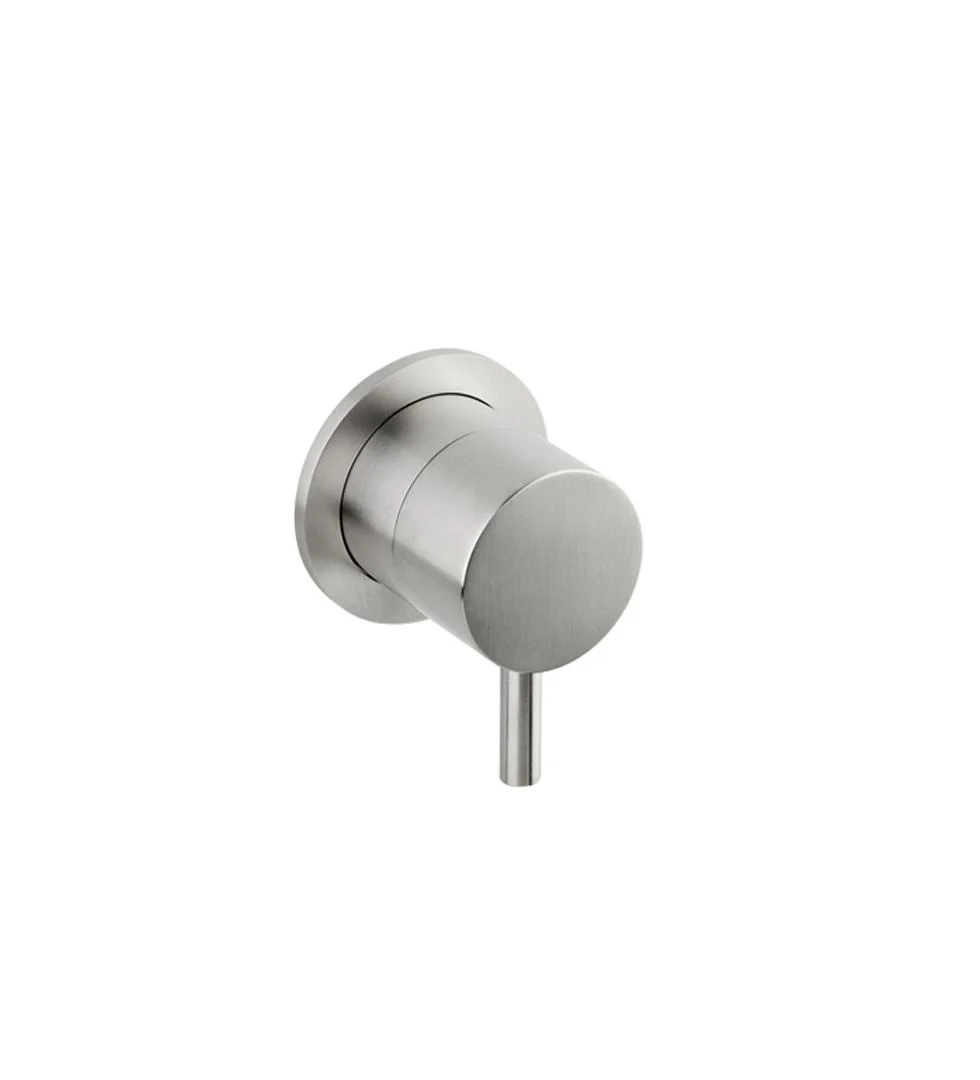 ProductHalf inch wall shut-off valve for isolating a branch2LIJX44X-BSAISI 316L, compact single fitting. Small and dense, so it typically travels as a parcel and carries low value in the consignment.View in catalogue →
Now take a freestanding shower column with a mixer and a 200 mm overhead head. It is a tall, floor-standing assembly of one riser, a mixer and a head, all in 316L. It is longer, it is awkward to nest, it needs more protective packing, and its value in the consignment is far higher.
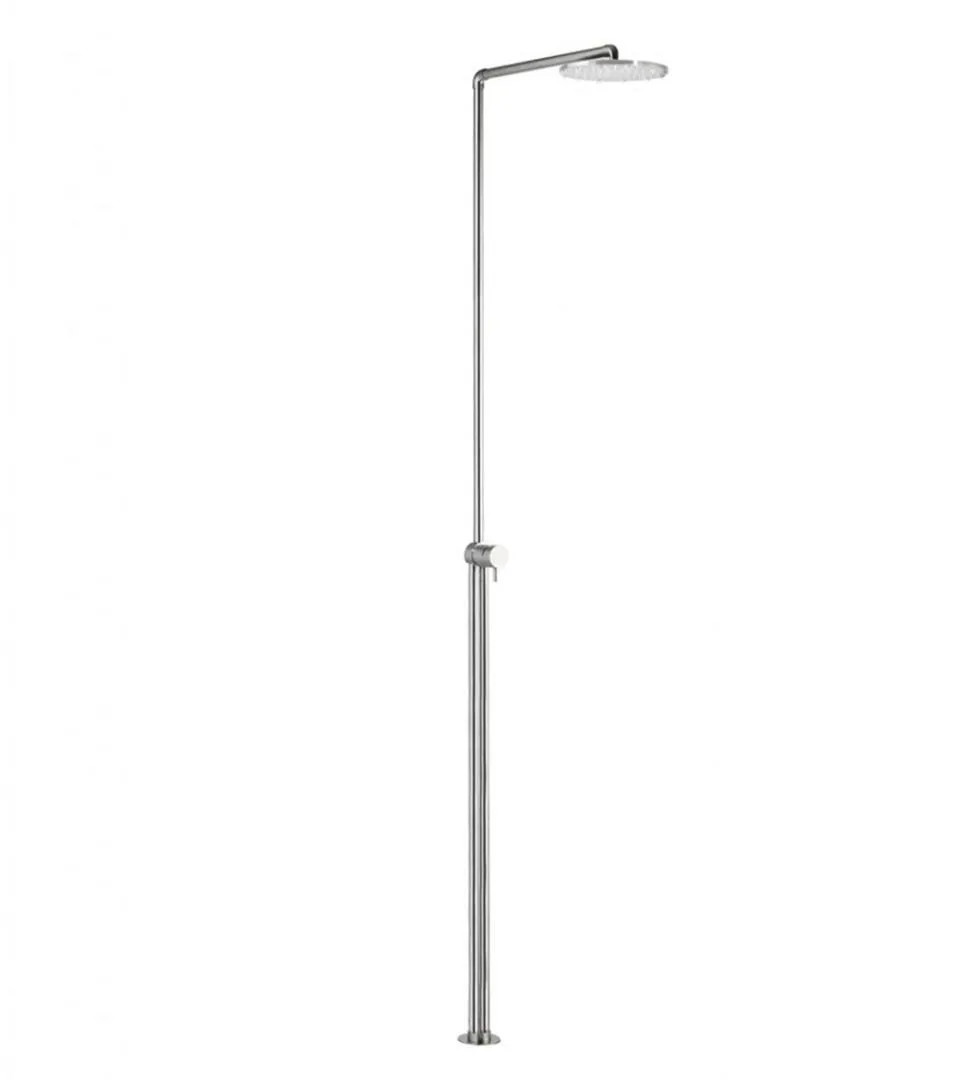 ProductFreestanding shower column with mixer and overhead head2TE2033Z-BSAISI 316L riser, mixer and 200 mm head. Tall, multi-piece and higher value, so it changes the packing, the weight and the delivery method.View in catalogue →
Both fittings are 316L stainless steel and both travel worldwide, but they do not cost the same to send and they do not carry the same risk. That is why the delivery charge on your invoice is a quoted figure for your consignment rather than a fixed published rate, and why you should confirm the delivery term, the freight and any duty on your specific order.
What you must arrange yourself
Under the delivery term you agree, one of the two parties always carries the work of export and import clearance, and the other is obliged to assist. The ICC spells out the split for each rule, and it is worth knowing which side you are on.
- Under EXW the buyer carries out and pays for all export, transit and import clearance formalities. Export clearance sits with you.
- Under FCA, CPT and CIP the seller clears the goods for export, and the buyer must carry out and pay for all import clearance formalities required by any country of transit and the country of import, such as import licences, security clearance and pre-shipment inspection.
- Under DAP and DPU the seller clears for export and for any transit country, and the buyer carries out and pays for import clearance in the destination country.
- Under DDP the seller clears for export, transit and import.
Alongside clearance, insurance is the other thing you may need to arrange. EXW and FCA oblige the seller to provide, at your request and cost, information the buyer needs to obtain insurance, but the buyer contracts their own cover. Under CPT the seller has no obligation to insure. Under CIP the seller insures to at least the destination. If you take CPT and want cover, arrange it yourself; if you take CIP, a baseline of insurance is already in the price.
Duty and import VAT: yours, set by your country
Customs duty and import VAT are the buyer's responsibility under all but DDP, and the rate is not something a delivery term can set. Each destination country sets its own rules, through its own customs authority, and a worldwide buyer should always confirm the current treatment for their country rather than rely on a general statement. Two official sources set out the principle.
For the European Union, the European Commission's guidance on persons liable for VAT states that when goods are imported, the person liable to pay the import VAT is the person designated or recognised as liable by the EU country in which the importation takes place, and that this is usually the customer or an import agent acting on the customer's behalf. On customs duty, the Commission's guidance on customs debt, remission and repayment explains that the duty is based on the common customs tariff, that the party making the declaration, the declarant, is the one who pays, and that where several parties are liable for a single customs debt they are jointly and severally liable for it. Outside the EU, the same principle applies through your own country's authority. In the United Kingdom, HM Revenue and Customs sets out the tax and duty position for goods sent from abroad, and states that goods sent from outside the UK to Great Britain go through customs and that the recipient may have to pay VAT, customs duty or excise duty before receiving them. Every country sets its own rate and its own liable party, which is why this article names no rate.
The practical point for a buyer is this. Unless you buy DDP, you will normally need the capacity to be the importer, or an import agent who can act as importer of record, so that the consignment can be cleared and the duty and import VAT paid at the border. That is why, for many overseas buyers, a DAP or DPU order is the simplest arrangement: the freight and delivery are handled, and you or your agent handle the import clearance and pay the duty and tax to your own authority. A business that imports regularly can often reclaim import VAT as input VAT against its own output VAT, subject to its country's rules, but that is a matter for your tax adviser and your country's authority, not for this article.
Documents you need on arrival
What you need in your hands to receive the goods depends on the term and the destination, but the core paperwork is consistent. Every rule obliges the seller to provide the goods and a commercial invoice. On top of that:
- The seller must provide any document required to enable the buyer to take over the goods under the destination rules DAP, DPU and DDP.
- Under CPT and CIP, the seller must provide, where customary or on request, the usual transport document for the carriage. That document should let you claim the goods from the carrier at the destination and, where it is issued in negotiable form, let you sell the goods in transit.
- Under CIP the seller must give you the insurance policy, certificate or other evidence of cover.
- At the border, the importer needs the commercial invoice and, depending on the destination and the goods, any import licence or other authorisation your country requires.
Keep these with you before the goods sail, because clearance at the destination cannot begin without them and the delay is charged to whoever the term says carries the risk at that moment. For a DAP or DPU order that is you, from the moment the goods reach the port until they reach your unloading point.
The mistakes that create disputes
Almost every delivery dispute comes down to one of a handful of avoidable errors. These are the ones to watch for.
Naming only a city, not a precise point. This is the mistake the ICC singles out most often. Where the contract names a place but not a precise point within it, the default is that the seller may select the point that best suits its purpose. The ICC warns that this means the buyer may incur the risk that the seller chooses a point just before the point at which goods are lost or damaged. If you want risk to pass at a particular point, name that point.
Confusing cost with risk. Buyers often read "carriage paid to my city" and assume the seller carries the risk to that city. Under CPT and CIP they do not. Risk passed at the first carrier. Read the risk column, not the cost column.
Forgetting that duty and import VAT are separate. No Incoterm other than DDP includes import duty or import VAT in the price. If a quotation looks dramatically cheaper than a competitor's, the difference may simply be that duty and tax were left off and will be billed to you at the border.
Not arranging import clearance. Under EXW, FCA, CPT, CIP, DAP and DPU the buyer is the one who clears the goods for import. If you do not do it, the goods sit at the port and, under the destination rules, the risk of loss while they sit there is yours.
Forgetting to record the edition. Incoterms rules change, and the 2020 edition revised several of them. The 2020 rules renamed DAT to DPU, raised the default insurance cover under CIP from Institute Cargo Clauses (C) to Clauses (A), added an option for an on-board bill of lading under FCA, and brought security-related requirements into the carriage obligations. The safe habit is to write the term together with its edition and its precise point, for example "FCA [named place], Incoterms 2020", so both sides are reading the same rule.
Getting a delivery quote for your country
FONTEA does not publish fixed international shipping terms, freight prices or lead times, because they depend on the destination country, the method of transport and the size and weight of your consignment. The site states plainly that we deliver worldwide and invite you to ask for a delivery quote to your country. So the right process for a first overseas order is simply to ask. Tell us your destination country, the products and quantities, and how you would like the goods collected or delivered, and we will confirm the delivery term, the freight and an indicative lead time for that specific order.
For your own planning, it is worth deciding three things before you ask, because they shape the quote and the term. First, whether you want the goods delivered to your door (a DAP or DPU conversation) or delivered to a terminal or your own forwarder (a D rule conversation), and whether you want us to clear import for you (DDP) or you or your agent will be the importer of record. Second, whether you can be the importer of record, or whether you need us or an agent to act as importer, because that affects the term and the paperwork. Third, whether you want transit insurance arranged (already included at a baseline under CIP, and something to arrange yourself under CPT, FCA or EXW).
Once you have that, the conversation becomes a simple one about a specific consignment, and the delivery term on your invoice will be one you chose and understand. The cost and risk columns in the table above are the reference to keep beside you. If you are matching finishes across a mixed-collection order, our guide to brushed stainless steel versus PVD versus chrome covers what you are specifying, and if the order is mainly kitchen fittings, kitchen sink mixer materials covers the grade. Where the fittings will see hard water or coastal exposure, AISI 304 versus 316L stainless steel taps explains the choice that affects what you should be insuring into transit.
Frequently asked questions
Does the Incoterm decide who pays customs duty?
No. An Incoterm allocates costs between you and the seller contractually, but the duty and import VAT rate, and who is liable to them in law, are set by the destination country's customs authority. Under every rule except DDP the buyer is the party that handles and pays import clearance, duty and tax.
What is the difference between DAP and DPU?
Under both, the seller delivers to your named destination and carries the risk there, and you handle import clearance. The only difference is unloading: under DAP the seller leaves the goods on the arriving vehicle ready for you to unload, and under DPU the seller unloads them before placing them at your disposal. DPU is the only rule of the eleven that obliges the seller to unload at destination.
Is CIF or FOB the right term for a container of fittings?
Rarely. FOB, CFR and CIF apply to cargo moved by sea or inland waterway and are built around the moment of loading on board a vessel. For fittings moving by road, air or in a container delivered before loading, FCA is usually the more appropriate rule, and the 2020 rules specifically added an FCA option for the on-board bill of lading that sea cargo needs.
Do we have to use Incoterms at all?
Incoterms are the international standard for reading delivery terms, and UNCITRAL recognises them as such, but a contract does not have to use them. If you and we agree a bespoke delivery arrangement in words, that arrangement governs. The advantage of using an Incoterm is that both sides read the same published rule instead of relying on a description.
Which term is easiest for a first overseas order?
It depends on whether you can be the importer of record. If you can, a DAP or DPU order is the most straightforward: we deliver to your destination, you clear and pay your own duty and tax. If you cannot be the importer and want us to clear for you, DDP quotes a single landed cost, but it needs care because the customs authority holds the named importer of record liable in law.
Specify it from the catalogue
Every fitting mentioned here is stocked and specified in the FONTEA trade catalogue: full technical data, finishes and wholesale tiers.
Related reading
-
 Specification
Stainless Steel Bathroom Fittings for Coastal and Seafront Developments: A Salt-Air Corrosion Guide
What actually governs whether bathroom fittings survive a seafront elevation: the chloride gradient, finish, joint design, drainage and ventilation, how corrosion appears, and what to schedule.
-
 Specification
Commercial vs residential taps: why cycle life and chemical resistance matter for hospitality fit-outs
Where the money genuinely belongs on a hospitality fit-out. How cycle life is measured, why exposed coatings see a harsher corrosion duty than concealed ones, and what a specifier should refuse to accept without a test standard.
-
 Materials
AISI 304 vs 304L vs 316L: what the "L" actually changes
The L suffix marks a lower carbon limit, not a stronger or more corrosion-resistant alloy. Here is exactly what it changes around welds, what it leaves alone, and whether it should change your order.