 ONTEA
ONTEA
The "L" is a carbon limit, and nothing else. In the AISI system it means the steelmaker must hold carbon at or below 0.030% rather than the 0.070% to 0.080% permitted on standard 304 or 316, and that single change exists to protect corrosion resistance immediately around welded joints. It does not make the alloy stronger, it does not add molybdenum, and it does not make a tap immune to anything. For a finished fitting in ordinary mains water, the honest answer is that the suffix is a real but narrow improvement, and usually the smallest decision on your order sheet.
Key Takeaways
- The only practical difference between 304 and 304L, and between 316 and 316L, is carbon content (British Stainless Steel Association, retrieved 2026-10-03).
- Lower carbon reduces chromium carbide precipitation in the heat-affected zone of a weld, which is the specific corrosion mechanism the suffix addresses.
- The L grade is actually slightly weaker: BS EN 10088-3:2023 puts 304 at 190 MPa minimum proof strength and 304L at 175 MPa (BSSA, retrieved 2026-10-03).
- It adds no molybdenum, so it does nothing for chloride pitting. That is a separate decision, and one we cover in AISI 304 vs 316L stainless steel taps.
- Modern steelmaking often delivers 304 and 316 at or below 0.05% carbon anyway, which narrows the practical gap further (BSSA, retrieved 2026-10-03).
What the suffix actually is
AISI 304 and AISI 316 are the American grade designations. Each has a low-carbon counterpart, and the only difference between a grade and its L version is the carbon ceiling. The British Stainless Steel Association puts it plainly: "As American AISI basic grades, the only practical difference between 304 or 316 and their corresponding 'L' grades, i.e. 304L or 316L, respectively, is carbon content." The ranges are 0.08% maximum for 304 and 316 and 0.030% maximum for the L types, and every other element range is essentially the same (British Stainless Steel Association, Comparison of 304 or 316 and 304L or 316L type compositions, retrieved 2026-10-03).
The same body of work sets out the European equivalents, which is where the confusion in supplier copy often starts. EN 10088-3 grade 1.4301 is 304 and grade 1.4307 is 304L, with carbon ceilings of 0.07% and 0.030% respectively. On the 316 side, 1.4401 is 316 and 1.4404 is 316L, at 0.07% and 0.030% (BSSA, retrieved 2026-10-03). If you see a spec sheet quoting a number like 1.4301 rather than 304, that is the same alloy under a different designation, and 1.4307 rather than 304L is the same suffix under a different designation.
So the answer to "what does the L change chemically" is: one element, by roughly half, and nothing else in the composition.
What it does around a weld
The mechanism is worth understanding, because it is specific and it is narrow. When austenitic stainless steel is held between roughly 450 °C and 850 °C, carbon diffuses to the grain boundaries and precipitates as chromium-rich carbide. That pulls chromium out of the solid solution immediately around each boundary, and the grain boundary is then prone to preferential attack. The BSSA calls this condition sensitised, and calls it weld decay when it happens in the heat-affected zone of a weldment (Corrosion mechanisms in stainless steel, retrieved 2026-10-03).
Arc welding passes adjacent metal through that temperature band quickly, so the exposure is short. That is why the L grades were introduced: less carbon available means less carbide available, and a much longer time is needed before a harmful level of precipitate forms. BSSA states that grades with carbon of about 0.03% will not become sensitised even for plate up to 20 mm thick when welded by arc processes (BSSA, retrieved 2026-10-03). The BSSA composition article puts the qualification in the other direction, noting that where the steel is held in that temperature range and then exposed to an aggressive environment, corrosion takes place in the grain boundary region (BSSA, retrieved 2026-10-03).
This is a genuinely different failure mode from the one that wins taps in coastal environments. Pitting and crevice corrosion are driven by chlorides attacking the passive surface, and BSSA is explicit that if there is a known pitting hazard, a molybdenum-bearing stainless steel is required (Corrosion mechanisms in stainless steel, retrieved 2026-10-03). The L suffix does not add molybdenum, so it does not touch that mechanism at all.
What it leaves alone
Two properties come up in almost every conversation about the L grades, and both are worth being straight about.
Corrosion resistance in the bulk of the metal. Away from a weld, the difference is not a meaningful upgrade. The BSSA composition article is careful to frame the low-carbon variants as an answer to weld decay specifically, not as an overall corrosion improvement.
Strength. Here the L grades go the other way. BS EN 10088-3:2023 sets minimum proof strength Rp0.2 at 190 N/mm² for 1.4301 (304) and 175 N/mm² for 1.4307 (304L), with tensile strength 500 to 700 N/mm² for both and identical 45% minimum elongation and 215 HB maximum hardness. On the 316 side, 1.4401 and 1.4404 both sit at 200 N/mm² proof strength and 500 to 700 N/mm² tensile, differing only in elongation, 45% against 40% (BSSA, Ambient temperature mechanical properties of austenitic stainless steel long products to BS EN 10088-3, retrieved 2026-10-03).
So the L suffix costs a little strength and buys a lot of margin at the weld. For a tap body, a towel rail or a shower column, neither number is a design constraint. A 15 MPa difference in proof strength does not decide whether a fitting works, and it is not a reason to prefer one grade on structural grounds.
Where the difference is real and where it is marginal
This is the honest part, and it is more nuanced than the supplier copy that treats every suffix as a premium.
Marginal in most finished fittings. Modern steelmaking gives better carbon control than it used to, and BSSA states that a carbon content of 0.05% or less is generally achieved in the standard carbon grades 304 and 316 as a result, so those grades are not prone to weld decay when arc welded either (BSSA, retrieved 2026-10-03). Where a supplier legitimately sources annealed tube and bar with a documented carbon figure, the gap between standard and L grade is smaller than the labels imply.
BSSA also notes that commercial steel is often produced to the low-carbon limit as a matter of course and offered to the market dual certified to both designations, so that fabricators specifying either grade can use the same material. On coil, sheet and plate, 304 and 304L can therefore arrive on the same certificate (BSSA, retrieved 2026-10-03). That is a real and slightly awkward fact for a specifier: on a product where the sub-material is dual certified, the suffix on the drawing tells you less than you might assume.
Genuinely material in a few cases. BSSA names the condition in which the distinction matters: heavy welded sections in the standard carbon grades may require post-weld annealing for maximum corrosion resistance, and that step is not required for the L grade. Its composition article also records that if the carbon level is at or below 0.030%, intergranular corrosion does not follow exposure to those temperatures for the times normally experienced in the heat-affected zone of thick sections (BSSA, retrieved 2026-10-03). So the suffix earns its place in heavy fabricated weldments, in pressure-retaining assemblies, and anywhere the post-weld anneal is a practical problem.
Also worth knowing. BSSA treats the low-carbon types as no harder to weld than the standard carbon types, and notes that the apparent difference is probably an artefact of the lower strength making the material easier to shape and form (BSSA, retrieved 2026-10-03). And a separate high-carbon variant exists, 304H, for service at temperatures above 500 °C, which is the mirror image of the same trade-off and irrelevant to a bathroom but a reminder that carbon is being tuned deliberately in all three directions.
Is it a decision you should make consciously?
Yes, but it is a small one, and the size of the decision depends on who is welding.
If you are buying finished fittings off a shelf, the suffix was decided by the manufacturer at the point of fabrication and there is nothing for you to change. What you can do is confirm it. Ask for the AISI grade in writing on the spec sheet or order confirmation, and treat a supplier who cannot state it as a supplier you have not finished evaluating. The AISI 304 stainless steel taps and fittings range on the catalogue is a reasonable example of a range where the grade is stated plainly on every product page.
If you are commissioning bespoke fabrication, the suffix is worth specifying deliberately for heavy welded sections, and worth not agonising over for light gauge fittings where the difference is marginal. And on the separate question of whether you need molybdenum at all, the answer to that is driven entirely by your chloride exposure, which is a different argument we make in AISI 304 vs 316L stainless steel taps and again in 316L and coastal properties.
One practical note on specifying by number. Writing 1.4307 rather than 304L will not get you a different alloy, and it will not resolve a genuine ambiguity in a supplier's documentation. What resolves ambiguity is a stated carbon figure on a material certificate.
Where the suffix shows up in the catalogue
The low-carbon grades appear on the catalogue across a handful of shower components, mostly where a welded or machined body is involved, and the standard grades carry everything else. Looking at them together is the clearest way to see that the L is a manufacturing decision rather than a positioning one.
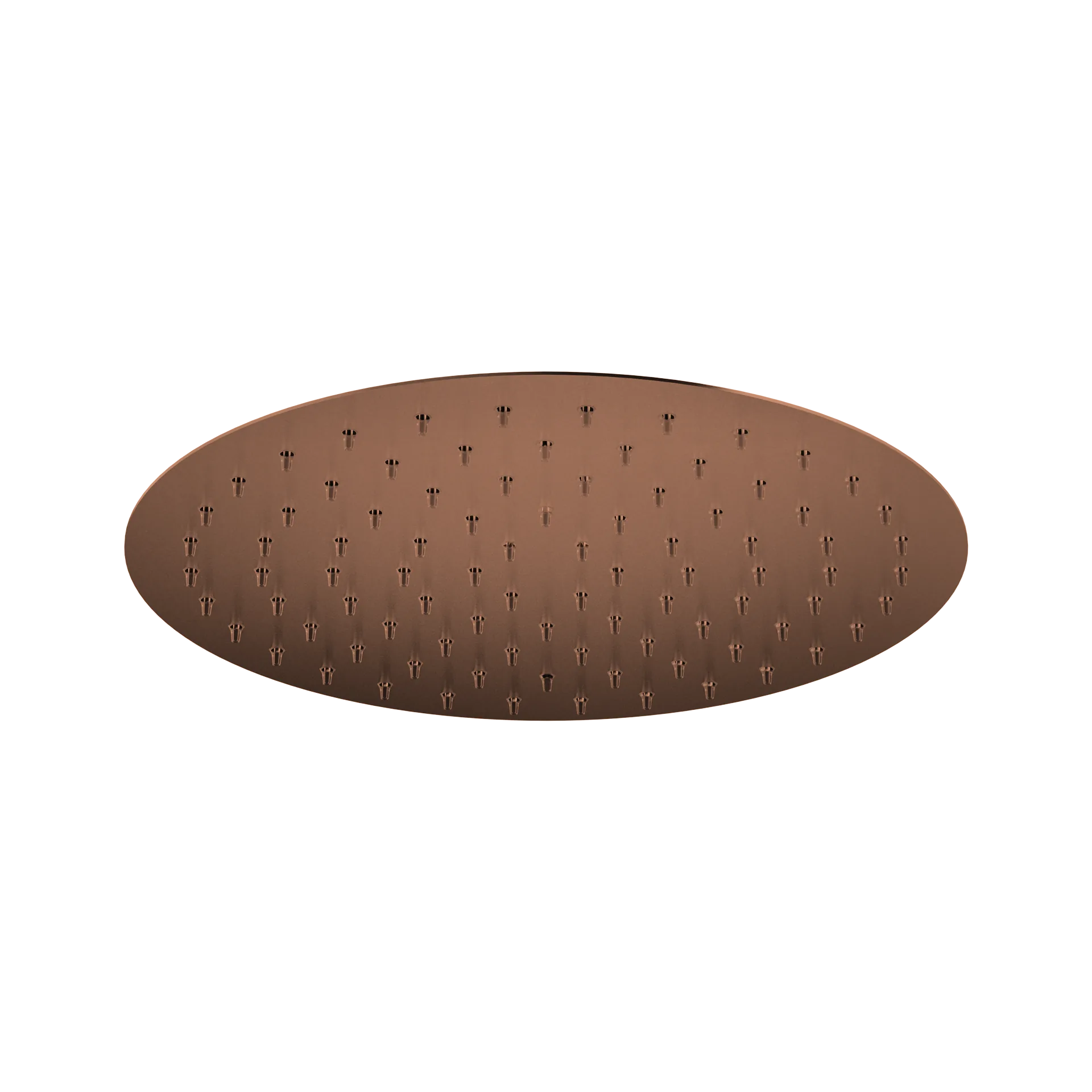 Product250 mm Round Ultraslim Shower Head in AISI 304L Stainless SteelAISI 304L stainless steel. 250 mm diameter, 9 L/min, G1/2 inch ball-joint connection. Available in Brushed, Copper PVD, Black PVD and Gold PVD.View in catalogue →
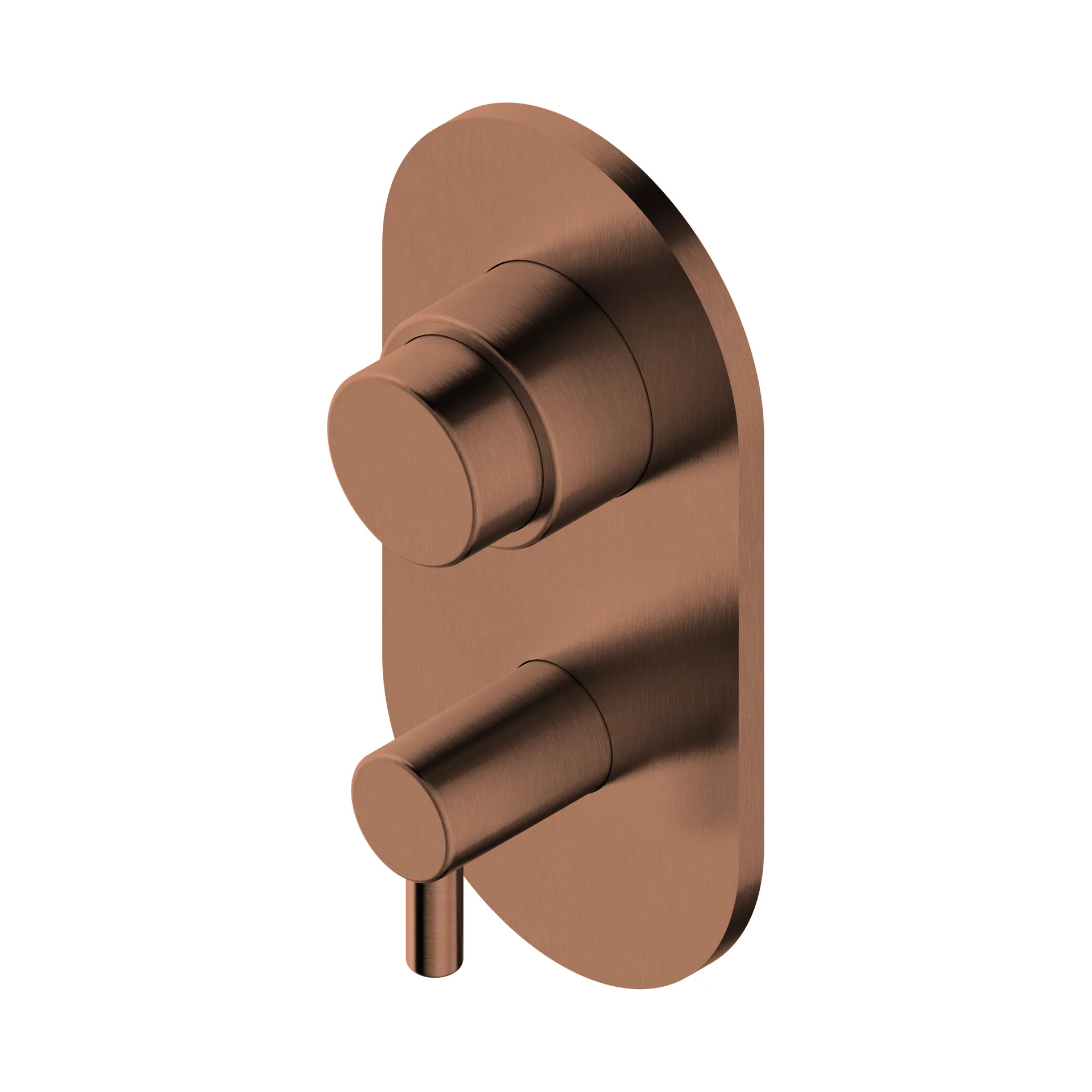 ProductConcealed Self-Closing Shower Mixer Valve in AISI 304L Stainless SteelAISI 304L stainless steel. Concealed behind the tiling, 6 L/min, self-closing timer. Available in Brushed, Copper PVD, Black PVD and Gold PVD.View in catalogue →
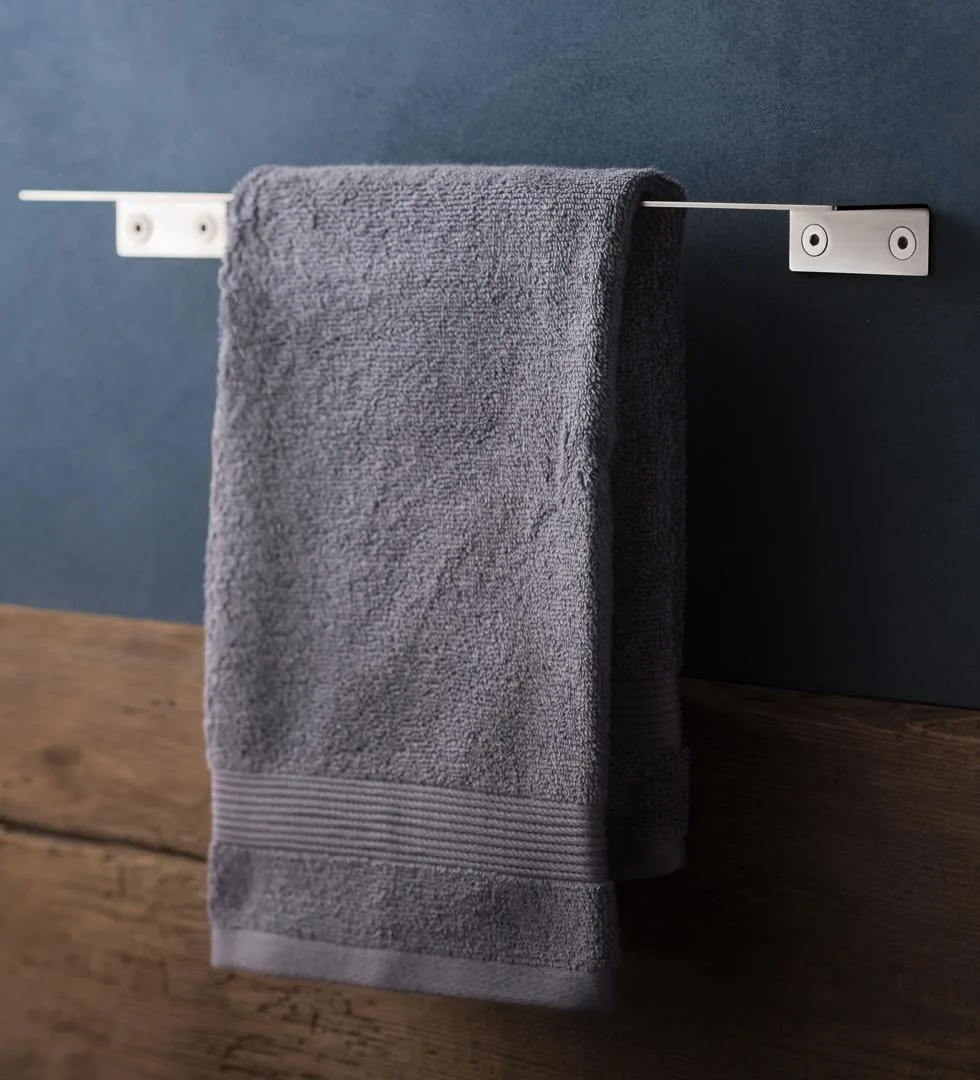 ProductWall Mounted Towel Rail, 320 mm, AISI 304 Stainless Steel2MS3795-BSAISI 304 stainless steel, 320 mm bar. Brushed, Gold PVD, Black PVD and Copper PVD available.View in catalogue →
 ProductWall Mounted Toilet Roll Holder, AISI 304 Stainless Steel2MS37630-BSAISI 304 stainless steel, the standard carbon grade. Brushed and PVD finishes available.View in catalogue →
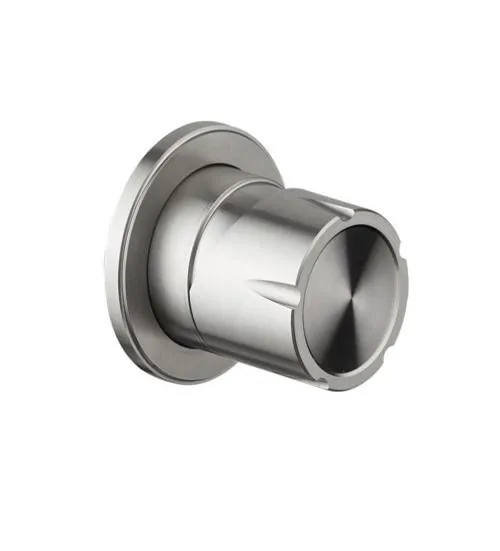 ProductConcealed Wall Mounted Shower Mixer, AISI 316L Stainless Steel2AC6332-BSAISI 316L stainless steel, the molybdenum-bearing grade. This is where the chloride question is decided, not the carbon one.View in catalogue →
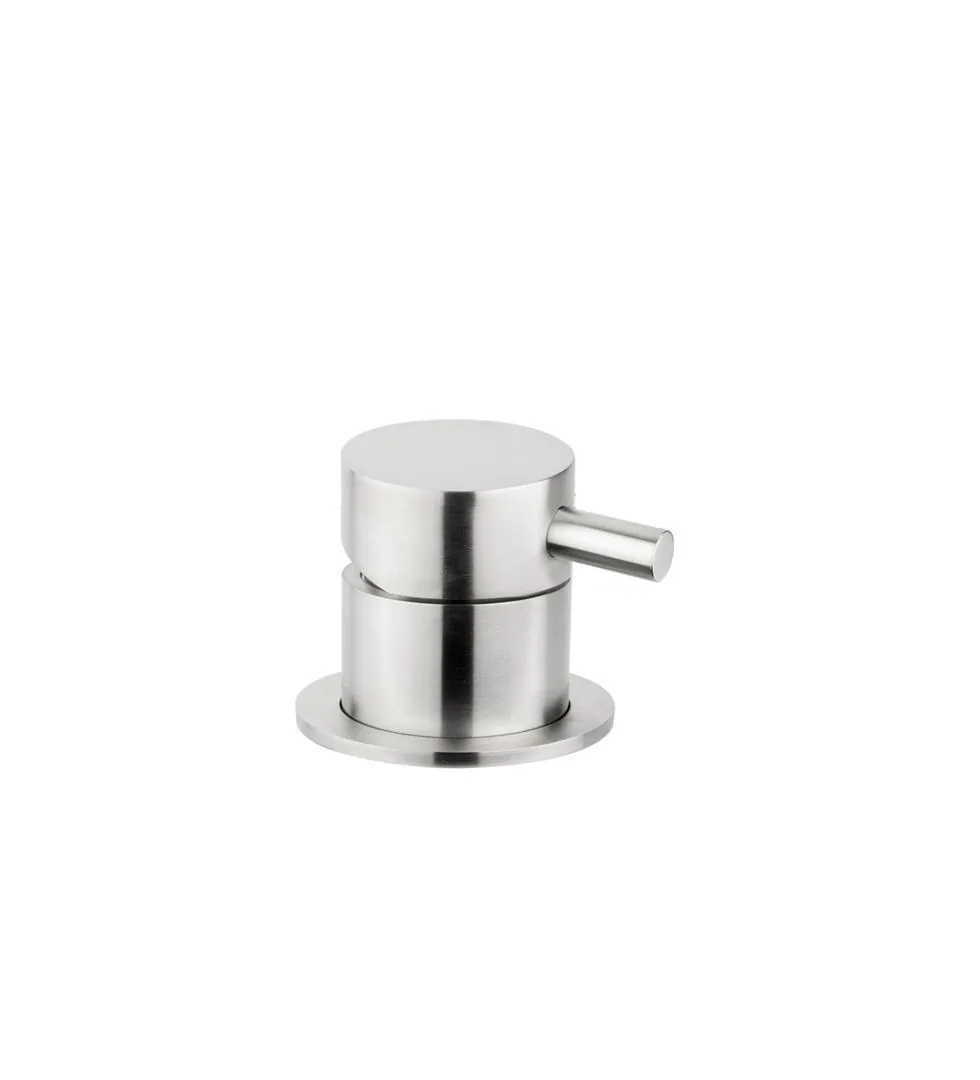 ProductSingle Lever Deck Mounted Basin Mixer, AISI 316L Stainless Steel2PO8306-BSAISI 316L stainless steel. Five finishes available, brushed through to the PVD range.View in catalogue →
Frequently asked questions
Does 304L resist corrosion better than 304?
Not in general, and certainly not where it matters most for a tap. The two grades perform the same in ordinary service environments. The difference is confined to resistance to intergranular attack at grain boundaries in the heat-affected zone of a weld, which is a real but narrow case.
Does 304L resist pitting and crevice corrosion better than 304?
No. Pitting and crevice corrosion are chloride-driven attacks on the passive surface, and neither grade carries molybdenum. BSSA is direct that if there is a known pitting hazard, a molybdenum-bearing stainless steel is required. That means 316L, not 304L.
Is 304L stronger than 304?
No, it is weaker. BS EN 10088-3:2023 gives 304 a minimum proof strength of 190 N/mm² and 304L 175 N/mm², with the same 500 to 700 N/mm² tensile range. The lower carbon is the trade for the weld behaviour, not a hidden benefit.
Is 316L stronger than 316?
Effectively no. In BS EN 10088-3:2023 both sit at 200 N/mm² minimum proof strength and 500 to 700 N/mm² tensile strength. They differ in elongation, 45% minimum for 316 against 40% for 316L.
If a product says 304 or 304L, do I get the same thing?
On some products, yes, and the specification will not tell you which you have. BSSA notes that steel is commonly produced to the low-carbon limit and sold dual certified to both designations, so it can be used for fabrications specifying either grade. Where that applies, a stated carbon figure on the material certificate is the only thing that resolves it.
Can I tell from the finish whether a fitting is 304L?
No. The same PVD and brushed finishes are applied across all these grades, because the finish is a surface treatment and the grade is the substrate. The brushed versus PVD versus chrome-plated brass comparison covers that layer in detail.
Does the L suffix mean the product is better quality?
Not as a general claim. It means one element is held lower, for one specific reason. A better-made fitting is signalled by things like cartridge life, finish consistency and whether the grade is documented at all, not by a letter on the end of a grade number.
The short version
The L is a weld decision, and nothing more. It caps carbon at 0.030% instead of 0.070% to 0.080%, which buys real resistance to intergranular corrosion in the heat-affected zone of a heavy weld. It adds no molybdenum, so it does nothing for the chloride pitting that actually decides how a coastal tap ages. It costs about 15 MPa of proof strength. For a finished fitting in ordinary mains water the difference is marginal, and on dual-certified sub-material the suffix may not even distinguish the two. Specify it consciously for heavy welded fabrications, confirm it in writing on anything you buy, and spend your attention on the grade that does the real work.
Specify it from the catalogue
Every fitting mentioned here is stocked and specified in the FONTEA trade catalogue: full technical data, finishes and wholesale tiers.
Related reading
-
 Materials
AISI 304 vs 316L Stainless Steel Taps: Which Grade for Which Job
How AISI 304 and 316L stainless steel taps differ, when 316L's molybdenum content earns its extra cost, and how to specify the right grade for coastal, hard-water and commercial jobs.
-
 Materials
Is Marine-Grade 316L Stainless Steel Worth It for a UK Bathroom?
Sometimes. 316L earns its premium where chlorides genuinely reach the fittings, and wastes money on a standard inland bathroom. Here is how to tell which situation you are in before you pay.
-
 Materials
Brushed stainless steel vs PVD vs chrome-plated brass: durability and cleaning compared
Brushed steel and PVD are two different decisions, not a menu of the same thing. Here is how each behaves with daily cleaning, limescale, scratches, and over a service life, and why our range is solid stainless throughout.