 ONTEA
ONTEA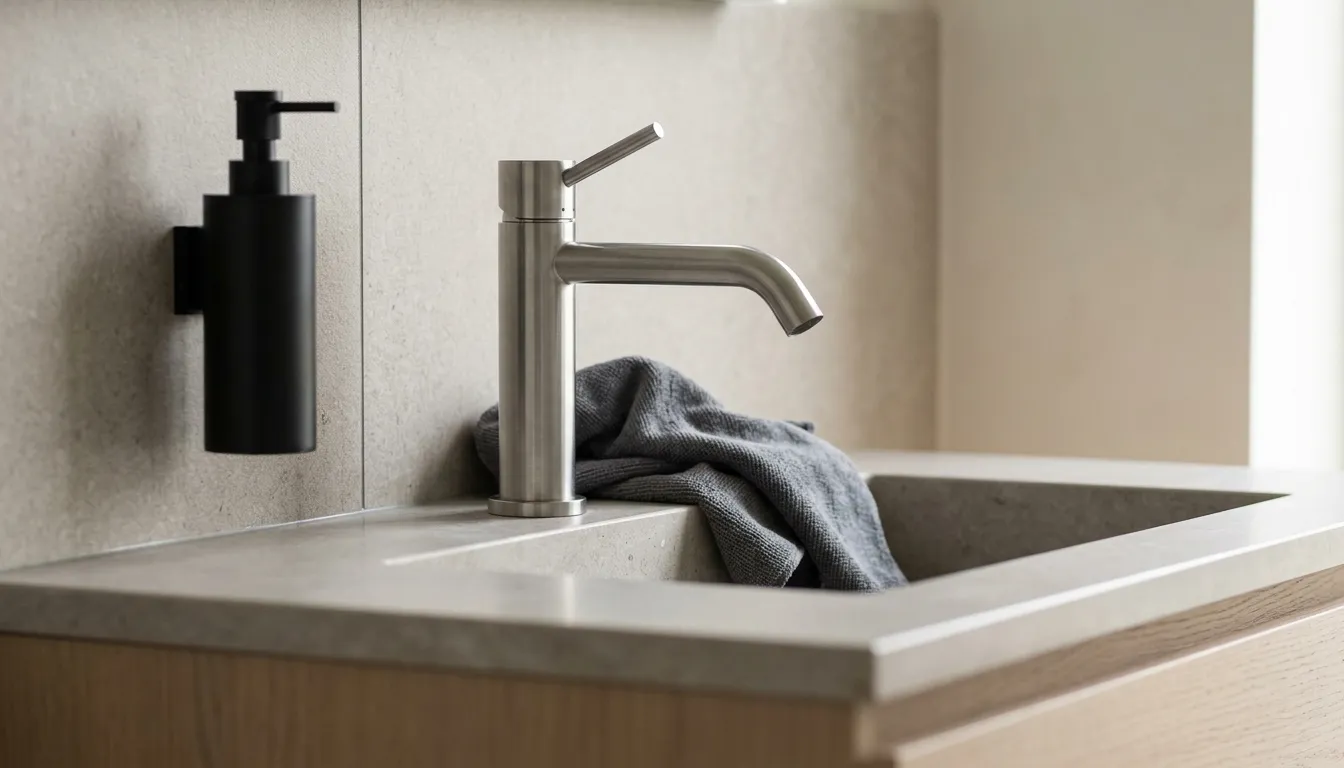
Clean a PVD or brushed stainless steel tap with a soft cloth, warm water and a mild, non-abrasive detergent, then rinse and dry, and you will not damage the finish. Damage comes from a short list of things you can avoid: strong acids, strong alkalis, chlorine and chloride cleaners, metal polish, steel wool and scouring powders. Both finishes are colour and sheen that sit on top of the steel rather than being the steel itself, so what you wipe them with matters more than how hard you scrub.
Key Takeaways
- PVD and brushed stainless steel are surface finishes, not bare steel, so the gentler, non-abrasive cleaners that suit them are different from the polish and acid products sold for plain stainless.
- Chloride cleaners, hypochlorite bleaches and strong acids or alkalis attack stainless steel and can permanently stain and pit it; keep them off the tap.
- On a brushed finish, always wipe along the grain; on PVD, use a soft cloth with no abrasive at all.
- Clean little and often, and dry after every use, so deposits never build up and no one reaches for a stronger product.
- If a finish shows a scratch that shows bare metal, a colour change, pitting or a dull patch, stop and get advice rather than trying to polish it back.
Know what the finish actually is
Both of these finishes are a layer on the surface of a stainless steel body, and knowing that is what makes the cleaning advice make sense.
Brushed stainless steel is the steel itself, mechanically worked with abrasive belts to create a fine directional grain. The trade body's guidance on architectural stainless is that stainless steel "has no surface coating to wear off", so frequent, light cleaning keeps the surface looking its best. Cleaning strokes on a grained or brushed finish should run along the grain, not across it, because a cross-grain wipe scratches and dulls the direction of the brush lines.
PVD (physical vapour deposition) is a genuinely different kind of surface. A leading PVD coating maker describes PVD as depositing an ultra-thin layer that is "so thin that the original surface finish of the material covered remains intact", while being about four times harder than chrome and scratch resistant. Because that colour layer is so thin, it tolerates normal wear but is easily marked by hard knocks or repeated rubbing with abrasive materials, and it is not a coating that can be corrected once it is scratched through.
A useful distinction to hold on to: PVD coatings do not, by themselves, make steel more corrosion resistant. As one coating maker states plainly, corrosion resistance "has to be controlled by the substrate" underneath, not by the PVD colour layer. That is why the stainless steel grade of the body, not the colour, still governs how the tap copes with a harsh or coastal environment.
What is safe to use
The safe list is short and ordinary. Across the technical guidance for these finishes, the agreed safe routine is a soft cloth with warm water and a mild, neutral detergent, followed by a rinse and a dry.
- Mild dish soap or a neutral, pH-balanced detergent in warm water. This is the standard safe cleaner for both finishes.
- A clean, soft cloth. Microfibre or cotton is the standard choice. A soft sponge without a scouring pad is also acceptable.
- Clean water for rinsing, then a separate soft cloth or chamois to dry, which prevents water spots.
- On a brushed finish, a mild cream polish with soft calcium carbonate, applied with a soft cloth and rinsed, is described by the stainless care guidance as suitable for stubborn spots and light discolouration on bare stainless.
Apply the cleaner to the cloth rather than spraying it straight onto the tap, and always follow the cleaning product's own label for dilution and contact time. UK health and safety law requires employers to assess hazardous cleaning substances, control exposure and give staff the information, instruction and training to work with them safely.
What damages the finish, and why
This is the part that matters most, because the products that ruin these finishes are the ones sold as "powerful bathroom cleaners". The damage comes in four kinds.
Chlorides and hypochlorite bleach
Chloride ions are the primary cause of localised corrosion on stainless steel. The stainless care literature is explicit: "Chloride-containing solutions, including hydrochloric acid-based cleaning agents and hypochlorite bleaches can cause unacceptable surface staining and pitting, and should not be used in contact with stainless steels." Localised forms of corrosion such as pitting and crevice corrosion are associated with chloride ions in wet conditions, and acidic conditions and higher temperature make them worse. In short, chloride attack breaches the thin passive oxide film that gives stainless its resistance, and the result is permanent pitting.
Strong acids
Strong acids are the other great destroyer. Hydrochloric acid, the active ingredient in many bathroom scale removers and mortar removers, is singled out: hydrochloric acid based solutions "must not be used in contact with stainless steels", and the guidance warns that proprietary hydrochloric acid mortar removers "can seriously damage stainless steel". Phosphoric acid based descalers are permitted on bare stainless steel at controlled dilution, but the leading PVD coating maker warns specifically that its decorative stainless PVD finish "is not resistant to phosphoric acid or phosphoric acid containing agents", which is a good illustration of why a cleaner that is fine for plain steel can still be wrong for a coated one.
Strong alkalis and caustic cleaners
Alkaline attack works on the same principle from the other side. Drain cleaners, oven cleaners and caustic soda products are strongly alkaline, and a PVD care guide published for coated stainless identifies sodium hydroxide solution, a strong base, among the chemical solutions with the "major damaging, corrosive impact" on the coating. Alkali also attacks the plastic internals of a tap, not just the finish. Avoid alkaline and caustic bathroom and drain cleaners on any tap.
Abrasives and metal polish
Abrasives do physical rather than chemical damage, but on a thin PVD layer the effect is just as permanent, because once the colour is scratched through you are looking at the base metal and the repair is not a wipe away. The PVD care guidance is blunt: "Avoid cleaning PVD by using any kind of metal polish liquid, paste, or spray", and abrasive powders or creams. On bare brushed stainless, the guidance allows non-scratching cream polishes but is clear that scouring powders should not be used because "these products can leave scratches on stainless steel surfaces".
Steel wool and carbon-steel pads must never touch a stainless or PVD tap. Beyond scratching, they shed iron particles that can embed in the surface and then rust, leaving orange tea-staining marks that are not the steel corroding but iron contamination. The same guidance applies to any pad or brush previously used on carbon steel. Keep a set of cleaning tools reserved for stainless and PVD only.
Clean each finish the right way
Brushed stainless steel
Because there is no coating to wear off, brushed stainless steel is the more forgiving of the two and tolerates a slightly wider range of products.
- Wipe loose dust or grit away first, with a dry soft cloth, so particles are not dragged across the grain.
- Wash with warm water and a mild detergent, using a soft cloth, sponge or soft brush. Wipe along the grain with every stroke.
- For stubborn spots, use a mild, non-scratching cream polish (the soft calcium-carbonate type), then rinse with clean water and dry.
- Rinse and dry after every use to reduce water marking.
PVD
PVD is the more delicate of the two, because a thin colour layer is on top. The correct method is gentler.
- Dust with a clean, soft, dry cloth.
- If needed, clean with warm water and a few drops of mild, neutral soap, using a soft microfibre cloth, with no abrasive at all.
- Rinse with clean water and dry immediately with a separate soft cloth.
- Never leave a wet cloth, sponge or pad sitting on the tap or in the bowl overnight, because trapped water causes staining.
The trade advice for coated metal is blunt about the boundary: "Never use abrasive cleaners, including steel wool and polish", and do not use "highly acidic or alkaline cleaners such as vinegar solutions or soap flakes, which can damage the coating or leave the surface with a film of grease". Vinegar and soap flakes, then, are exactly the sort of mild-sounding household acid and alkali to keep away from a PVD tap.
How often to clean
The single most effective thing you can do is clean a little and often, before a visible build-up forms, rather than letting deposits set and then reaching for something stronger. The architectural stainless guidance is that cleaning "should be done before there is a visible build-up of soiling or finger-marking", and that keeping the surface clean preserves its corrosion resistance.
- At home: a wipe with a damp soft cloth every few days, and a proper wash with mild detergent about weekly, or more often in a busy household. Dry after each use.
- In a busy commercial washroom: a short daily wipe-down of high-touch lever handles and spouts with mild soapy water is the baseline, with a fuller routine clean on a set schedule. Keep the routine in a written protocol so every cleaner applies the same method.
- Limescale areas: deal with limescale with a controlled, short-contact descaler appropriate to the finish, then rinse thoroughly and dry, rather than leaving a strong acid to sit. Limescale is a deposit problem rather than a finish problem; what matters here is the strength and contact time of the product you use on the finish.
Because deposits build up fastest where a tap is touched constantly, levers and spout outlets are the two places to check most often.
What damaged finishes look like, and when to stop
Knowing the failure signs tells you when to stop cleaning and get advice rather than trying to polish a mark away.
Stop and seek advice if you see any of these on a PVD tap:
- A scratch that shows bare or differently coloured metal. On PVD a deep scratch shows a colour change because the colour layer has been cut through. This is not a surface mark; it cannot be buffed out and the part usually needs replacing.
- Dull patches or uneven sheen where the finish was rubbed with an abrasive. The coating maker is clear that PVD "can become damaged due to hard knocks or repeated rubbing with abrasive materials".
- Any sign the colour is flaking or lifting.
Stop and seek advice if you see these on a brushed stainless tap:
- Pitting or tiny permanent pinholes, which mean chloride or acid attack has broken through the passive film. This is corrosion and it will not clean off.
- Rust-orange or tea-coloured staining, which is usually embedded iron from steel wool or a contaminated pad rather than the steel itself rusting, but it needs the right treatment to remove.
- A patchy result after cleaning, which can mean one area was etched differently to the next.
If a deposit will not shift with mild detergent, escalate cautiously. The stainless guidance recommends a stepwise approach for stains and warns that more aggressive remedies should be trialled on a small, hidden area first, and that where heavily soiled colour-coated surfaces are involved it is advised to maintain shorter cleaning intervals than for bare steel. When in doubt, the correct answer is to stop, not to try a stronger product on a visible surface.
What warranty terms usually say
There is no single rule that a chemical voids a warranty, and it is misleading to invent one. Warranties for decorative coated fittings commonly require you to follow the manufacturer's cleaning and care instructions, and to maintain the product reasonably. A cleaner that attacks the coating therefore risks breaching the care condition, and a visibly damaged finish is hard to claim against because it is treated as misuse rather than a manufacturing fault. The practical principle is simple: follow the care instructions for the finish, avoid the damaging products above, and keep any claim or correspondence with the supplier's records.
Products in this guide
Both finishes referenced below are genuine catalogue finishes: a brushed stainless steel floor-standing basin mixer, and deep grey PVD and black PVD variants offered across the range. The care rules above are about the layer rather than the colour, so they read the same on any PVD tone: a deep grey PVD surface is deposited colour on steel in exactly the way a warmer or darker PVD one is, and it is scratched and attacked by the same things. See how the finishes compare in stainless steel versus chrome finishes, and how to specify matching accessories in black PVD bathroom accessories.
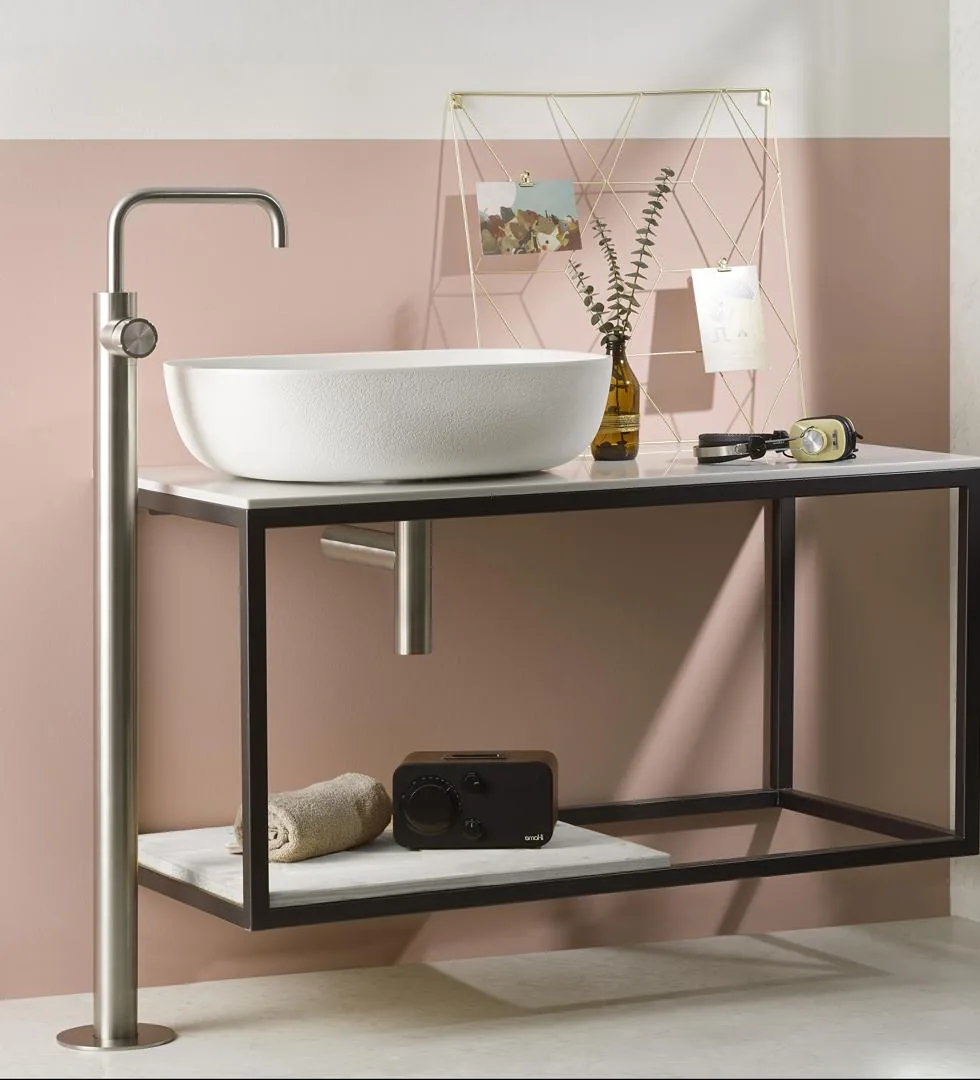 ProductFloor Standing Freestanding Basin MixerAISI 316L, floor-standing column for a basin with no tap hole. Five finishes including brushed stainless steel and deep grey PVD. Guide price £1,900 ex VAT.View in catalogue →
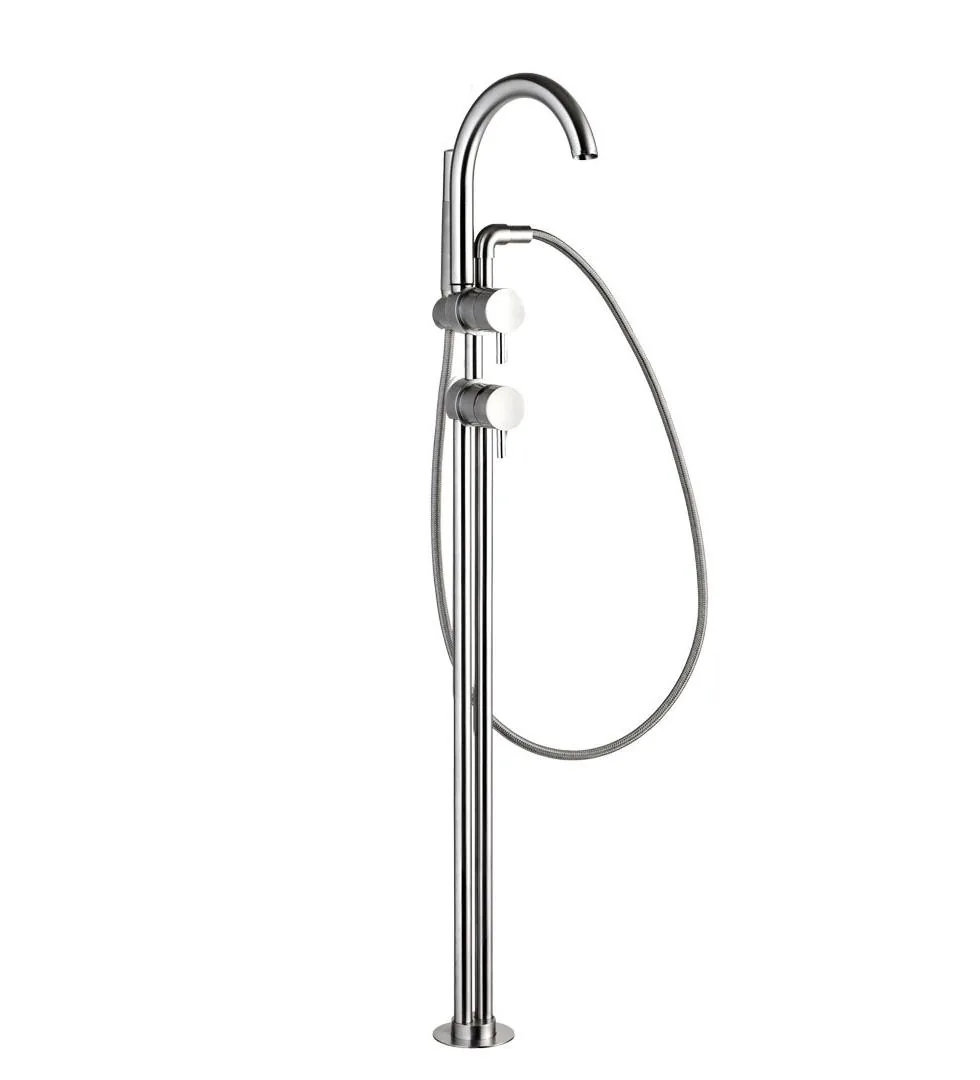 ProductFreestanding Bath Mixer with HandshowerAISI 316L, one lever for filling and the handshower, deep grey PVD among five finishes. Guide price £2,075 ex VAT.View in catalogue →
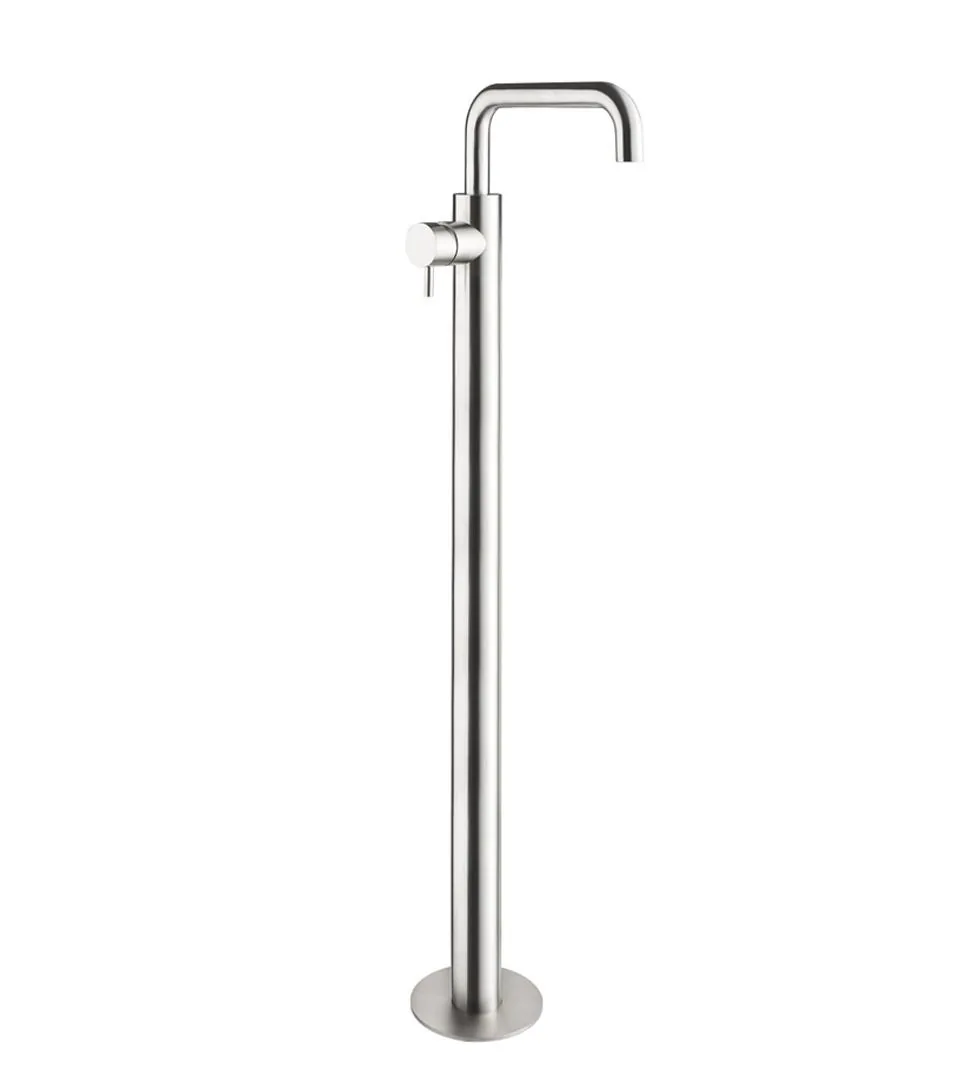 ProductFloor Standing Washbasin Mixer on a ColumnAISI 316L, hot and cold rise through the floor so the bowl takes no tap hole. Five finishes including deep grey PVD. Guide price £1,925 ex VAT.View in catalogue →
For the wider care picture, our guide to which cleaning chemicals damage stainless steel accessories covers the commercial housekeeping protocol, and salt spray testing explains how a tap's corrosion resistance is actually measured.
Specify it from the catalogue
Every fitting mentioned here is stocked and specified in the FONTEA trade catalogue: full technical data, finishes and wholesale tiers.
Related reading
-
 Finishes
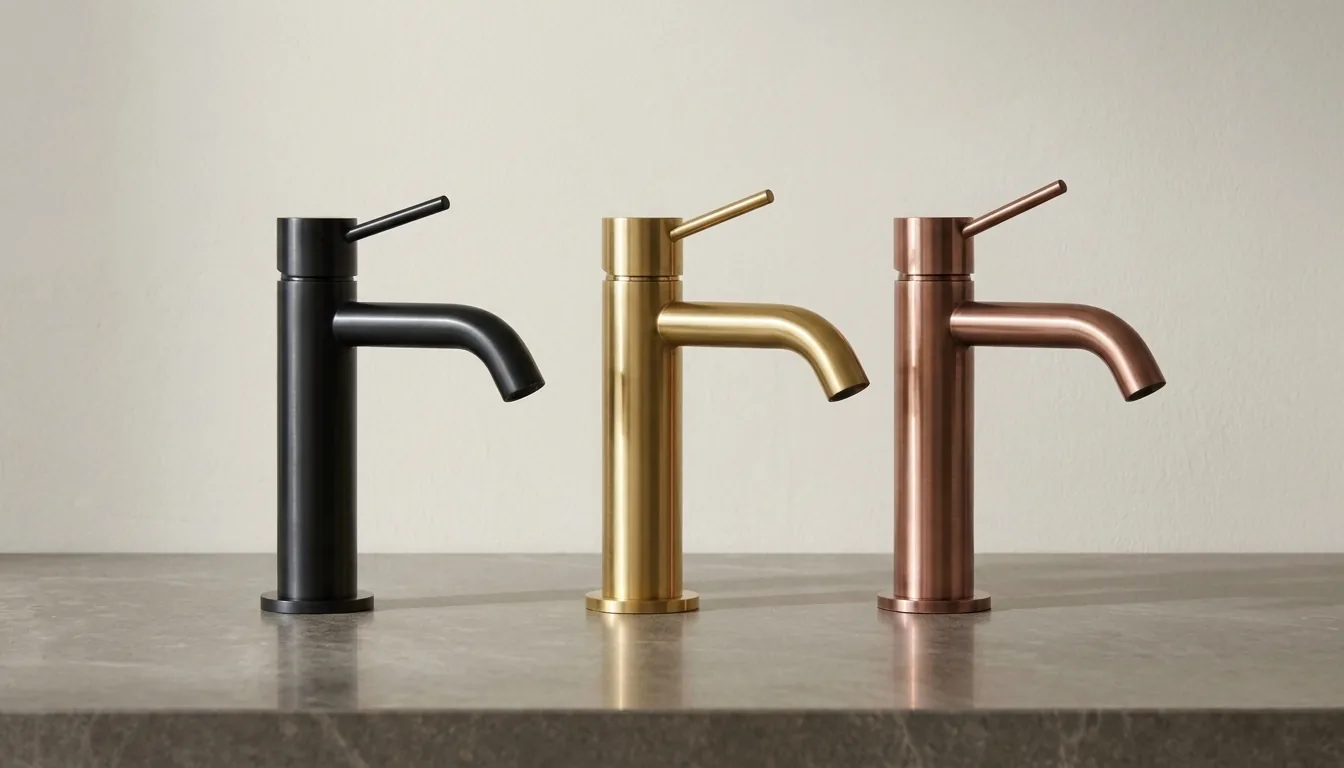
PVD Tap Finish Explained: How Black, Gold and Copper Are Applied
PVD bonds a thin metallic layer onto stainless steel in a vacuum, so the colour is part of the metal rather than a paint or electroplate. Here is what black, gold and copper PVD actually are and how long they last.
-
 Specification
Commercial vs residential taps: why cycle life and chemical resistance matter for hospitality fit-outs
Where the money genuinely belongs on a hospitality fit-out. How cycle life is measured, why exposed coatings see a harsher corrosion duty than concealed ones, and what a specifier should refuse to accept without a test standard.
-
 Finishes
What tap finish hides limescale best in hard-water areas?
Brushed and satin stainless steel hides limescale best day to day. Glossy and PVD finishes show a white deposit far more, and matte black shows it worst. Here is why.