 ONTEA
ONTEA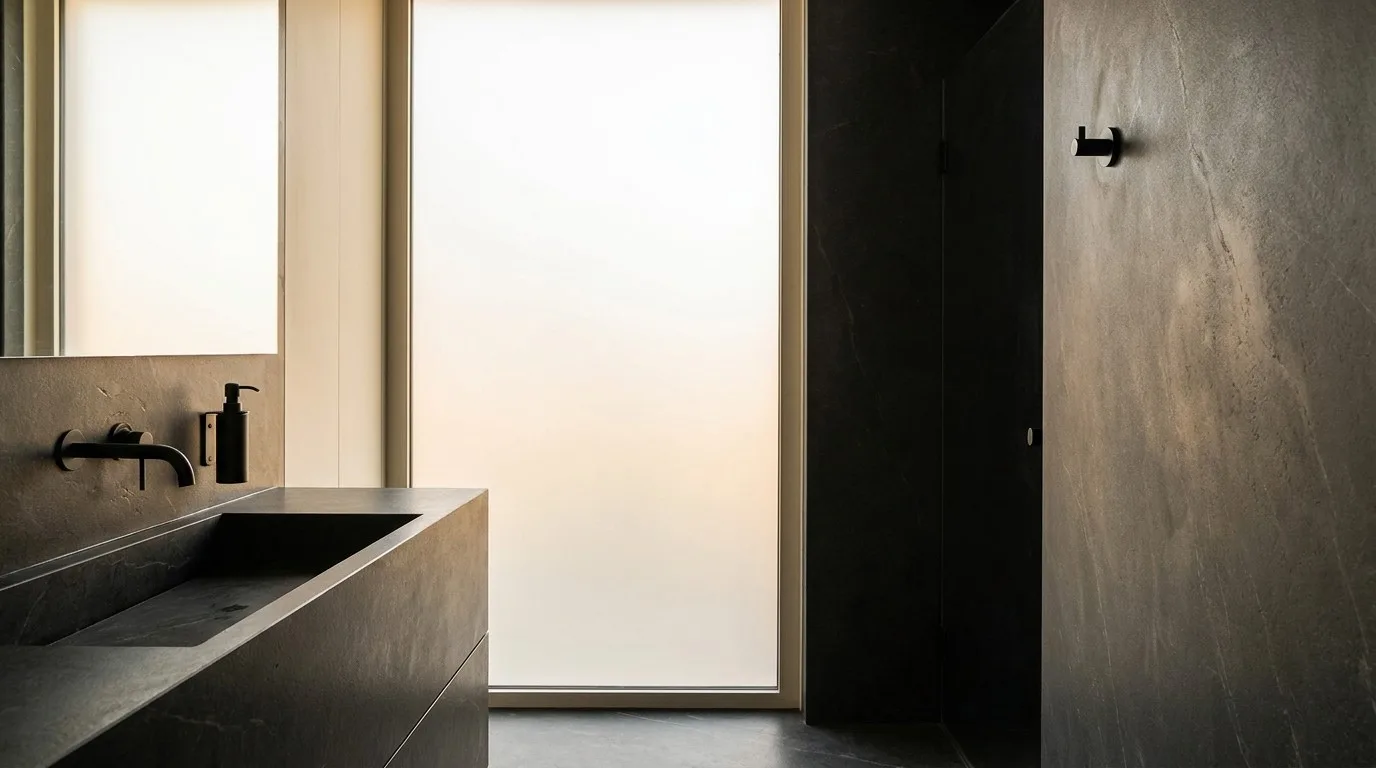
Black PVD stainless steel bathroom accessories give a scheme a dark, coordinated finish without making colour the whole specification. The useful question for a UK project is not simply whether black looks right. It is whether the supplier can identify the stainless grade, describe the PVD process, provide evidence for the finished product, and explain how the accessories should be cleaned.
That distinction is why black PVD belongs as a named line in an accessory schedule. A finish sample settles the visual decision. It does not settle the substrate, concealed components, fixing method or expected exposure.
Key Takeaways
- Specify “black PVD on stainless steel”, not only “matt black”.
- Select the stainless grade for the room, with 316L the more cautious direction where chloride exposure matters.
- Treat salt-spray hours as controlled test evidence, not a universal service-life promise.
- Approve a sample, record the exact finish and issue cleaning guidance with the handover information.
Why black PVD is becoming a specification question
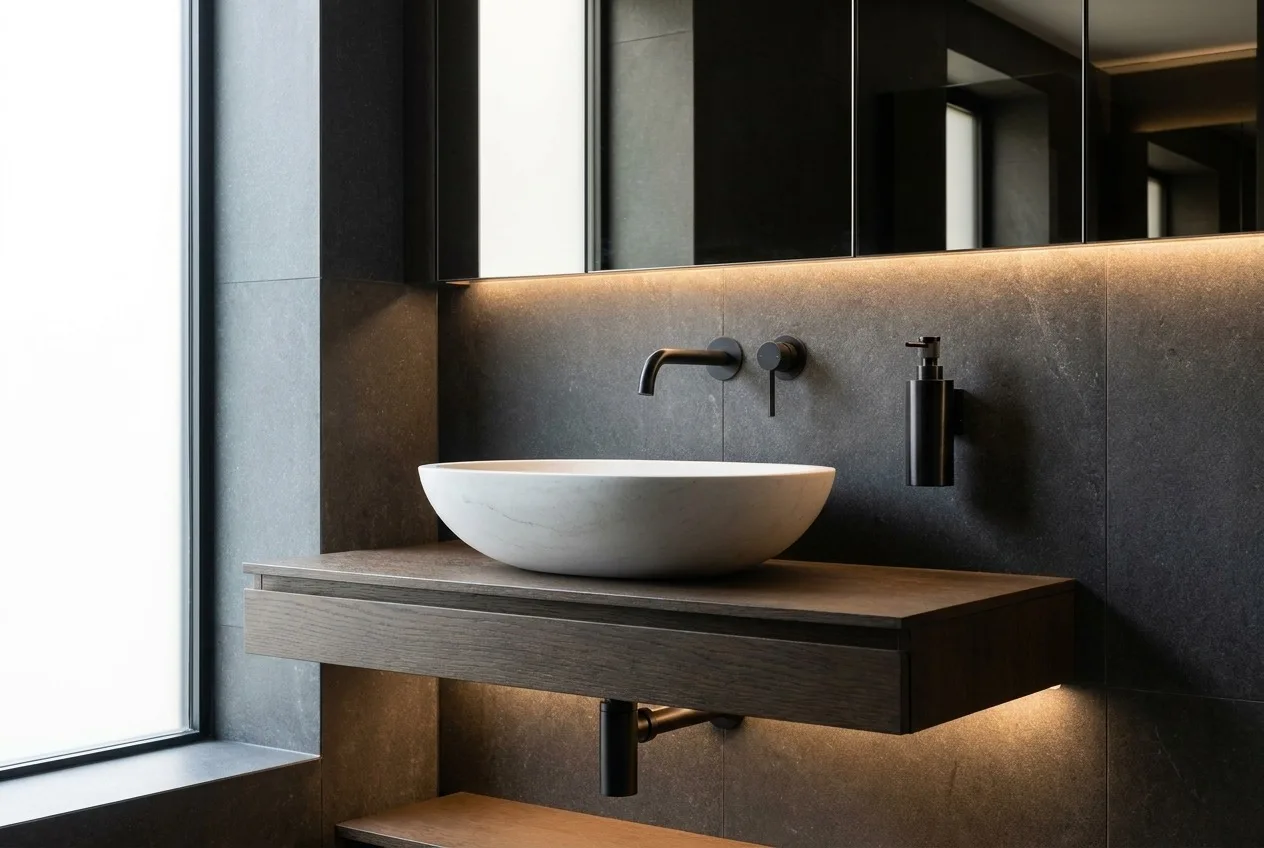
Black accessories coordinate easily with dark sanitaryware, graphite tiles, bronze-toned hardware and timber. They can also give a multi-room project one repeatable visual language across towel rails, hooks, dispensers and roll holders. Those are design and procurement benefits, not proof of durability.
The specification needs to separate three decisions:
- Substrate: what metal the accessory is made from, including brackets and concealed parts.
- Finish: how the visible colour is produced and identified.
- Use conditions: where the accessory is installed, how often it is handled and which cleaning products will reach it.
A black finish can be produced in more than one way. The Hansgrohe finish overview distinguishes PVD, lacquer, powder coat and polished chrome. A schedule that says only “black” leaves the contractor and supplier to interpret a critical part of the job.
The FONTEA bathroom accessories catalogue shows how a range can present a dark finish alongside brushed, black PVD and gold PVD options. That is useful when coordinating a room, but the individual product page remains the source for its grade, SKU and finish variant.
What PVD changes, and what it does not
Physical vapour deposition is a vacuum coating process. In its explanation of PVD finishes, Hansgrohe describes cleaning the parts before placing them in a chamber, then using vaporised metal to deposit a coloured layer. The process can create finishes such as matte black, but the result still depends on the part preparation, coating control, geometry and inspection behind that particular product.
PVD changes the visible surface. It does not turn an unsuitable base metal into a suitable one, and it does not remove the need to consider edges, joints, wall plates, screws or refill components. The substrate remains part of the corrosion specification.
Ask for these details before approving a black PVD sample:
- Stainless steel grade for the visible body.
- Material of wall plates, brackets, screws and concealed components.
- Finish name, code and sample reference.
- Whether the sample represents the same production route and substrate as the scheduled product.
- Cleaning instructions for the exact finish.
- Any product-specific adhesion, abrasion or corrosion report.
Avoid turning a general PVD description into a promise about every black accessory. A manufacturer may have test results for one tap, one substrate or one production batch. That result cannot automatically stand for a different accessory with another shape, fixing or coating thickness.
Choose substrate for the room, not only the colour
A black PVD finish does not replace grade selection. The British Stainless Steel Association explains that chloride ions can contribute to localised pitting and crevice corrosion, while molybdenum helps reduce the effectiveness of chlorides in breaking down the passive layer. That gives 316 stainless steel an advantage over 304 where chloride exposure is a material concern.
For many sheltered internal bathrooms, AISI 304 may be a reasonable starting point when the design, ventilation and cleaning regime are suitable. For coastal buildings, spa and pool environments, open windows near the sea, or rooms exposed to frequent chloride deposits, 316L is the more cautious direction. It is still not corrosion-proof. The BSSA warns that even 316 types can suffer pitting and crevice corrosion in seawater conditions, especially where deposits, crevices or stagnant moisture allow chlorides to concentrate (BSSA selection guidance).
Bathroom accessories are not submerged marine equipment, so do not copy a seawater specification without considering the actual room. Instead, review:
- Distance from shower spray, bath splash and open windows.
- Ventilation and how quickly wet surfaces dry.
- Cleaning frequency and chemical exposure.
- Joints, wall posts and horizontal surfaces where residue can remain.
- Whether the visible grade matches the grade of concealed parts and fixings.
Our guide to 316L stainless steel accessories for coastal properties covers this exposure-led approach in more detail. The key principle is the same for black PVD: colour is one line in the schedule, not the whole decision.
How to read salt-spray and finish test evidence
Salt-spray testing can help compare a defined part under defined laboratory conditions. It cannot provide a universal conversion from test hours to years in a UK bathroom.
The British Stainless Steel Association's salt-spray guidance says that results are sensitive to the part shape, designed-in crevices, surface finish and test conditions. It describes ASTM B117 and BS EN ISO 9227 methods, and notes that test durations and acceptance criteria need to be understood for the particular test. In its example comparison, a 316 type part might pass a 96-hour test at a stated salt concentration while 304 may not perform the same way under those conditions. That example is not a rating for every 316L accessory or a prediction of service life.
When a tender asks for salt-spray evidence, request a report that identifies:
- The exact test method and solution.
- Test duration and exposure conditions.
- The complete product or a clearly defined representative panel.
- Stainless grade, surface preparation and finish system.
- Edges, holes, wall plates and fixing materials included in the test.
- Pass criteria, including what counts as staining, blistering, corrosion or coating failure.
- Test laboratory, report date and product or batch reference.
A supplier's statement such as “tested to 1,000 hours” is incomplete without those details. It may describe a coating panel rather than a complete accessory. It may also use a different acceptance threshold from another supplier. Compare like with like, and keep the report with the approved sample and finish schedule.
Do not write an unverified salt-spray number into a product card. If no report exists for the supplied configuration, say that the evidence is outstanding and ask for it before approval.
Write a black PVD accessory schedule that can be approved
A good schedule lets another person identify the product, inspect the finish, install it correctly and replace it later. Use one line for each accessory, then attach the approved sample and care information.
| Schedule field | What to record |
|---|---|
| Product | Accessory type, dimensions and intended room position |
| Body | Stainless grade and whether it is solid stainless steel |
| Finish | Black PVD name, code, sample and sheen |
| Concealed parts | Wall plate, bracket, screw and refill-component materials |
| Installation | Substrate, fixing method, projection and clearance |
| Evidence | Product-specific test report and acceptance criteria |
| Care | Approved cleaner, rinsing, drying and prohibited products |
| Procurement | SKU, quantities, lead-time confirmation and replacement reference |
| Approval | Date, sample reference, mock-up room and approving party |
For a concrete example, the FONTEA wall-mounted liquid soap dispenser is listed in the catalogue with four selectable finishes: brushed stainless steel, deep grey, black PVD and gold PVD. Its Black PVD variant is SKU 2MS3720-DG and the product page identifies an AISI 304 stainless steel body. The page also describes wall mounting beside the basin, above the splash line, and notes that the reservoir volume, the fixings and the pump type are not recorded and should be confirmed with the supplier. Those are exactly the installation and operation details that belong in a schedule.
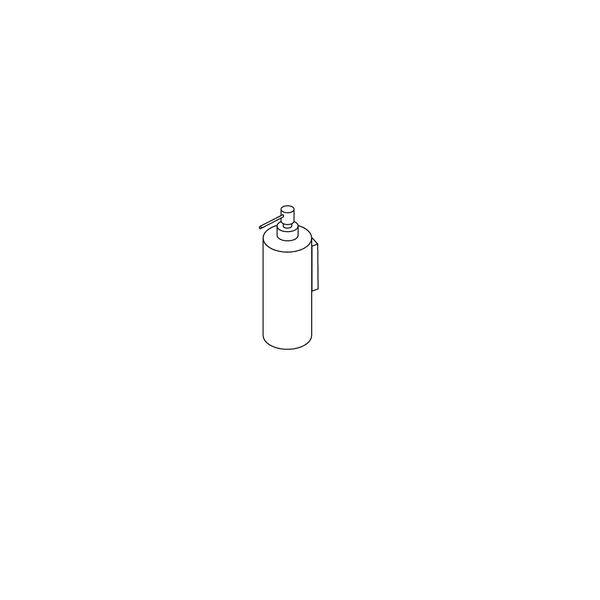 ProductFONTEA wall-mounted liquid soap dispenser in Black PVD stainless steel2MS3720-DGBlack PVD variant of a wall-mounted accessory. The page records AISI 304 and leaves reservoir volume, fixings and pump type to be confirmed. Confirm finish sample and current trade pricing before order.View in catalogue →
The FONTEA wall-mounted robe hook is another example. Its Black PVD variant is SKU 2MS3781-DG, and the catalogue page identifies AISI 304 stainless steel. The page states the hook is screwed to a structural wall or a suitable backer rather than to tile alone, and that the load rating and fixing detail are not recorded and should be confirmed before hanging heavy garments. That is the same point the product made before, and it is made here by an explicit instruction rather than by a published projection: the wall substrate and fixing method belong in the schedule rather than being left to a late installation decision.
The pairing also shows why the grade line in a schedule cannot be copied from one accessory to the next. Both of these FONTEA examples are AISI 304, which the page presents as the standard corrosion-resistant grade for interior washrooms. That is a reasonable starting point for a sheltered internal bathroom, but it is not the answer for a coastal or spa room, and neither accessory page records concealed materials, a load rating or a product-specific test report. A black finish does not upgrade the substrate underneath it.
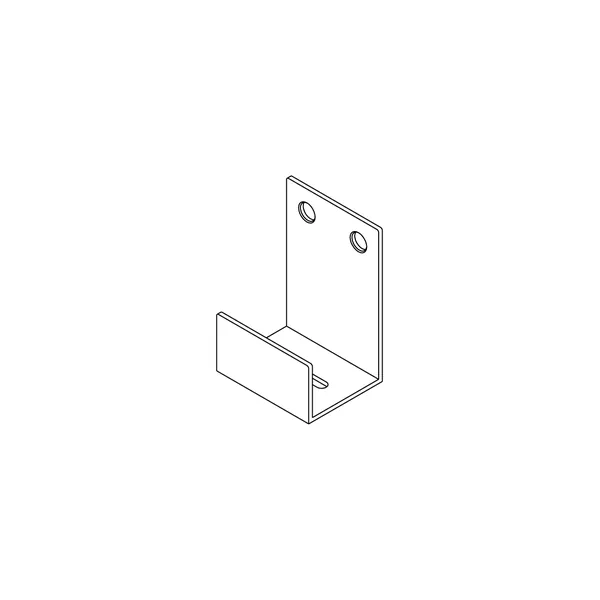 ProductFONTEA wall-mounted robe hook in Black PVD stainless steel2MS3781-DGBlack PVD AISI 304 hook. The page leaves load rating and fixing detail to be confirmed, so record substrate and fixing specification for each room.View in catalogue →
These examples show why a catalogue link is not enough by itself. Record the finish variant, product reference, mounting detail and approval sample together. If a black PVD accessory is substituted, recheck the substrate and test evidence rather than treating a similar shape as an equivalent product.
Sample approval and batch control
Black finishes can look different under warm bathroom lighting, daylight and reflected tile surfaces. Approve a physical sample in the intended room or mock-up, then keep the sample reference with the finish schedule. Review the accessory beside taps, shower controls, ironmongery and tile grout, not on an isolated white background.
For a multi-room project, state whether one sample approves the whole accessory family or only a particular SKU. Confirm how replacement items will be matched after completion. A sample approval should identify the product family, finish code, substrate, date and approving party.
The visual check should also look for practical details:
- Consistent colour on faces, edges and wall plates.
- Clean transitions around knurled, pressed or machined details.
- No visible damage from transport or installation.
- A fixing cover that can be removed without marking the finish.
- Enough clearance to clean behind and beneath the accessory.
This process does not create a durability guarantee. It prevents a visual sample from being mistaken for approval of an unspecified substitute.
Cleaning and handover protect the finish
The safest routine for stainless steel is simple: mild detergent and warm water, a clear rinse and drying with a clean cloth. The BSSA cleaning guidance says routine cleaning with soap or mild detergent is usually adequate and warns that chloride solutions, hydrochloric-acid cleaners and hypochlorite bleaches can cause staining and pitting. It also warns against carbon-steel wool and pads previously used on carbon steel.
Give the operator a short care sheet at handover. It should name the approved cleaner, explain rinsing and drying, identify products to avoid and state what to do after an accidental splash. For black PVD, add the supplier's finish-specific instructions. Do not assume that a cleaner suitable for uncoated stainless steel is suitable for every coloured finish.
Position matters as well. Keep accessories out of direct spray where the layout allows it, avoid details that hold standing water and leave enough access for wiping around wall plates. A well-chosen finish still needs a room that can be cleaned consistently.
For comparison with plated accessories, see how stainless steel and chrome bathroom accessories fail differently. That guide explains why substrate and surface layer should be considered separately.
When black PVD is the right recommendation
Black PVD is a strong recommendation when a project needs a coordinated dark finish and the team is prepared to approve a defined product, substrate, sample and care regime. It works best when colour is treated as part of a complete specification rather than as a late decorative choice.
Choose a different direction or pause approval when:
- “Matt black” is the only available description.
- The stainless grade or concealed materials are unknown.
- Test evidence does not identify the tested product and acceptance criteria.
- The finish sample does not match the scheduled SKU.
- Housekeeping cannot follow the required cleaning method.
- The fixing substrate and replacement route have not been agreed.
Browse the FONTEA bathroom accessories catalogue for current products and finish variants, then send the room schedule through the contact page when quantities, samples or trade pricing need review.
Frequently asked questions
Is black PVD the same as matt black?
No. “Matt black” describes appearance, not the manufacturing process. Specify black PVD on a named stainless grade, then confirm the finish code, sample and care guidance.
Is black PVD suitable for a coastal bathroom?
It can be, but the colour does not answer the corrosion question. Assess the stainless grade, chloride exposure, concealed parts, design details, cleaning regime and product-specific evidence. The BSSA identifies 316 as more resistant to chloride-driven localised corrosion than 304, while also warning that 316 is not corrosion-proof in all conditions.
What salt-spray hours should a supplier provide?
There is no universal pass number for every bathroom accessory. Ask for the method, duration, product configuration and acceptance criteria. BSSA guidance explains why part geometry, crevices, finish and test conditions affect the result.
How should black PVD accessories be cleaned?
Follow the product care sheet. As a general stainless-steel starting point, use mild detergent and warm water, rinse with clean water and dry. Avoid abrasive pads, carbon-steel wool, hydrochloric-acid cleaners and concentrated bleach or other chloride-containing products unless the supplier's instructions specifically say otherwise.
Specify black as a system, not a colour swatch
Black PVD earns its place in a bathroom schedule when it delivers coordinated appearance without hiding the decisions that protect long-term use. Name the stainless grade, finish variant, concealed materials, fixing method, evidence, sample and cleaning regime. Keep the exact product reference with those records, and make replacement information available at handover.
That approach gives UK specifiers a finish they can approve with confidence, while leaving room to choose the right grade and evidence for each project's exposure. For current black PVD accessory options, review the FONTEA catalogue.
Specify it from the catalogue
Every fitting mentioned here is stocked and specified in the FONTEA trade catalogue: full technical data, finishes and wholesale tiers.
Related reading
-
 Commercial projects
Who Buys Bathroom Accessories on a Build-to-Rent or Hotel Project?
Assign accessory selection, procurement, backing, installation and handover responsibilities explicitly across FF&E and construction packages.
-
 Maintenance
Housekeeping and Stainless Steel: Which Cleaning Chemicals Damage Bathroom Accessories?
Create a practical cleaning protocol for stainless bathroom accessories that controls product choice, dilution, contact time, rinsing and escalation.
-
 Procurement
Finish Consistency Across Hundreds of Rooms: Sample Approval and Batch Control
Set a repeatable finish-approval process for bathroom accessories with physical samples, controlled schedules, first-room checks and recorded batch inspections.