 ONTEA
ONTEA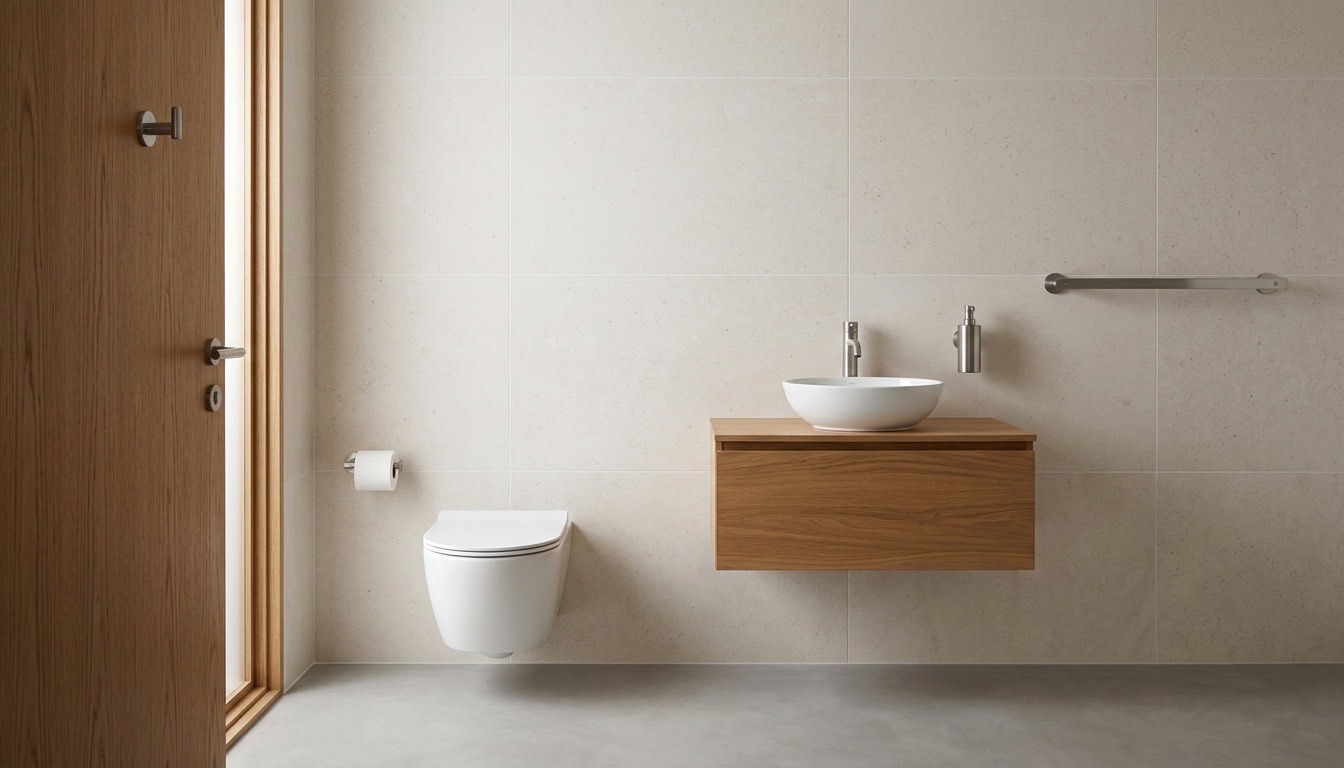
Matching accessory finishes across a project means holding one finish from the tap through to every rail, holder, hook and dispenser in the room, and recording which variant of each piece you have actually specified. The catalogue publishes nine finishes with their own landing pages, and a set of accessory colours that is wider than that, so the useful question for a specifier is not what colours exist but which of them you can order today on the exact accessory you need.
Key Takeaways
- Matching finishes is a scheduling problem, not a colour-matching problem. The finish name is only half of what goes in a schedule, the finish variant of a specific product is the other half.
- Exact match matters most where pieces sit together in one view. Small standalone items can tolerate a variation that would be visible on a shared wall.
- The catalogue publishes nine finishes on their own landing pages, including two bare steel finishes, one gold and one grey PVD, and a seven-colour pearl palette. Filter-only colours on a category page are not the same as a finish you can order.
- Where a combination does not exist, you have four options: change the product, change the finish, change the piece to something the catalogue does offer, or accept a visible variation and record it.
- Sample before committing to a large schedule. The catalogue publishes no sample, warranty or spares information, so ask for what you need before the order goes in.
What "matching" actually has to mean
Matching finishes is not a matter of two products sharing a colour name. It is a matter of two products sharing the same finish code on the same product, because a name alone leaves the variant open. The catalogue makes this concrete: a wall-mounted robe hook is offered with a code ending in BS, DG, GD or CE, one for each of its four finish variants, and each of those is a separate orderable line rather than a swatch on the same product page.
That distinction matters more for accessories than it does for a tap. A tap is usually a single hero item with one visible finish. An accessory set is many small pieces bought in bulk, often on separate order lines, and each one has to carry the same finish code as every other piece in the scheme.
The practical definition of a match is therefore: same product family, same finish variant, same supplier. Anything less is a scheme you will be checking on site.
The finishes the catalogue publishes
Nine finishes have their own landing pages on the catalogue, each with a product count. Four carry descriptive text explaining what the finish is and what it is not.
Brushed is the natural finish of the base metal, given a fine satin grain, with no coating and no plating. The page states it is available on every model in the catalogue in both 316L and 304 steel, and it lists 244 products. Because the colour is the metal, a scratch can be blended back into the grain instead of exposing a different layer underneath.
The black PVD page describes a matte black bonded to stainless steel at a molecular level in a vacuum, and states it will not fade in daylight. Gold PVD and copper PVD are described in the same way, as vacuum-bonded to the steel rather than electroplated.
Tinta is the one finish family that is not a single colour. The page describes it as a thin film carrying metallic pigments laid over the stainless steel body, offered as seven separate colours: Vivid orange, Sweet blue, Pearl black, Rich brown, Light rose, Calm green and Golden yellow. It is explicit that a fitting carries one finish, and that a Tinta colour is an alternative to a steel or PVD finish, never a layer over one. That is a genuinely useful line for a specifier, because it rules out a whole class of impossible combinations before they reach a tender.
Three of the nine landing pages carry no description at all: inox spazzolato, inox lucido and oro. They are the brushed steel, polished steel and gold finishes of the range, and the catalogue publishes only a product count for each: 360, 294 and 328 products. If you need to know what one of them is before you specify it, ask. The catalogue does not tell you.
Deep grey is the ninth. It is a PVD finish in the same family as gold, as the Tinta page states when it lists the alternatives, and it has its own landing page with 328 products.
The colours you can see but not yet order
The bathroom accessories category page carries a finish filter with seventeen entries. Eight of them, Anthracite, Coal, Desert, Olive tree, Pearl, Powder, Rock and Snow, have no landing page anywhere in the catalogue and no descriptive text. Filtering the accessories category by any of those eight currently returns zero products.
This matters because a specifier reading that filter will reasonably assume those colours are orderable. They are visible in the interface and they are not currently offered. A specification written against them is a specification that will come back with a substitution request, and the substitution will happen late, after the wall is tiled.
The same page's own introduction names four finishes for accessories, brushed, black, gold and copper, which is a narrower statement than its filter. Where the two disagree, the product page for the specific accessory is the authority, because that is where the actual variant list lives.
Which accessories have to match exactly
Matching pressure is not uniform across a room. It falls where the eye compares objects directly and in the same field of view.
The tightest match is a group of pieces on one wall or one elevation: a rail, a hook and a holder mounted close enough to read as a set. Any difference in sheen or colour temperature between these will read as a mistake, because there is nothing else in frame to distract from it.
The next tier is a room-wide match: the same rail length repeated across every room of a hotel, or the same dispenser beside every basin. Here the risk is not visible mismatch in one room, it is drift between rooms, where a batch difference shows up when two doors open side by side.
The loosest tier is the standalone small item: a toilet-roll holder on the opposite side of the room from the rail, a hook behind a door. Here a variation is tolerable if it is intentional and consistent within its own zone.
A useful rule is that the tighter the grouping, the more you should specify the finish variant code rather than the finish name, because at that distance the code is the only thing standing between you and a wrong delivery.
Where a variation is acceptable
Some variation is genuinely fine, and pretending otherwise makes specifications brittle.
A shelf used for toiletries is usually seen alone, often from a standing position and often with items on it. It does not need to match a rail that is three metres away in the same view.
A freestanding piece, such as a towel stand placed in the middle of a room, is read as furniture rather than as a fitting. It can sit in a neighbouring finish and still look deliberate, provided it is deliberate everywhere it appears.
A piece that is largely hidden, behind a door or under a counter, is the safest place to absorb a mismatch.
What never works is an unplanned variation. The difference between a considered zone and an error is whether the decision was written down. If a piece is a different finish because you decided that, say, the freestanding items read better a step apart from the wall-mounted ones, that is a scheme. If it is a different finish because the catalogue did not have the combination, it is a defect that will be photographed and returned.
Building a finish schedule that survives contact with a site
A finish schedule is a table with one row per product variant, not a list of colour names. The columns that earn their place are the ones that stop a substitution.
For each piece, record the product name, the catalogue link, the finish name, the full product code including its finish suffix, the material grade, and the quantity per room type. A schedule that says "towel rail, brushed" cannot be checked. A schedule that says "wall-mounted towel rail, 560 mm, inox spazzolato, 2MS45356-BS, AISI 304" can be checked against a delivery in about ten seconds.
The second rule is to fix the variant per product, not the colour per project. Writing "all accessories in deep grey" leaves every individual product's variant open. Writing one finish code per row closes it, and makes a substitution visible at the point where it happens rather than at the point of installation.
Third, write down what is not available. If you have deliberately accepted that one piece cannot be finished to match, put that in the schedule with the reason. A recorded substitution is a decision; an undocumented one is a surprise.
Fourth, agree the variant list before ordering in volume. The catalogue publishes variant lists per product page, and they are not the same across products. Every product you add to the schedule needs its own variant check, because a finish that exists on one accessory does not imply it exists on the next.
When the combination you want does not exist
This is the ordinary case, not the exceptional one. Four options exist, and the order matters.
Change the product. The same finish is often available on a different rail length or a different holder type within the same range. Moving from a 560 mm rail to a 425 mm rail within one family may keep the finish and change only the length.
Change the finish. If the piece exists but not in your colour, move to the nearest finish you can actually order and check that it looks deliberate against the rest of the scheme, rather than assuming it will.
Change the piece. Some accessories in any range are narrower in finish than others. A piece available only in the base steel finishes is a candidate for being replaced with a piece from a range with a wider finish list.
Accept and record the variation. Sometimes this is right, particularly for the standalone tier described above. Accept it deliberately, in writing, with the affected products named.
The option to avoid is ordering the unavailable combination and treating the resulting substitution as a delivery problem. That conversation happens at the worst possible moment, when the wall is already tiled.
Sampling before a large schedule
A finish sample answers one question: is this the colour I meant? It does not answer whether the supplier's production batch will match it, and that is a different and harder question.
What you can reasonably do is check each decision in turn. Before the schedule is signed off, ask for samples of the specific products in the specific finishes you intend to order, not a general colour chip. If the catalogue does not publish sample information, which it does not, then asking is the only way to find out what is available and on what terms.
Our existing guide to finish consistency across hundreds of rooms covers the approval process in detail, including how to hold a reference sample, how to record it, and why one good sample does not prove a whole batch. That article is about the control process. This one is about which finishes you can actually put in the schedule in the first place.
For the physical side of the range, the bathroom accessories category page lists the wall-mounted pieces the catalogue offers in solid stainless steel, and each product page carries its own variant list, material and guide price.
What the catalogue does not tell you
Two gaps are worth stating plainly rather than discovering on site.
First, the catalogue publishes no statement about samples, warranties or spares for accessories. It publishes an indicative guide price per unit excluding VAT, and states that firm trade pricing is quoted per order to trade accounts. Everything else about terms has to be asked for directly.
Second, accessory product pages publish dimensions as a drawing rather than as figures in text, and some pages explicitly state that a detail is not recorded and should be confirmed with the supplier. The robe hook page says its load rating and fixing detail are not recorded. The towel rail page says its projection and fixing method are not recorded. Neither is unusual, but it means the drawing is the specification, and a specifier working from a schedule should expect to ask.
The short version
Pick the finish from what the catalogue actually publishes, check the variant list on the specific accessory you need rather than the filter on a category page, and write the finish code into the schedule rather than the finish name. Where a combination does not exist, choose deliberately between changing the product, the finish or the piece, and record the answer. Sample the specific products and finishes before a large order, because the catalogue publishes no sample information to rely on, and ask for the load, projection and fixing details that its product pages do not carry.
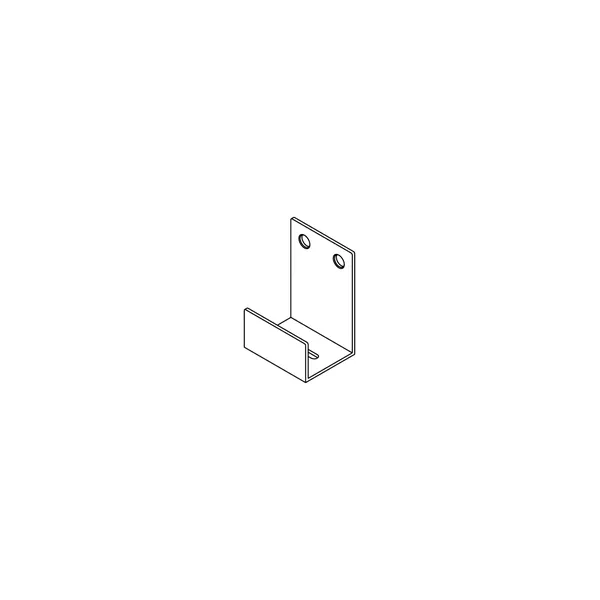 ProductWall Mounted Robe Hook, AISI 304 stainless steel2MS3781-BSInox spazzolato variant of a four-finish accessory, available in deep grey, oro and Tinta on the same product page.View in catalogue →
 ProductWall Mounted Towel Rail, 560 mm, AISI 304 stainless steel2MS45356-BS560 mm rail in four finishes. Guide price shown per unit ex VAT; confirm current pricing and the other variants at order.View in catalogue →
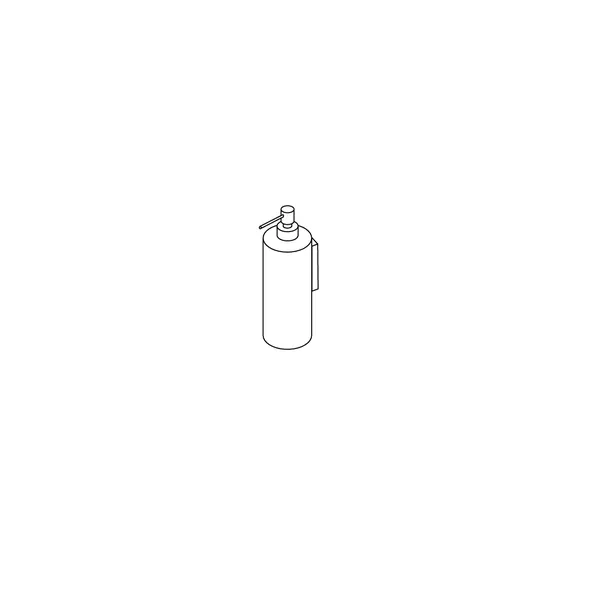 ProductWall Mounted Liquid Soap Dispenser, AISI 304 stainless steel2MS3720-BSAvailable in the same four finishes as the robe hook and towel rail, which is what makes a matched accessory set schedulable.View in catalogue →
Specify it from the catalogue
Every fitting mentioned here is stocked and specified in the FONTEA trade catalogue: full technical data, finishes and wholesale tiers.
Related reading
-
 Specification
Stainless Steel Bathroom Fittings for Coastal and Seafront Developments: A Salt-Air Corrosion Guide
What actually governs whether bathroom fittings survive a seafront elevation: the chloride gradient, finish, joint design, drainage and ventilation, how corrosion appears, and what to schedule.
-
 Accessible bathrooms
Accessories for Accessible Hotel Rooms and Doc M Washrooms: What to Specify Beyond Grab Rails
Plan accessible bathroom accessories by reach, transfer space, visibility and fixing coordination, then verify locations against the project access brief and approved drawings.
-
 Commercial projects
Who Buys Bathroom Accessories on a Build-to-Rent or Hotel Project?
Assign accessory selection, procurement, backing, installation and handover responsibilities explicitly across FF&E and construction packages.