 ONTEA
ONTEA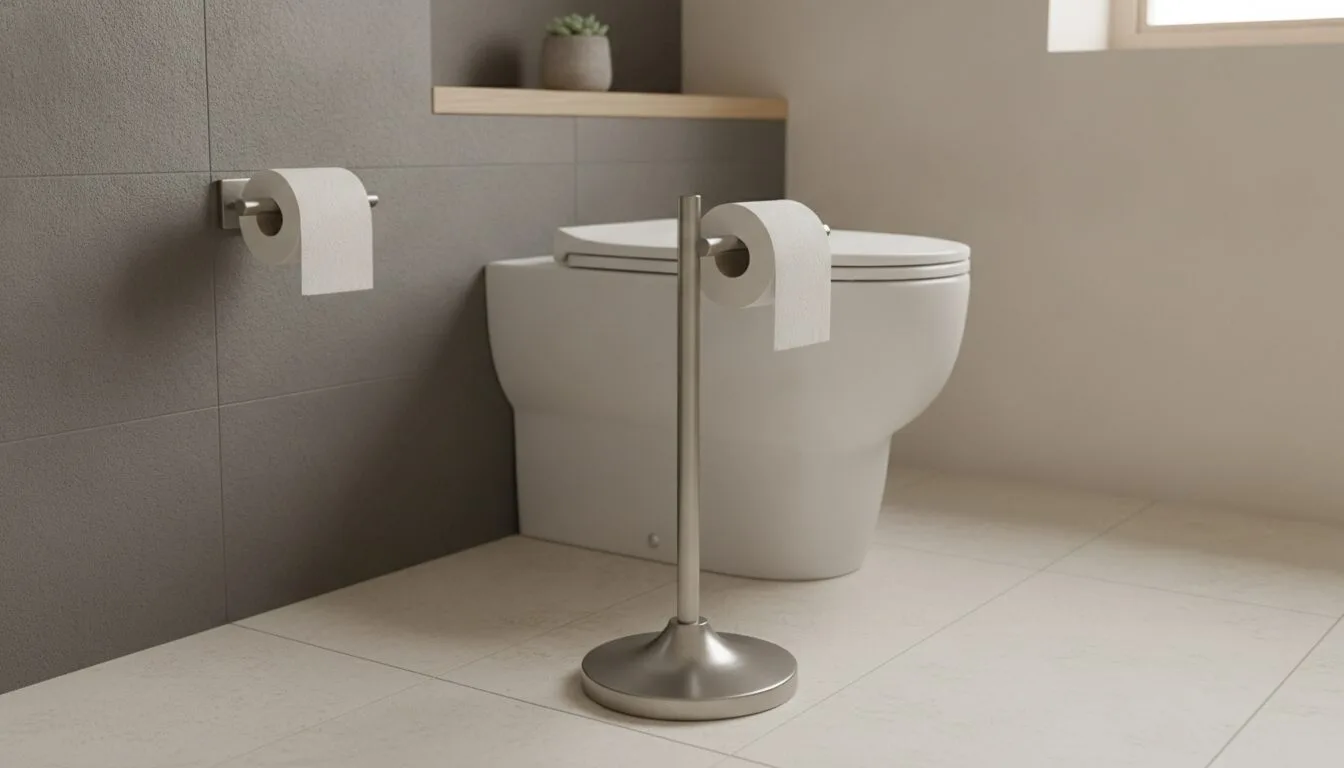
The short answer is practical: choose a wall-mounted toilet-roll holder when you want a fixed reach position, clear floor and straightforward mopping. Choose a freestanding holder when you cannot or do not want to drill, or when spare-roll storage matters more than floor space.
Neither format automatically lasts longer. Mounting stability means resistance to movement when a user pulls the paper or cleans around the fitting. Material durability means how the body and finish handle moisture, handling and approved cleaning. Daily reliability depends on what can move or loosen: the wall fixing and substrate on one side, the base footprint and floor contact on the other. Material, finish, roll size and cleaning access matter too, but they cannot rescue a poorly installed fixing or an unstable stand. This article focuses on mounting; our separate guide to stainless steel vs chrome bathroom accessories covers coating and substrate failure modes.
Key Takeaways
- Wall-mounted holders suit compact, busy or permanent bathrooms when the wall can take a sound fixing.
- Freestanding holders suit rented homes, no-drill layouts and rooms that need spare-roll storage, but use valuable floor space.
- Judge stability separately from material durability: inspect the fixing or base, then check roll compatibility and care instructions.
Freestanding vs wall-mounted at a glance
| Decision point | Wall-mounted | Freestanding |
|---|---|---|
| Installation | Screw-fixed or adhesive-mounted to a wall | Placed on the floor, with no wall fixing |
| Daily movement | Stays in one position when correctly fixed | Can shift when pulled, moved or knocked |
| Floor space | Leaves the floor below clear | Uses a footprint beside the WC |
| Cleaning | Easy to mop beneath the holder | Base and floor contact need cleaning |
| Storage | Usually one roll unless the design adds capacity | Often combines dispensing with spare-roll storage |
| Best fit | Permanent, compact or high-use bathrooms | Rental, no-drill or flexible layouts |
| Main risk | Loose fixing, unsuitable substrate or poor placement | Light or narrow base, tipping or awkward floor position |
This table describes the trade-off, not a performance test of every product. A well-designed freestanding unit can be stable, while a wall-mounted holder can loosen if its fixing does not suit the wall. Treat the mounting method as part of the specification rather than as a style choice made after the room is designed.
What actually holds up during daily use?
Wall-mounted: fixed position, with installation as the weak link
A wall-mounted holder has one useful advantage every time someone reaches for the paper: its position does not change. The roll remains at the planned height and distance from the pan, and the floor stays free of another object. That consistency is valuable in a cloakroom, an en-suite or a shared washroom where the holder is used repeatedly.
The installation is the part to scrutinise. Identify whether the fixing is going into masonry, a stud, a suitable board or a tiled finish over another substrate. Use the fixing method supplied or specified for that construction. A decorative cover can hide the screws, but it cannot compensate for an unsuitable anchor behind the tile.
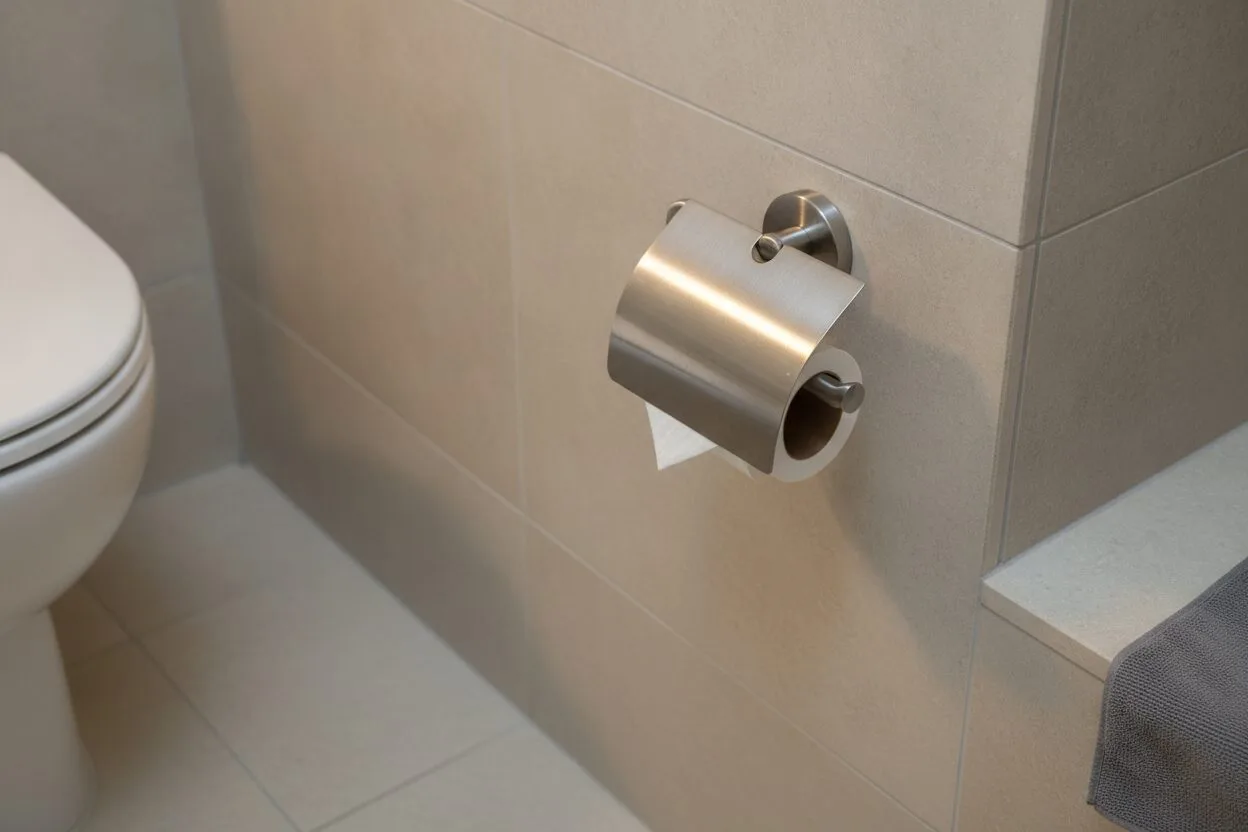
The FONTEA wall-mounted toilet roll holder is a useful example of the everyday wall-mounted approach. Its catalogue page describes a body in AISI 304 stainless steel, held clear of the wall face so the roll can be changed without marking the tile, and states that the exact fixing and projection are not recorded and should be confirmed with the supplier. Those are product details to check against the available wall width and the substrate, not a promise that every wall will accept the same installation. The FONTEA range also publishes left-hand and right-hand versions of the same holder for when the pan position fixes the side, so a compact layout is scheduled for its actual reach rather than for a standard photograph.
 ProductWall mounted toilet roll holder2MS37630-BSAISI 304 stainless steel, four finishes; the exact fixing and projection are not recorded, so take them from the selected product's own data.View in catalogue →
Freestanding: flexible placement, with the base as the weak link
A freestanding holder removes the drilling decision. Put it beside the WC, move it when the room layout changes, and avoid a permanent wall hole. That makes it a sensible format for rented bathrooms, temporary installations and rooms where pipework, panelling or a glass screen leaves no convenient wall surface.
The compromise is movement. A user pulls paper from the holder while the unit stands on the floor, so the base needs enough footprint and mass for the intended use. A tall, light stand can be easy to knock. A broad base can be steadier but harder to fit beside a close-coupled WC or within a narrow circulation route. Check the base dimensions, underside contact and total height before choosing from a photograph.
For a concrete category example, the Mina EMME 1271 is a freestanding stainless-steel unit combining a toilet-roll holder and toilet-brush holder. Mina's product page identifies it as AISI 304 and lists a brushed stainless finish alongside other finishes. It is not a FONTEA catalogue product, but it shows why freestanding products can add a second function while taking one floor position.
A freestanding unit should not be treated as a wall-mounted holder with its screws removed. It has different checks: is the base stable on the finished floor, can the floor be cleaned around it, and does the combined storage make the footprint worthwhile?
Cleaning, splash zones and floor access
Wall-mounted holders usually make routine floor cleaning simpler because there is no base to lift or mop around. They also keep the roll off the floor. That does not make them immune to splashes or residue: location beside a shower, basin or bath still matters, and the wall junction needs to remain accessible for wiping.
Freestanding holders can be moved out of the way, which is helpful during a deep clean. The same flexibility creates another task. Clean around the base and underneath it, check for trapped moisture, and keep spare rolls away from direct spray. A floor-standing design that is easy to move is not automatically easier to maintain if it is rarely moved.
For stainless-steel surfaces, the British Stainless Steel Association recommends soap or mild detergent with warm water, followed by a clean-water rinse and drying. Its guidance also warns against chloride-containing solutions, including hydrochloric-acid cleaners and hypochlorite bleaches, and against carbon-steel wool. Follow the product's own care sheet where it is more specific, especially for coloured finishes. For a separate coastal exposure question, see the 316L accessories guide.
Cleaning access is therefore a mounting decision as well as a housekeeping decision. In a hotel or multi-unit development, specify where staff can wipe behind a holder, how a freestanding base is lifted safely, and which cleaning products are approved for the finish. In a home, the same questions prevent a small fitting from becoming a neglected dirt trap.
Which format suits your bathroom?
Compact en-suites and cloakrooms
Wall-mounted is usually the better starting point when floor clearance is tight. A vertical holder can reduce sideways projection where the gap beside the pan is narrow, although the FONTEA range currently publishes no vertical roll holder, so that format has to be sourced separately or accepted as a horizontal holder on a short projection. Measure the wall run, cistern, basin, door swing and user reach together. Do not choose a slim holder only by its front view if its rosette or fixing plate cannot sit on the available wall.
One UK bathroom guide gives a starting range of 600 to 700 mm from the finished floor and 200 to 300 mm forward of the bowl edge for holder placement (Bathroom Mountain). Treat those figures as practical guidance, then adapt them to the users, pan geometry and accessibility design of the room. The important result is a natural reach without collision with the wall, cistern or furniture.
Rented or no-drill bathrooms
Freestanding is the simplest no-drill option. It does not ask permission to penetrate a tiled wall and can move with the tenant. It still needs a measured position: keep the base outside door swings, avoid the shower's direct spray and leave enough clearance to clean.
Adhesive mounting is a separate option, not an automatic substitute for a screw fixing. The tesa UK Power.Kit guidance describes surface compatibility, cleaning before application and a 12-hour hardening period. Its page also lists surfaces it does not recommend, including plaster and some plastics. If adhesive is considered, use the manufacturer's surface, curing and load instructions rather than assuming a smooth-looking wall is suitable.
Family, guest and hospitality bathrooms
A wall-mounted holder creates a predictable position and keeps the floor clear for cleaning teams. That makes it the default for a permanent, high-use layout when the substrate and fixing are known. A freestanding unit can still make sense where spare-roll storage is part of the brief, but its base should be treated as a piece of floor furniture with a defined cleaning and replacement plan.
Material, roll size and finish checks
Mounting format answers only one part of the decision. Before ordering, ask for the following product information:
- Body material and finish, including any concealed components that affect care.
- Overall projection, base dimensions or fixing plate dimensions.
- Roll width and diameter limits, including whether jumbo rolls fit.
- Fixing method, wall-substrate requirements and included hardware.
- Cleaning instructions for the exact finish.
- Spare parts, replacement references and finish availability.
Do not use material grade as a shortcut for mounting stability. A stainless-steel freestanding holder can still tip if its base is too light for its height. A stainless-steel wall holder can still loosen if its anchor is wrong. Conversely, a sound fixing does not make a finish suitable for every cleaner.
A second specification choice is capacity. The FONTEA accessory range does not currently publish a two-roll wall-mounted holder, so where spare-roll continuity matters the capacity is added by a second function rather than by a double spindle. The FONTEA freestanding toilet roll and brush holder unit carries a roll holder and a brush holder on one stand in AISI 316 stainless steel. Compare that combined capacity, and the floor position it occupies, with the wall width and the project's replacement routine before choosing it over a single wall holder.
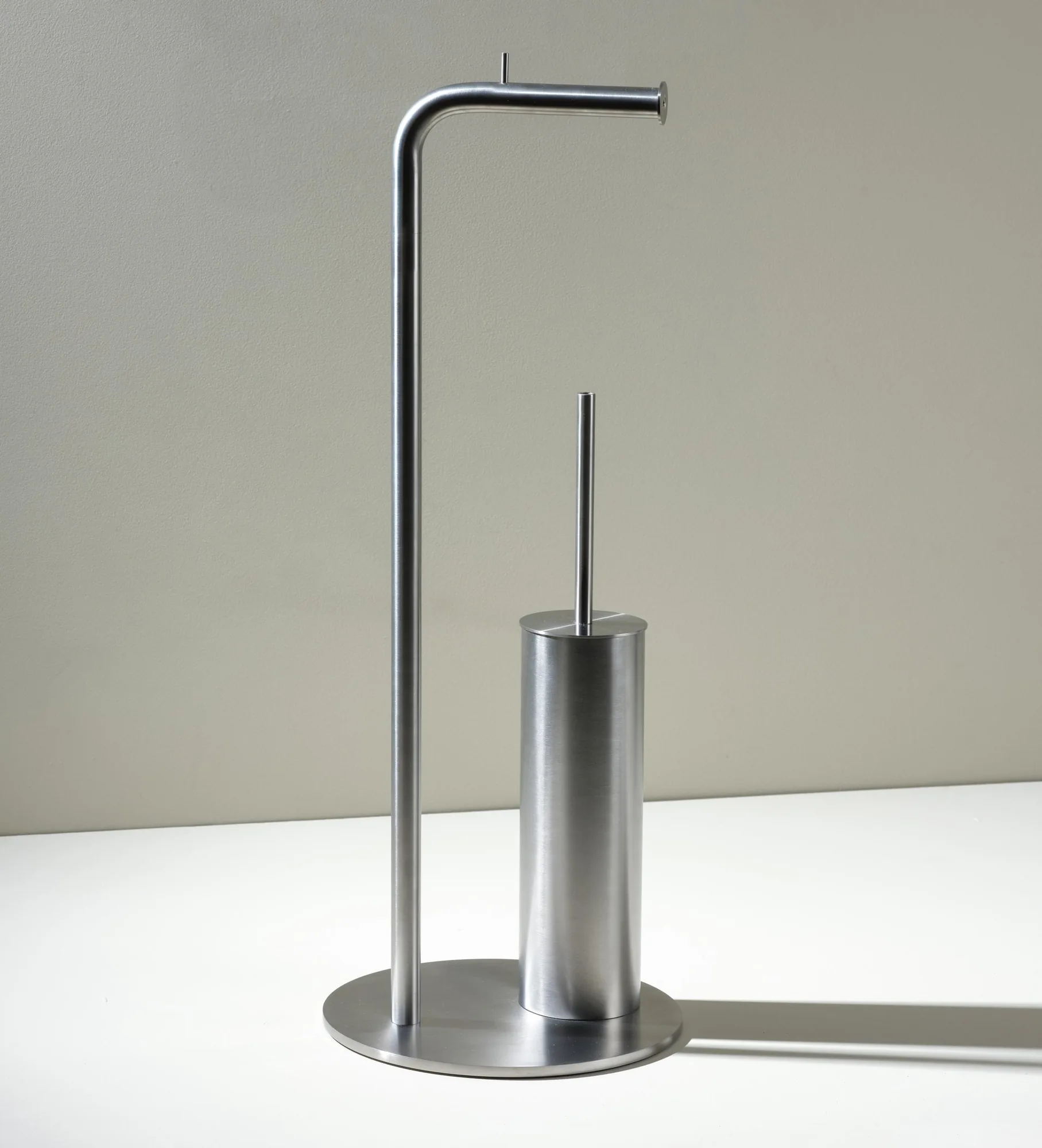 ProductFreestanding toilet roll and brush holder unit2MS3403-BSTwo functions on one stand in AISI 316 stainless steel, four finishes; confirm the floor is level and clear of the pan swing before placement.View in catalogue →
If a toilet brush is also being specified, keep its mounting decision separate. The FONTEA freestanding toilet brush holder is a relevant catalogue example of a freestanding accessory, but it is not a toilet-roll holder. It stands on the floor so no drilling is needed beside the pan, and it can be moved if the layout changes later. Its placement still needs a stable base, cleaning access and a sensible position beside the WC, set where the room is cleaned around rather than under.
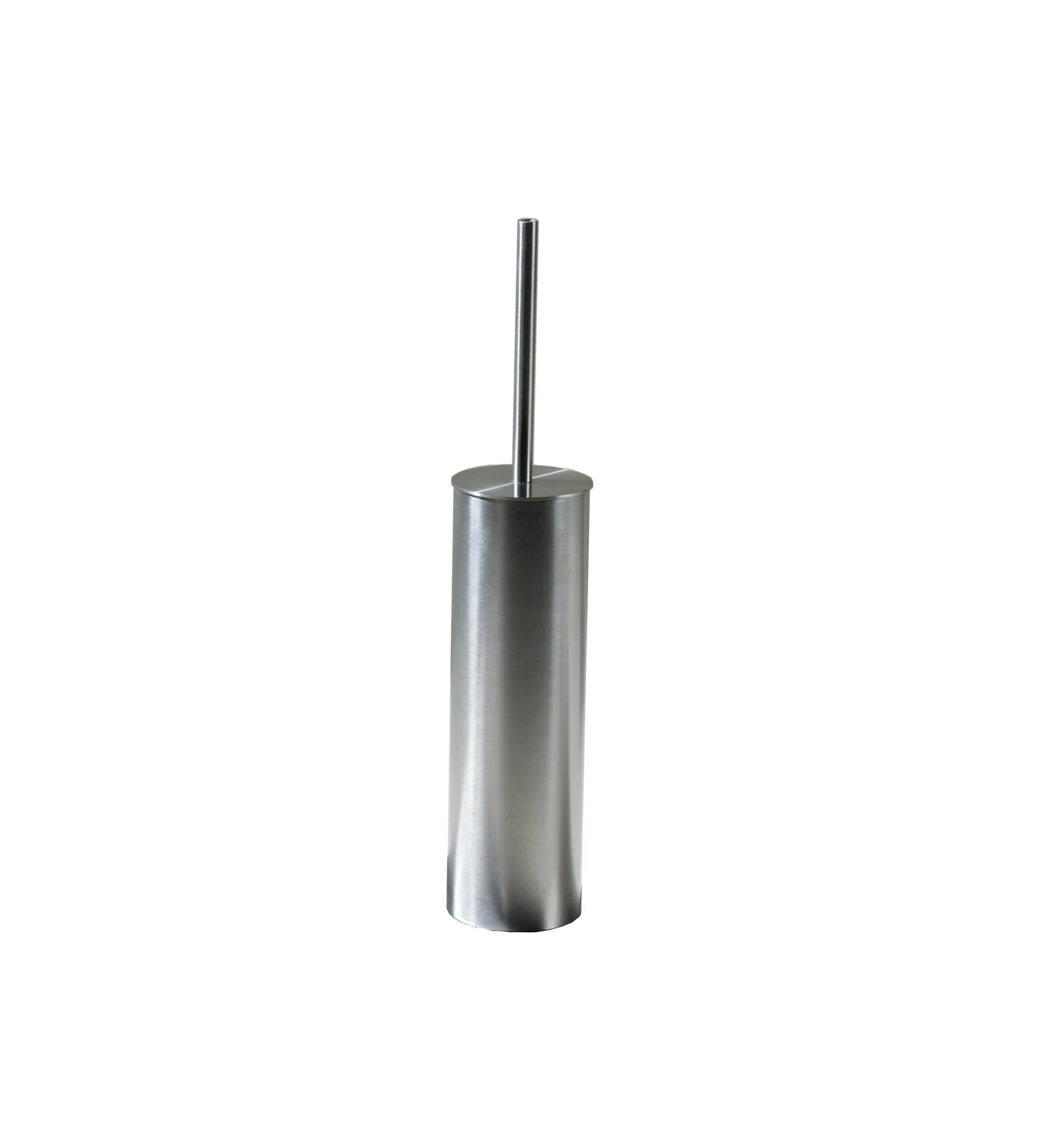 ProductFreestanding toilet brush holder2MS3535-BSFloor-standing AISI 304 stainless steel in four finishes; no wall fixing, so position it clear of the cleaning route.View in catalogue →
A buyer's decision checklist
Use this sequence before approving a toilet-roll holder for a home or project:
- Measure the wall and floor clearance beside the WC, including door and drawer swings.
- Decide whether permanent wall fixing is acceptable and identify the wall substrate.
- For freestanding units, check base width, mass, floor contact and cleaning access.
- Check the roll size and replacement method against the household or operator's stock.
- Set a usable position, using published guidance only as a starting point.
- Confirm body material, finish-care instructions and any concealed parts.
- Record the product reference, approved finish and replacement route in the schedule.
For a wider accessory schedule, browse the FONTEA bathroom accessories catalogue. For room layouts, quantities or finish matching, use the FONTEA contact page with the relevant schedule rather than selecting a holder from a photograph alone.
Frequently asked questions
Is a wall-mounted toilet-roll holder more stable?
It is usually more stable when the fixing suits the wall and is installed correctly because its position is anchored rather than resting on a floor base. That is a mounting advantage, not a guarantee. Check the substrate, anchor, screw and fixing plate, then inspect the holder after installation.
Is a freestanding holder better for a rented bathroom?
Often, yes. It avoids drilling and can be moved when the room or tenancy changes. Choose one with a base suited to the floor and keep its footprint clear of splash zones, door swings and the cleaning route.
Does wall-mounted make cleaning easier?
Usually. The floor beneath stays open for mopping, while a freestanding unit needs to be moved and cleaned around its base. A wall-mounted holder still needs wiping at the wall junction and should be positioned away from direct spray where possible.
Will a freestanding toilet-roll holder wobble?
It can, depending on base mass, footprint, height, floor contact and how it is used. Ask for base dimensions and weight where available. If those details are not published, treat stability as an unresolved specification question rather than assuming the stand is secure.
Can adhesive replace a screw-fixed holder?
Only when the surface and product instructions allow it. The tesa guidance describes compatible surfaces and a curing period, but adhesive performance is product- and surface-specific. Do not apply a generic load or durability claim to a different holder.
Choose mounting around the room, not the photograph
Wall-mounted toilet-roll holders are the practical default for compact, permanent and heavily cleaned bathrooms because they keep a fixed position and leave the floor clear. Freestanding holders earn their space when drilling is unavailable, flexibility matters or integrated storage solves a real room problem.
Whichever format you choose, specify the part that takes the daily stress: wall anchor and substrate for a mounted holder, base and floor contact for a freestanding one. Then confirm roll size, cleaning access, finish care and replacement references. Browse the FONTEA catalogue to compare relevant accessory formats before you finalise the schedule.
Specify it from the catalogue
Every fitting mentioned here is stocked and specified in the FONTEA trade catalogue: full technical data, finishes and wholesale tiers.
Related reading
-
 Accessories
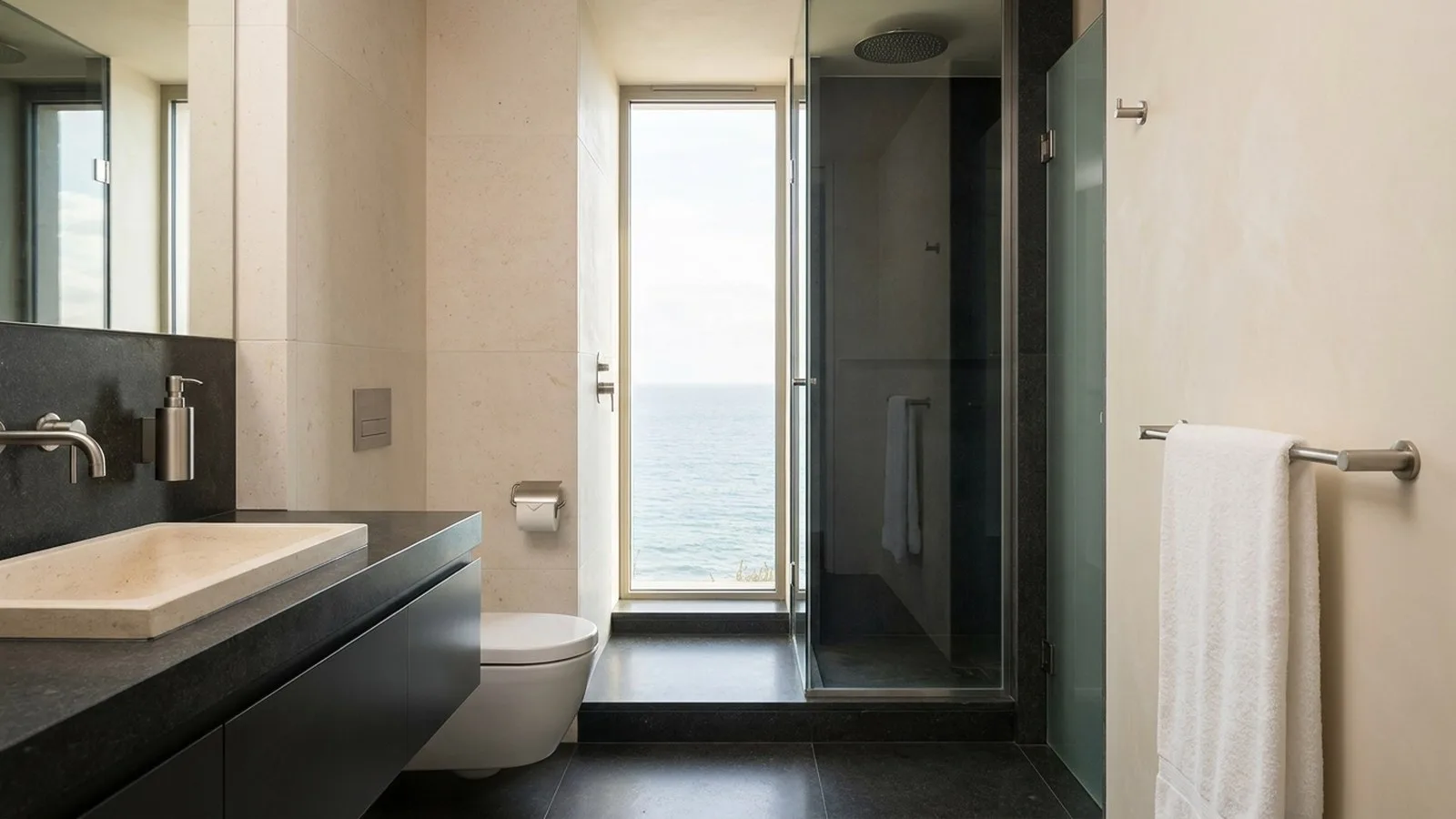
316L Stainless Steel Bathroom Accessories for Coastal and Seafront Properties
How to specify 316L stainless steel bathroom accessories for coastal homes, hotels and seafront projects, from finishes and fixings to cleaning.
-
 Accessories
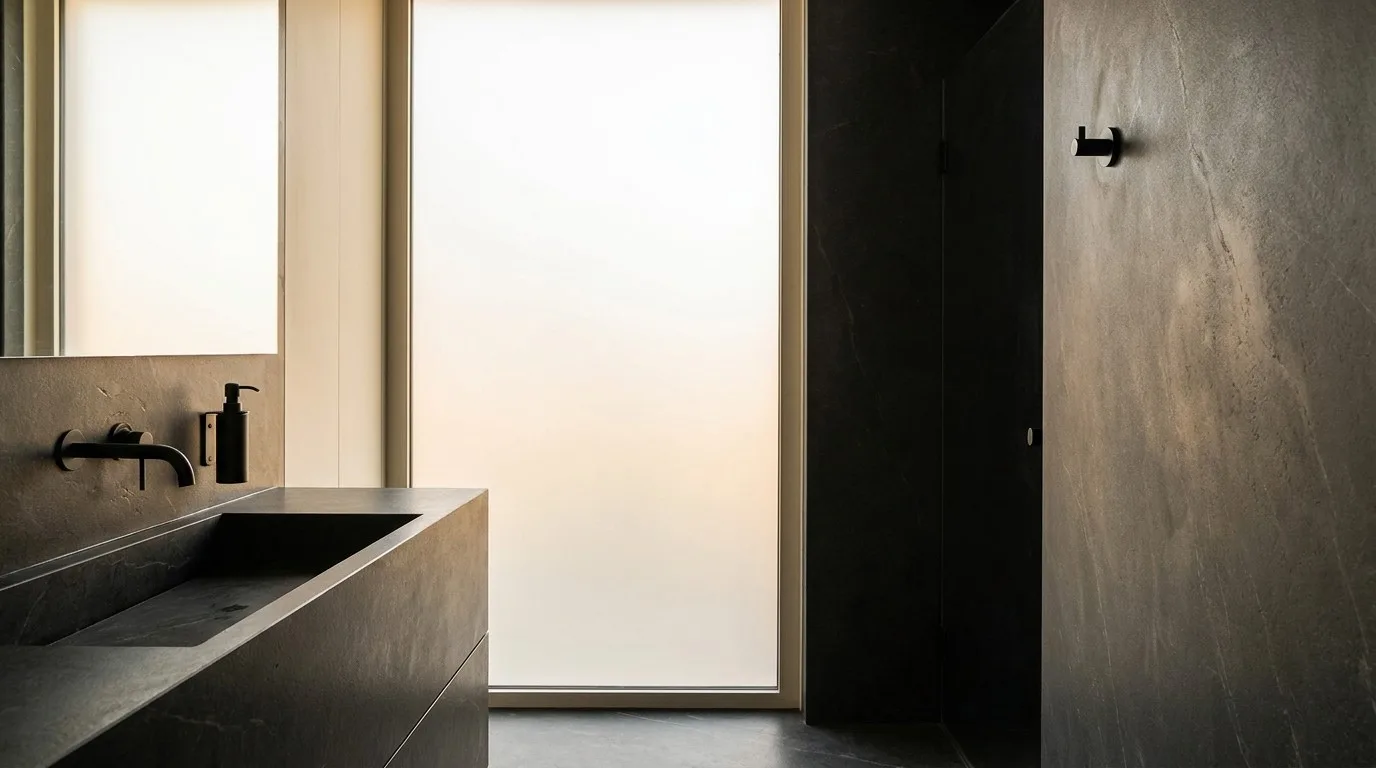
Black PVD stainless steel bathroom accessories: a UK specification guide
Black PVD gives bathroom accessories a dark architectural finish, but approval should cover the stainless grade, coating evidence, fixing details and cleaning regime.
-
 Accessories
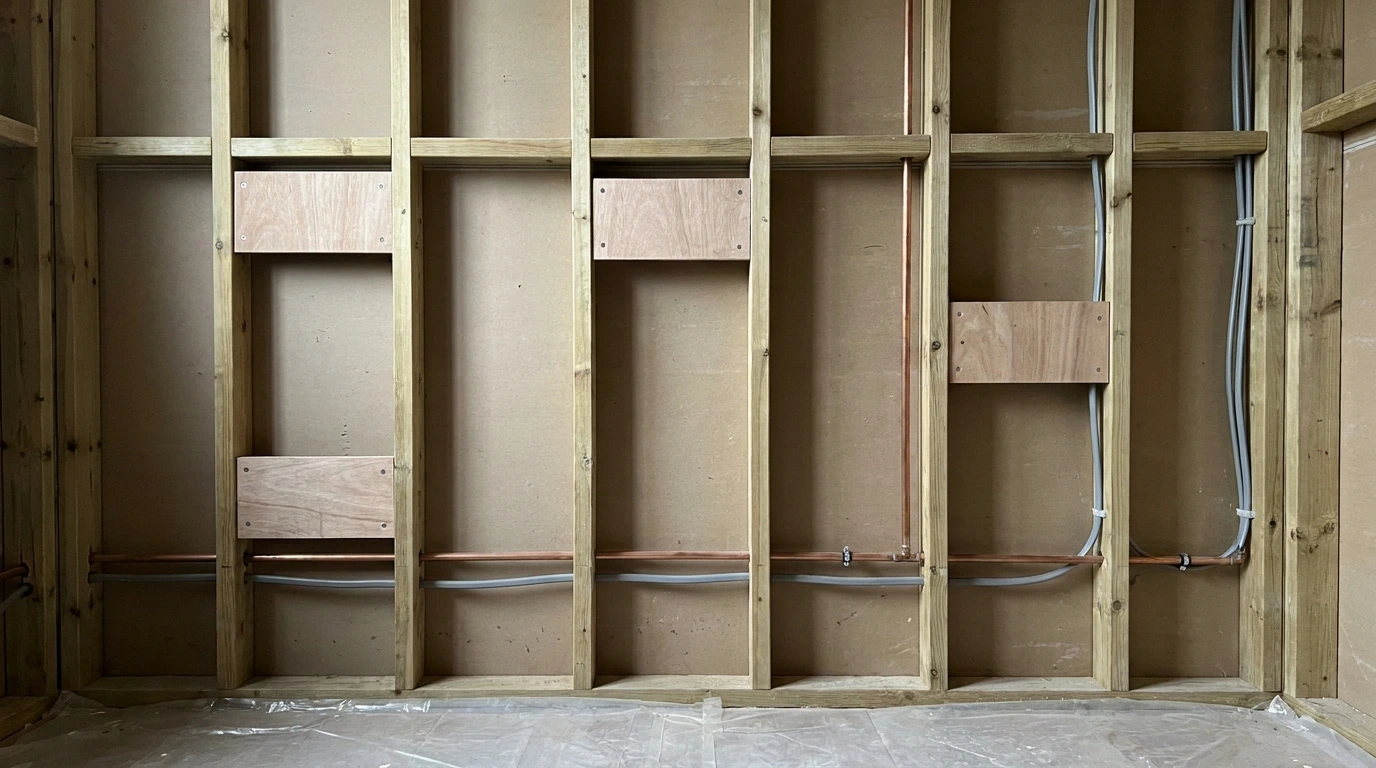
How to Fix Bathroom Accessories: Wall Backing and Stainless Fixings
Plan wall backing, substrates and stainless fixings before installing towel rails, robe hooks and shelves in hotel or rental bathrooms.