 ONTEA
ONTEA
Bathroom fittings that genuinely originate in the EU enter Great Britain at 0% customs duty, so for EU-origin taps and accessories the duty line on your import declaration should be nil. What still lands is import VAT at 20%, charged on the customs value plus duty plus freight, which is why the landed cost of an EU shipment is usually close to the ex-works price with VAT and carriage on top rather than duty on top.
Key Takeaways
- EU-origin fittings are duty free into Great Britain under the UK-EU Trade and Cooperation Agreement, but only when origin is proven. A statement on origin from the exporter or your own importer's knowledge is required.
- Import VAT is charged at 20% on the customs value plus duty plus incidental costs such as freight and insurance to the first UK destination. VAT-registered importers normally account for it on their VAT Return rather than paying at the border.
- Two different duty rates matter here. Stainless steel sanitary ware and building fittings carry a 0% third-country rate, while taps, cocks and valves carry 2%. Both are 0% for EU-origin goods.
- Tariff and VAT rates verified against the UK Trade Tariff on 3 October 2026. Check your own codes and your import date before you quote a landed cost.
All rates, thresholds and dates in this article were opened at source on 3 October 2026. Duty figures come from the UK Trade Tariff commodity look-up, and the VAT, origin and clearance rules come from HM Revenue & Customs guidance on GOV.UK. Rates change, so treat the figures below as a dated starting point and re-check them for the month you are actually importing.
The short answer, and the part that catches people out
The UK's own tariff schedule sets the starting rate. The UK Global Tariff applies to all goods imported into the UK unless the country you are importing from has a trade agreement with the UK, an exception such as a relief or suspension applies, or the goods come from a developing country covered by the Developing Countries Trading Scheme. The schedule sits in Annex I of Part Three of the Tariff of the United Kingdom, made under section 8 of the Taxation (Cross-border Trade) Act 2018 through the Customs Tariff (Establishment) (EU Exit) Regulations 2020.
Because the EU has a trade agreement with the UK, goods that originate in the EU get the preferential rate instead. As the government's own explanation of the Integrated Tariff Schedule puts it, the agreement provides that this goods trade between the UK and EU will be tariff free, subject to traders meeting rules of origin requirements.
What catches importers out is that the agreement's zero rate is conditional, not automatic. Origin is where the goods were grown, produced or manufactured, and it may not be the country where they are shipped or bought from. A shipment that ships from Italy, is invoiced by a Dutch trading company and was assembled from components bought in two other countries may not be EU-origin at all. If you cannot prove origin, the standard rate applies, and for taps that is not zero.
One useful piece of continuity for anyone who already worked with EU paperwork: the classification of goods has broadly remained the same as under the EU's Combined External Tariff, to provide continuity and minimise disruption for businesses used to the EU code system. The codes you used before January 2021 are usually still recognisable, though the UK now runs its own schedule and the rates under it are not always the same as the EU's.
Two duty rates, not one
Classification drives everything downstream, and the answer depends on what the product is rather than on which range it came from. Checked against the UK Trade Tariff commodity look-up on 3 October 2026:
| What the product is | Commodity code | Third-country rate | EU preferential rate |
|---|---|---|---|
| Sinks and washbasins of stainless steel, other | 7324100090 | 0% | 0% |
| Other sanitary ware and parts of iron or steel, other | 7324900090 | 0% | 0% |
| Mountings, fittings and similar articles of base metal, suitable for buildings, other | 8302419000 | 0% | 0% |
| Taps, cocks and valves for sinks, washbasins, baths and similar fixtures, mixing valves, other | 8481801190 | 2% | 0% |
| Taps, cocks and valves, other, other | 8481801990 | 2% | 0% |
Read that as a headline rather than a ruling. Stainless steel towel rails, soap dispensers and toilet-roll holders sit in the 8302 heading with a 0% third-country rate, while taps and mixers sit in heading 8481 with a 2% third-country rate that took effect on 14 April 2025. If you are buying from inside the EU and proving origin, both are 0%. If a shipment's origin is not provable as EU, the third-country column is what you are exposed to, and for taps and mixers that is a real 2% on top of VAT.
Two caveats matter here. First, classification depends on the material and the function of the individual article, not on the marketing category, so a range sold as one collection can contain articles in different headings. Where a range mixes materials or functions and the code is not obvious, HMRC's guidance on getting a legally binding decision on a commodity code explains how to apply for a binding tariff information decision, which settles the classification rather than leaving it to argument at the border. Second, a composite product such as a thermostatic shower column combines a valve, a rail and a head and can attract more than one heading. Do not assume the whole column inherits the tap rate; check it.
What import VAT is charged on
Import VAT is the real cost of importing fittings from the EU, and it is not a fixed percentage of the invoice. HMRC's guidance on VAT on imports from outside the UK sets out the base: imported goods are normally charged at the same rate as if they had been supplied in the UK, and the value for VAT is the customs value plus incidental expenses such as commission, packing, transport and insurance up to the goods' first destination in the UK, plus any customs duty or levy payable on importation. The standard UK VAT rate is 20%.
So the order matters. Duty is calculated on the customs value first. Import VAT is then calculated on that same customs value with the duty and the freight, insurance and handling added. For EU-origin goods the duty element is nil, but the freight and insurance element is not, which means carriage from Italy to a UK trade counter is inside your VAT base and not merely a cost you absorb after the VAT is settled.
If you are VAT registered, the usual route is to keep that VAT off your cash flow entirely. Postponed VAT accounting lets you declare the import VAT and reclaim it as input tax on the same VAT Return, and you do not need any approval to use it. Two conditions apply: the goods must be for use in your business with the right to dispose of them, and you must include your VAT registration number on the declaration. If a freight forwarder or broker makes the declaration for you, you must tell them in writing that you want PVA used and enter your own details as consignee, and you keep a written record of that instruction. You cannot change PVA to immediate payment after the declaration is submitted.
If you are not VAT registered you still have to pay the import VAT, and you cannot reclaim it. That is the point at which import VAT stops being a timing question and starts being a margin question, and it is worth modelling into a price before you commit to a supply chain that relies on EU imports.
The £135 consignment threshold gets quoted out of context more often than any other rule in this area, so it is worth stating plainly what it does and does not do. Under the rules on VAT and overseas goods sold directly to customers in Great Britain, consignments valued at £135 or less that are outside the UK and sold directly to customers are charged UK supply VAT at the point of sale by the seller, rather than import VAT at the border. It applies to consumer sales, and it explicitly does not apply where the sale is business to business and the customer has given the seller their UK VAT registration number. A trade buyer supplying their VAT number takes the consignment out of that regime entirely, and above £135 normal VAT and customs rules apply on importation.
Proving EU origin, and what it costs not to
Preference is a claim you make, and the evidence has to exist before or after the goods arrive. Under the Trade and Cooperation Agreement origin procedures, a claim can be made if the importer holds either a statement on origin made out by the exporter or their own importer's knowledge that the product is originating.
The statement on origin is prescribed text the exporter adds to the invoice or another document describing the product in enough detail to identify it, and it can be electronic. It can cover a single consignment or multiple shipments of identical products under one contract for a period of no more than twelve months. For imports into the UK it is valid for two years from the date it was made out. The exporter must hold the underlying information showing originating status, including the originating status of the materials used, which usually means supplier declarations from their own suppliers.
You are not powerless if the paperwork is late. A claim can be made after importation as long as it is made within three years of the importation date and accompanied by a valid proof of origin, in which case duties would be repaid to you. The three-year window is a genuine fallback, but planning a programme delivery on the assumption that you will use it is a poor trade: a repayment claim is a recovery process, not a cash-flow plan.
Importer's knowledge puts the evidential burden on you. It means you are claiming from your own knowledge that the goods meet the origin criteria, so you should hold the Harmonised System code and origin criterion used, a description of the production process, and details of any non-originating materials and their codes. For a mixed range, or where the supplier's production is not fully transparent to you, a statement on origin from the exporter is the more defensible route. On import into the UK a small-consignment waiver allows some goods to be imported without a formal proof of origin where the total value is under £1,000 and they are declared as meeting the origin rules, but the waiver does not apply where imports are being split to avoid the normal requirements, which is exactly what a phased multi-shipment programme might look like to HMRC if you treat it casually.
The steps that set your lead time
Nobody publishes a reliable single figure for how long an EU-to-UK shipment takes, because the answer depends on the factory, the route, the carrier and the customs setup of the importer rather than on the goods. What you can control, and what gov.uk sets out in measurable terms, is the administration around the shipment, and that is where lead time is usually lost.
Getting an EORI number comes first. You need an EORI number that starts with GB to import goods into England, Wales or Scotland. You will usually get it immediately, but if HMRC needs to make checks on your application it can take up to 5 working days. If your business is not established in Great Britain and you cannot apply yourself, someone dealing with customs for you applies instead.
If you import regularly, a duty deferment account is the mechanism that moves your duty and VAT payments to one monthly Direct Debit rather than payment per consignment, and it needs setting up before your first shipment rather than after. Applying requires a guarantee from a financial institution established in the UK and regulated by the Prudential Regulation Authority unless you qualify for a guarantee waiver, and HMRC aims to complete a deferment account application within 30 working days once it has everything it needs. That is the single largest controllable delay in setting up an import operation.
The safety and security declaration comes next, and it is the requirement most often discovered late. If you move goods into Great Britain you need to make an entry summary declaration before the goods arrive, and you can submit up to 200 days in advance. As the carrier, you are responsible for making sure it is submitted, either yourself or through a third party such as a customs agent, and if you use a third party they should not file without your knowledge and contractual agreement. The service, Safety and Security GB, has no user interface, so the declaration is submitted as an XML message through compatible software. Confirm in your freight contract who is actually lodging it, because a carrier filing late is your delivery date slipping.
Customs value and duty deferral finish the picture. You can defer import VAT through a deferment account if you are not VAT registered, or are registered and not using PVA; if you are using PVA you do not need a deferment account for the VAT. You must also be able to substantiate the customs value, which for goods sold at agreed prices usually rests on the commercial invoice and any related documentation.
On the ground side, the remaining timing questions are commercial rather than regulatory: production and finishing lead times set by the manufacturer, the transit time of the chosen route, and whether your terms leave the supplier or the buyer responsible for clearing customs. Ask for a firm lead time in writing, with the port of dispatch and the Incoterm named, because an unstated term is where a projected saving quietly turns into a charge you did not budget.
Worked example: what an EU shipment costs
Take a hypothetical consignment of EU-made fittings with a customs value of £20,000 and £800 of freight and insurance to the first UK destination, with origin proven, so the duty is 0%.
| Line | Amount |
|---|---|
| Customs value | £20,000 |
| Customs duty at 0% (EU origin proven) | £0 |
| Freight and insurance to first UK destination | £800 |
| Value for import VAT | £20,800 |
| Import VAT at 20% | £4,160 |
If the same consignment arrived without proof of origin and contained taps rather than only accessories, a 2% duty on a £20,000 customs value would add £400, and import VAT would rise accordingly because duty is inside the VAT base. The figures are illustrative, but the structure is not: duty changes the VAT base, freight changes the VAT base, and a VAT-registered buyer recovers the VAT on the same return while a non-registered buyer carries it as cost.
What this looks like on the products themselves
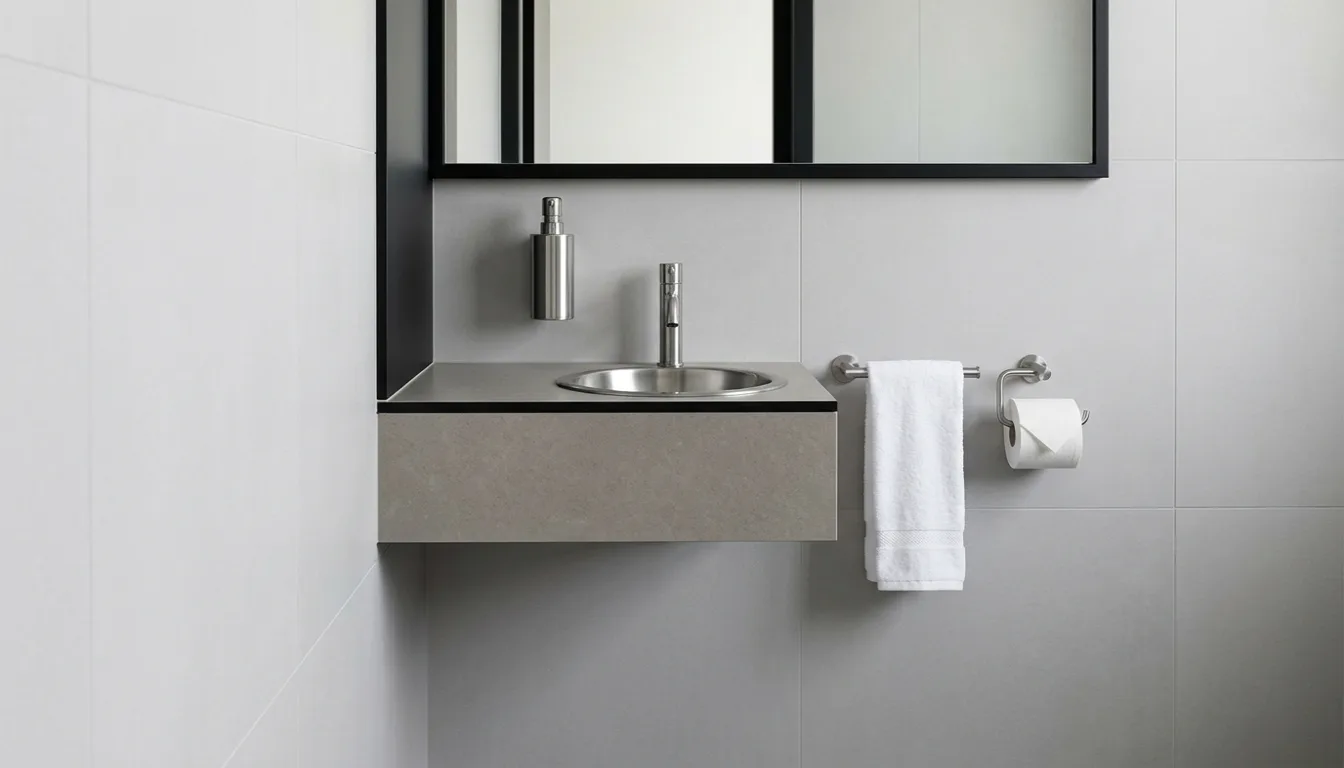
The distinction in this article is visible in a real range. A stainless steel towel rail, a soap dispenser and a toilet-roll holder are building fittings and sanitary ware, which sit in the 0% headings. A basin set and a thermostatic shower set are fittings that control or supply water, so they sit in the tap headings and carry the 2% third-country rate before preference is applied. Classification and specification are two separate conversations here, and the material is worth deciding on its own terms: the two water-control products below are AISI 316L marine-grade stainless steel, while the three accessories are AISI 304, the standard grade for interior washrooms. Both are offered across the same finish families, so a buyer can match a room without forcing a marine grade onto a towel rail that will never see salt air.
One more reading note before the prices: each product page publishes an indicative guide price for the finish shown, while the listing pages show a lower "from" figure standing for the cheapest finish in the range. So the price on a product page is not the entry price for the range, and a buyer comparing two suppliers should compare like finish with like finish.
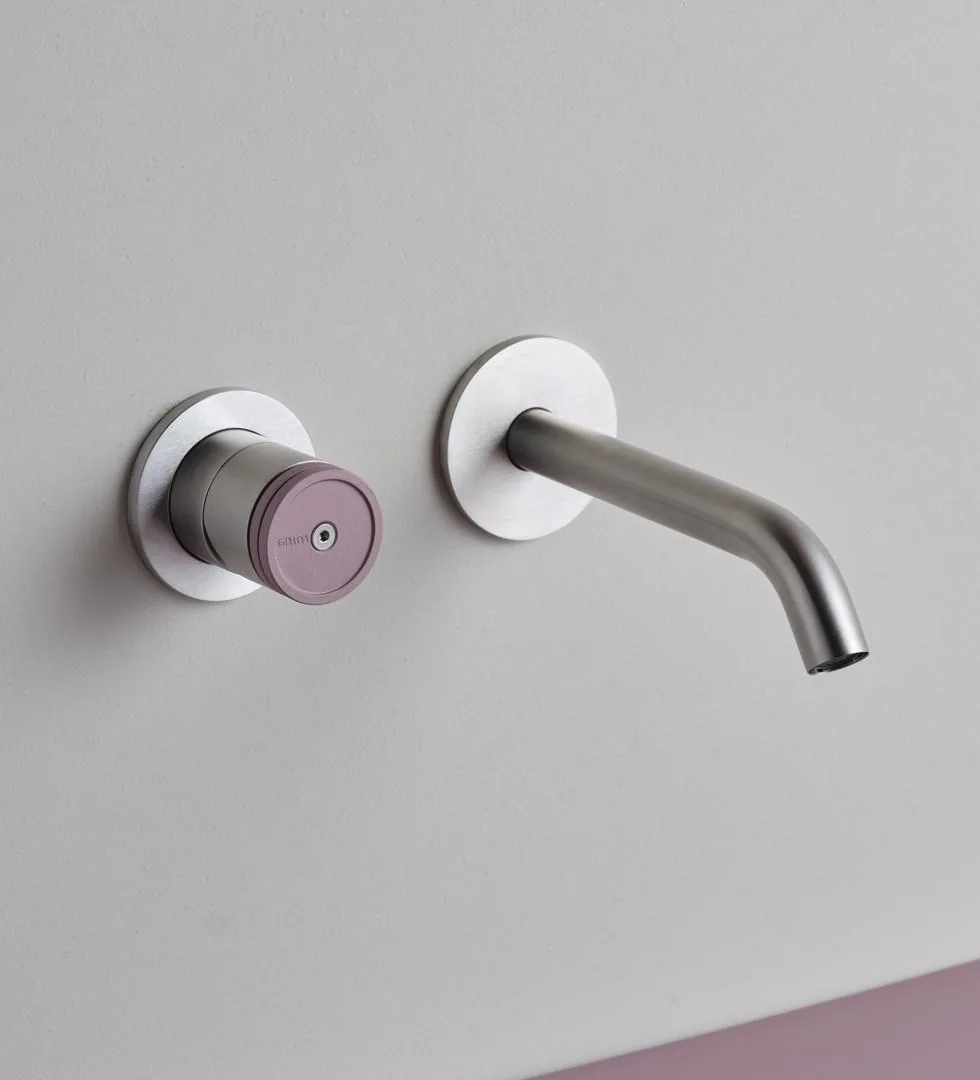 ProductWall Mounted Basin Set, 160mm Spout, AISI 316L2SC3213450-BS160 mm spout reach with an 18 mm outlet, wall fed so the worktop stays clear. AISI 316L. Guide price £590 per unit, ex VAT. A water-control fitting, so the tap heading applies before preference.View in catalogue →
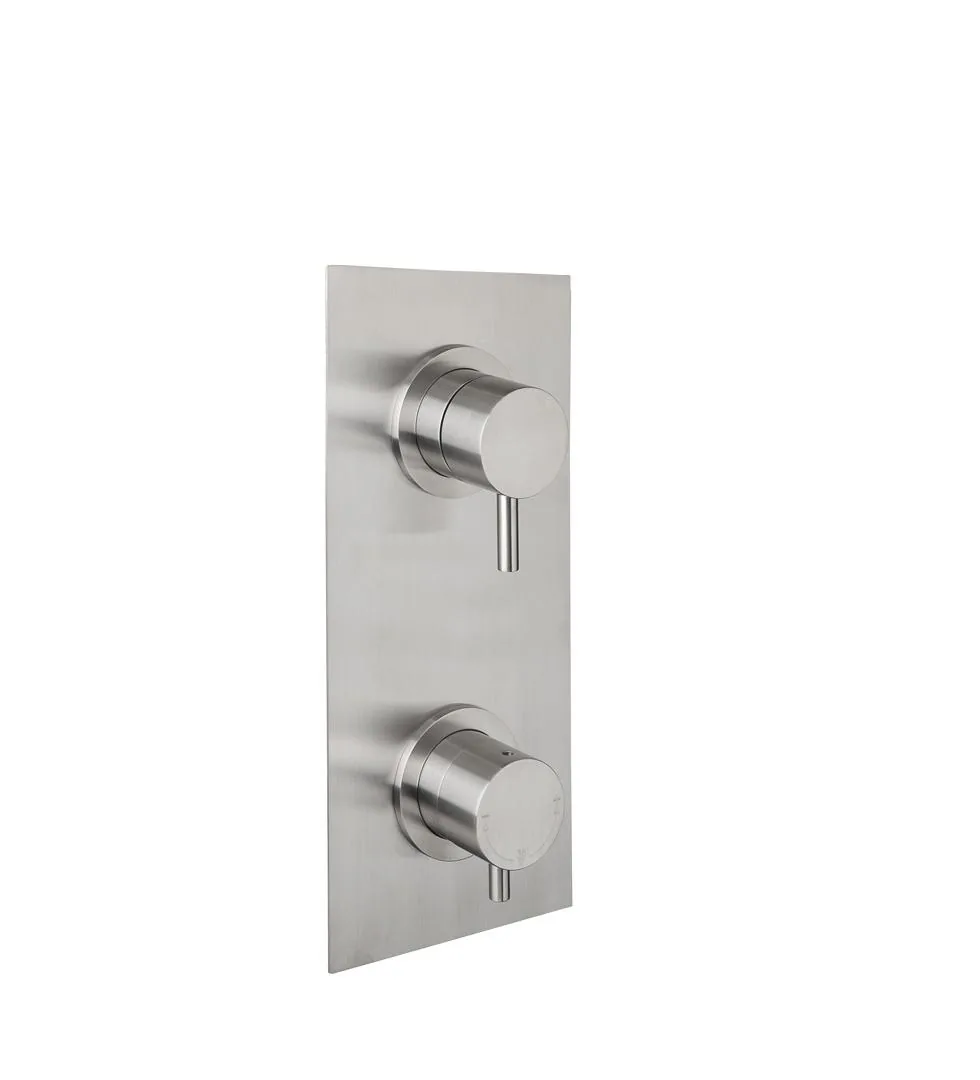 ProductHalf Inch Thermostatic Set, Single Shut-Off Valve2LI88S4-BSOne thermostatic mixer with one shut-off valve feeding a single outlet, on half inch connections for a concealed body. AISI 316L. Guide price £1225 per unit, ex VAT.View in catalogue →
 ProductWall Mounted Towel Rail 650 mm, Long Bath Towel2MS3794-BS650 mm bar, long enough for a bath sheet, on a stand-off so the towel dries. AISI 304. Guide price £150 per unit, ex VAT. A building fitting, so the 8302 heading.View in catalogue →
 ProductWall Mounted Toilet Roll Holder in AISI 304 Steel2MS37630-BSWall mounted beside the pan, holding the roll clear of the tile face so it changes without marking. AISI 304. Guide price £85 per unit, ex VAT.View in catalogue →
 ProductWall Mounted Liquid Soap Dispenser in 304 Steel2MS3720-BSWall mounted to keep the basin deck clear and wipeable, in a body that resists washroom cleaners. AISI 304. Guide price £140 per unit, ex VAT.View in catalogue →
Full specifications, dimensions and finish options for these and the rest of the range are in the Fontea catalogue, with the stainless steel taps and bathroom accessories types listed separately and the materials broken out under AISI 316L and AISI 304. Every price and material above was read from the product's own catalogue page on the date this article was published.
Before you quote a landed cost
- Get the commodity code before the price, not after. The code decides the rate, and the rate changes the VAT base. Look each article up in the UK Trade Tariff for the date you expect to import.
- Ask for the origin evidence at order confirmation. A statement on origin for the shipment, or a supplier declaration package behind your own importer's knowledge claim, obtained before the goods leave is worth more than a repayment claim afterwards.
- Decide the VAT route before the first invoice. PVA keeps import VAT off your cash flow and needs no approval, but it has to be selected on the declaration and instructed in writing to whoever files it.
- Set up the deferment account and the safety and security declaration early. Thirty working days for a deferment account and an XML declaration lodged by the carrier are both avoidable delays.
- Name the Incoterm and the clearing responsibility in the contract. Who presents the declaration, who pays import VAT at the border if you cannot defer, and when title and risk pass should all be written down, not assumed.
If you would rather not run the customs operation at all, that is a legitimate choice for a trade buyer, and it is the part most UK suppliers of European fittings are set up to handle. Ask any supplier for their EORI number, their PVA and deferment arrangement, and the origin evidence they provide with a consignment, then compare that against the cost of doing it yourself.
Specify it from the catalogue
Every fitting mentioned here is stocked and specified in the FONTEA trade catalogue: full technical data, finishes and wholesale tiers.
Related reading
-
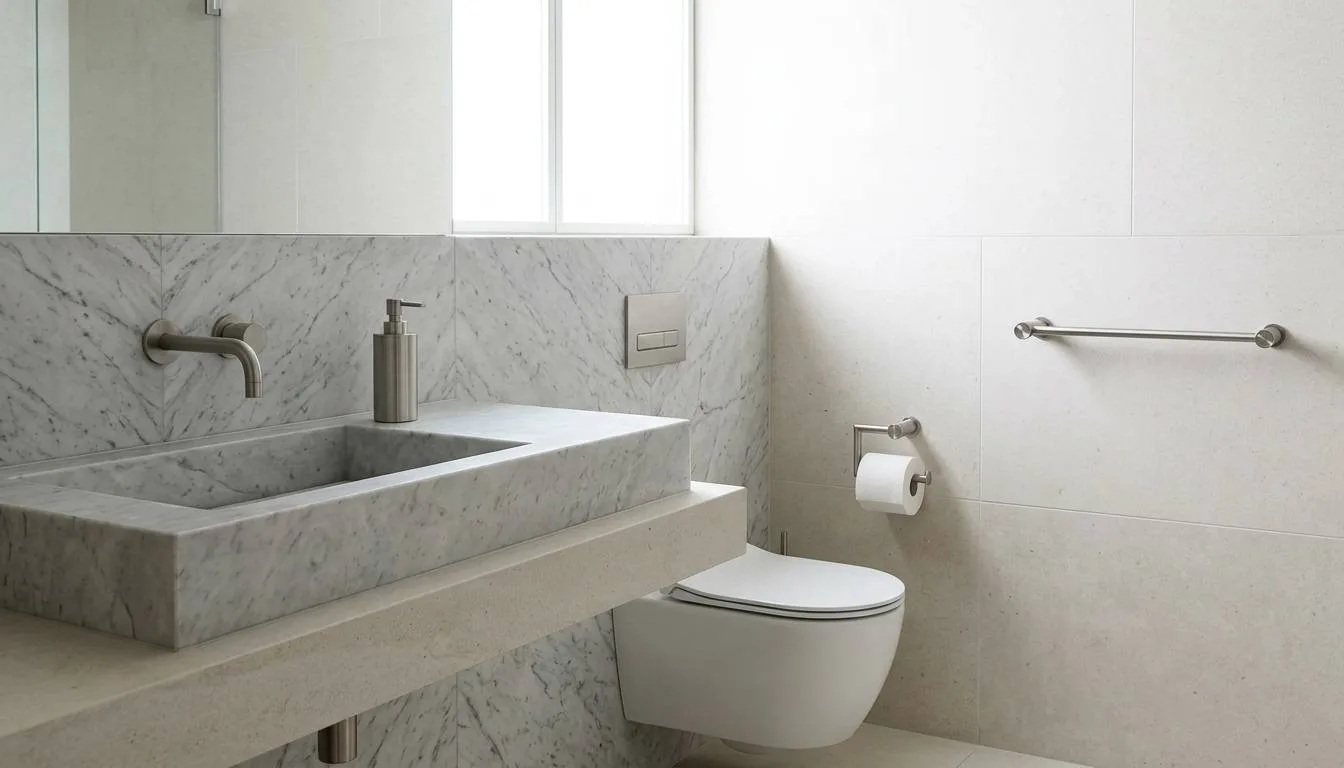 Procurement
Finish Consistency Across Hundreds of Rooms: Sample Approval and Batch Control
Set a repeatable finish-approval process for bathroom accessories with physical samples, controlled schedules, first-room checks and recorded batch inspections.
-
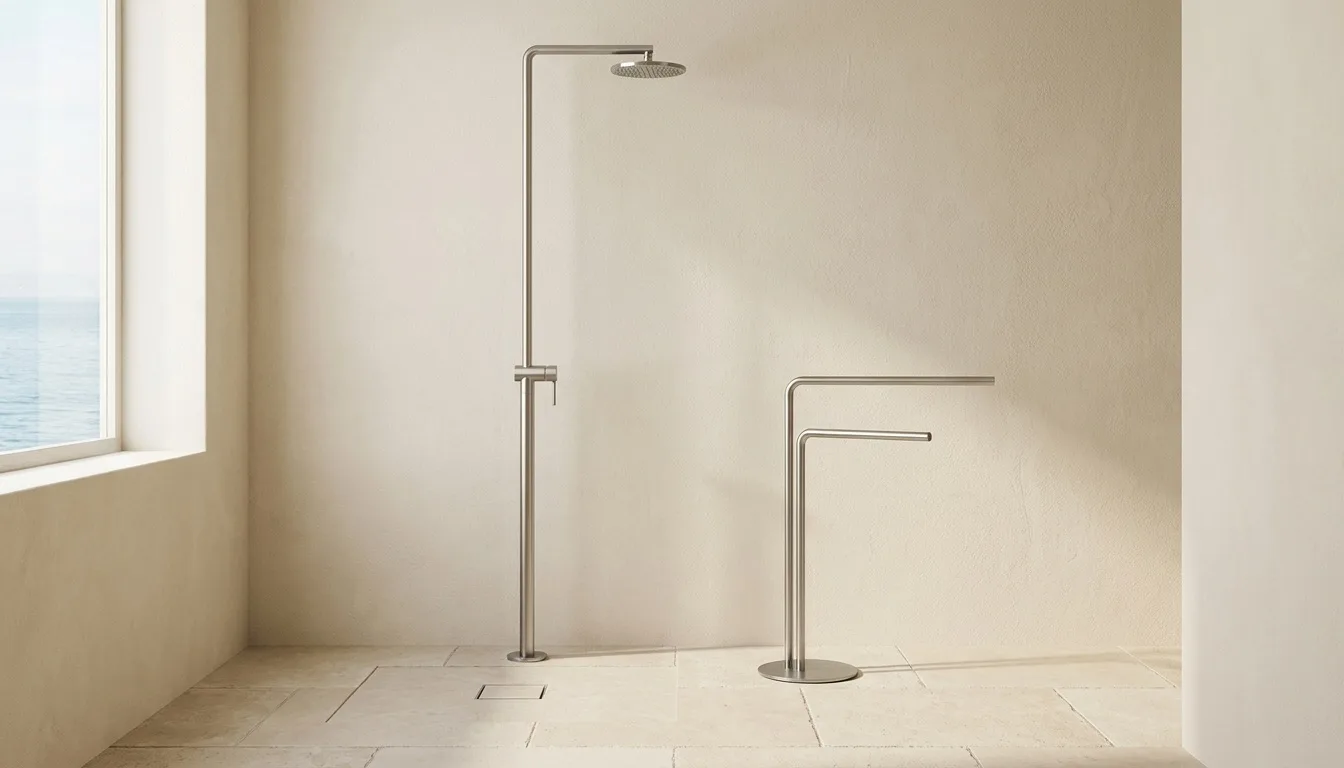 Specification
Stainless Steel Bathroom Fittings for Coastal and Seafront Developments: A Salt-Air Corrosion Guide
What actually governs whether bathroom fittings survive a seafront elevation: the chloride gradient, finish, joint design, drainage and ventilation, how corrosion appears, and what to schedule.
-
 Specification
Commercial vs residential taps: why cycle life and chemical resistance matter for hospitality fit-outs
Where the money genuinely belongs on a hospitality fit-out. How cycle life is measured, why exposed coatings see a harsher corrosion duty than concealed ones, and what a specifier should refuse to accept without a test standard.