 ONTEA
ONTEA
Order taps and fittings in phases that match the construction programme, not the total quantity on the schedule. A buyer who commits the whole project quantity at once buys the fittings, then owns the risk that half of them sit on site for months before the room that needs them is built; a buyer who splits the order into programme-aligned phases keeps the money, the storage space and the finish control tied to the work actually happening.
The second half of the answer is what each phase needs in writing. Because every programme moves, the contract terms that survive a slip, a shortage and a finish variation are what protect the delivery, and those are the terms worth settling before the first order rather than during the first delay.
Key Takeaways
- Phase the order against the build sequence. Each phase should land close enough to its installation window that fittings are not stored for months before they are needed.
- Give the supplier what it needs to hit a phase: the delivery address, the window, the required quantities per fitting and finish, and the site contact and access constraints.
- Storage is a real cost for fittings, not just a box to put them in. Stainless must be kept dry and segregated from other metals to avoid contamination and rust staining.
- Agree the trade terms, warranty and variation process in writing before the first order, so a slipped programme or a shortage has a defined path rather than a negotiation.
- Ask for firm trade pricing per phase based on volume and finish. The catalogue publishes guide prices for orientation only, and firm trade pricing is quoted per order.
Why phasing beats ordering the whole project at once
A build-to-rent block or a hotel programme is delivered in a sequence: first fix, then rising walls, then the wet trades, then the finish and fit-out. The bathrooms are not all ready at the same moment, and the fittings for a bathroom are not all needed at the same moment within it either. Ordering against that sequence, in phases, lines each delivery up with the trade that is ready to receive it.
The alternative, a single order for the whole scheme, has two costs that are easy to underestimate. The first is storage: fittings for rooms that are not built yet have to live somewhere on site, and on a live development that somewhere is often a corridor or a unit under construction. The second is control: a single bulk order fixes the finish and specification for the whole project at the point it is placed, which leaves no room to respond if a batch arrives off-shade or a design decision changes mid-build.
Phasing is not only about avoiding storage. It is about putting the buyer's leverage to work at the moment it is most useful. Each phase is a fresh, smaller commitment, so the specification and the finish can be confirmed against the latest approved sample and the latest programme rather than frozen months before anyone can see them on a wall.
 ProductDeck Mounted Basin Mixer Without Drain, 316L2SC321415-BSAISI 316L stainless steel; single deck hole; guide price from £310 per unit ex VAT. Firm trade pricing is quoted per order based on volume and finish.View in catalogue →
What a supplier needs to hit a phase
A phased order only works if each phase carries enough information to be executed without a phone call. When you release a phase to the supplier, be explicit about the following, ideally on a delivery schedule that both sides work from.
- The exact delivery address, including the access route, any loading-bay or crane constraints, and the hours the site will accept deliveries.
- A named site contact who can receive, count and sign for the delivery, and a fallback contact if that person is not on site that day.
- The delivery window, and whether the date is fixed or indicative. Give the supplier the fixed dates and let them confirm the rest.
- Quantities broken down by fitting, by finish and by room or block, so a shortage can be traced to one item rather than to the whole phase.
- Any inspection or documentation the main contractor requires on delivery, such as a delivery note listing each reference, and who signs it.
- What happens if the delivery is refused or only partly accepted, so the shortfall is recorded at the point it happens rather than at the end of the phase.
Each of these is ordinary project information, but each one is the kind of thing that gets assumed rather than stated, and assumptions are what turn a phase into a delay.
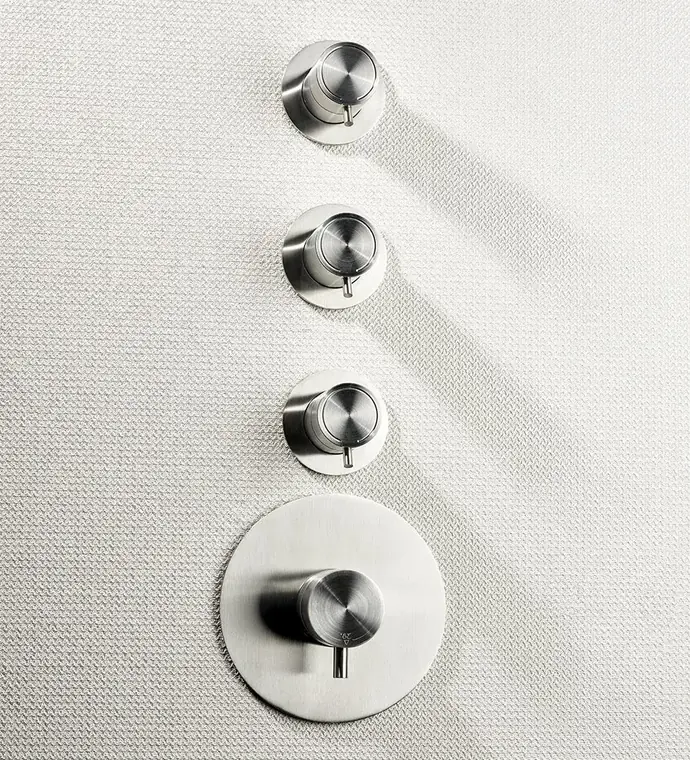 ProductConcealed Thermostatic Set, Three Shut-Off Valves, 316L2SL33S6-BSAISI 316L stainless steel; three shut-off valves serve three separate outlets from a single mixer; half-inch connections throughout; guide price from £2025 per unit ex VAT.View in catalogue →
How site storage affects the fittings themselves
Fittings delivered early are not simply sitting still. They are exposed to a site environment, and for stainless steel that environment has a specific hazard that trade storage guidance calls out: contamination from other metals. The British Stainless Steel Association advises avoiding contamination during storage, handling and fabrication, notes that the use of non-stainless steel processing and handling equipment is a frequent source of contamination, and states that as soon as any of this contamination becomes wet, rust staining will result.
That is the practical argument for phasing rather than a single bulk drop, and for how the store is set up when a phase does land early. Keep stainless fittings dry, keep them segregated from mild steel, and avoid stacking them where a galvanised or carbon steel item can shed contamination onto a wet carton. This is why the number one lever a buyer has on storage risk is not the storage area but the delivery date: fittings that arrive weeks before they are installed are fittings that sit through more weather, more handling and more chance of a damaged or contaminated carton.
For a programme that will run over months, the buyer should agree with the supplier and the main contractor, before the first phase lands, where the store will be, who is responsible for keeping it dry, and who counts the fittings in and out. That is a small conversation that avoids a large argument at handover.
What happens when the programme slips
Construction programmes move. A buyer who has planned every phase against a fixed date will find that the date is the first thing to break, because the fitting that was due for a wet room is now sitting in a store waiting for a wall that is two weeks behind.
The protection is not a clause that stops the programme slipping, because no supply clause can do that. The protection is a clause that says what happens when it does. Before the first order, agree in writing:
- How much notice the buyer gives to move a phase date, and how much notice the supplier needs to re-plan a delivery that has already entered production. A phase that has not entered production is cheap to move; one that has is not, and the parties should know where that line sits.
- What the buyer pays, if anything, to re-schedule, and what happens to the price if a phase is delayed and then released after the original date. Firm pricing quoted per phase is only real if it is held for a stated window.
- Whether a phase that has been delayed can be split, so a partial quantity can be released to the rooms that are ready rather than the whole phase waiting.
The last point is the one that protects the programme. A fittings order that is all-or-nothing per phase is only as useful as the least advanced part of that phase. Allowing a phase to be released in parts means the rooms that are ready get fitted while the rest catch up.
 ProductWall Mounted Towel Rail 650 mm2MS3794-BSAISI 304 stainless steel; 650 mm bar; available in brushed stainless steel, deep grey, Tinta and gold PVD; guide price from £150 per unit ex VAT.View in catalogue →
Handling variation and shortage across phases
Two things will not hold across a multi-phase programme: the exact specification, and the exact quantity. Both need a defined route before they become a problem in week three of a phase.
Variation is easiest to handle when it is handled at a known price. Agree, before the first order, that a change to the approved fitting or finish between phases is quoted per order on the same basis as the original, and that the change is only accepted once it is confirmed in writing against a reference and a finish. A bathroom programme that adds a floor of a different finish, or swaps a mixer for a taller spout, should not be resolved by whoever picks up the phone first.
Shortage is a matter of where it is recorded. Agree that a shortfall against a delivery note is counted and signed at the point of delivery, that the supplier confirms a replacement or credit date for the missing reference in writing, and that the buyer does not absorb a shortage twice by also raising it at handover. Where a shortage is resolved by an agreed credit rather than a replacement unit, that credit should carry across to the phase it belongs to rather than being applied to the whole contract.
One more point specific to a stainless range: hold the finish decision at the level of the whole project, not the phase. A project specified in one finish should be ordered in one finish across every phase, because a later phase bringing a different batch of the same finish is a visible mismatch in a room block where every unit is meant to read identically. Confirming the finish against a physical approved sample before releasing the first phase, and holding that sample as the reference for every later phase, is what keeps a phased order visually consistent.
 ProductWall Mounted Toilet Roll Holder2MS37630-BSAISI 304 stainless steel; mounts beside the pan; part of a wider accessory range so one finish runs through the room; guide price from £85 per unit ex VAT.View in catalogue →
What to agree in writing before the first order
The terms that matter most here are the ones that are ordinary in general trading but rarely written down in a project purchase. Get these agreed before phase one is released, and the rest of the programme is administration rather than negotiation.
Trade pricing and how it is held. The catalogue publishes guide pricing shown for orientation, with firm trade pricing quoted per order based on volume and finish. Ask for the firm price per phase in writing, and ask how long that price is held. A phased order is only cheaper if the price holds across the phases, which is the whole reason to phase it.
The trade term for carriage, duty and risk. Where an order crosses a border, the term decides who clears customs, who pays the duty, and when the risk passes to the buyer. These are the Incoterms, the standard trade terms the International Chamber of Commerce publishes and maintains, which the ICC describes as a set of standards used in international and domestic contracts for the delivery of goods, recognised by UNCITRAL as the global standard for interpreting the most common terms in foreign trade. The two a UK trade buyer is most likely to meet are DAP and DDP, and they are not interchangeable: under the ICC's guidance, DDP is the one rule in which the seller is responsible for all duties, taxes and import formalities in the destination country, while under every other rule the buyer bears the import burden. If your project is delivered on DDP, the supplier has taken on the customs step; if it is delivered on DAP or FCA, you have, along with the duty itself. For a UK buyer importing into the UK, the UK Global Tariff applies to all goods imported into the UK unless a trade agreement, exception or relief applies, and gov.uk guidance is explicit that the commodity code on the import declaration determines the rate of duty and whether an import licence is needed. Agree the term in writing on the order, because it changes the landed cost of every phase.
Warranty and what it covers. Ask what the warranty period is, what it covers, what it excludes, and how a claim is made, and get it in writing. Note that the Fontea catalogue does not currently publish a warranty period or a spares term on its product pages, so these have to come from the supplier in writing per order rather than from the catalogue.
Lead time and the price of a late order. Ask the supplier for the lead time from order to delivery for each fitting on the schedule, and for what happens if a delivery is late. If the supplier publishes no lead time, say so in the record and rely on a committed date for each phase instead, because an unquantified lead time is not a promise.
Who owns the fitting in transit, and from when. Under the agreed Incoterm, risk passes to the buyer at a defined point. That is the point at which the buyer is carrying the risk of the fittings sitting on site, which is another argument for phasing the order so that risk arrives with the work.
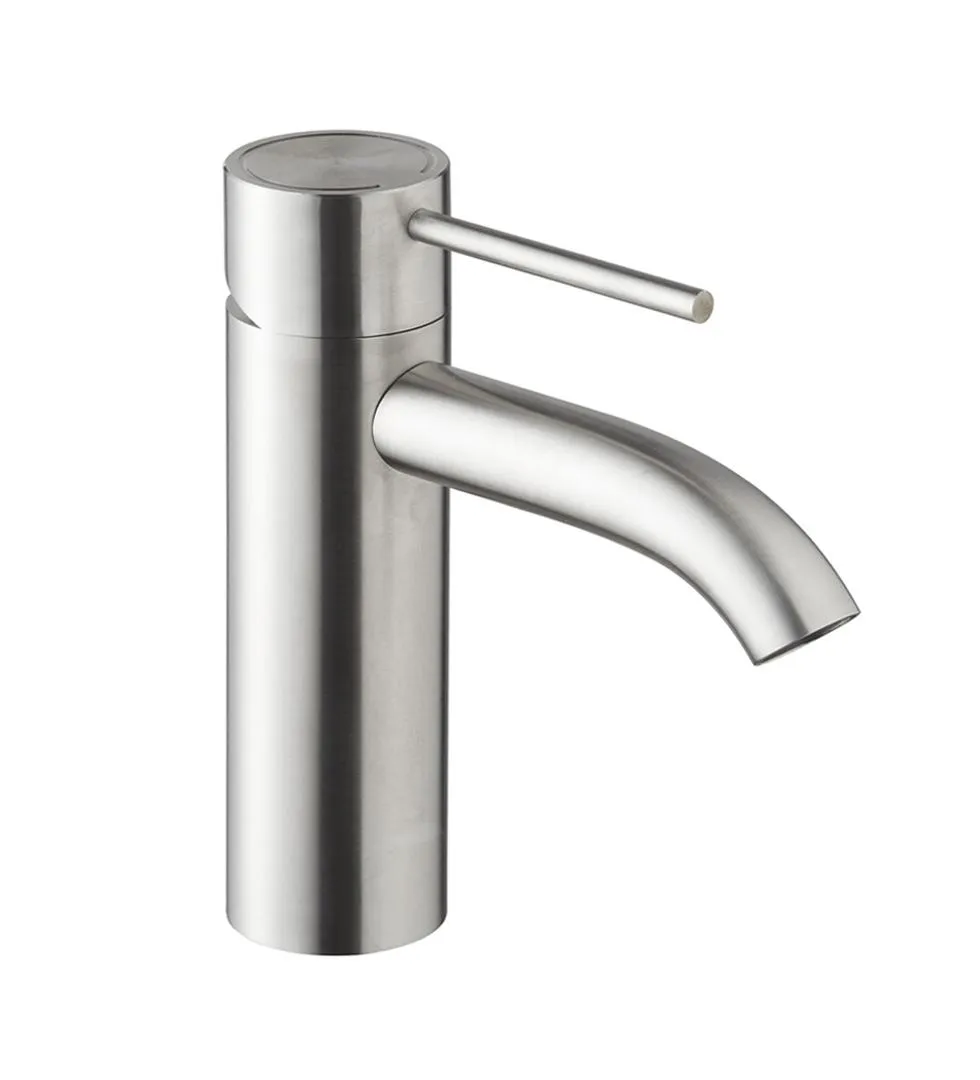 ProductDeck Mounted Basin Mixer Single Hole, 316L2SL33577-BSAISI 316L stainless steel; single central cut-out keeps the deck uncluttered; supplied without a pop-up waste so the drain is chosen with the basin; guide price from £430 per unit ex VAT.View in catalogue →
The fittings a phased order most often leaves out
A phased order that is planned only around the taps tends to leave the small fittings to a later, rushed phase, and those are exactly the fittings that are needed last and forgotten first. Deck-mounted basin mixers are supplied without a waste, so the waste and trap are chosen with the basin rather than with the tap, and that decision belongs to the basin package rather than the tap package. Concealed thermostatic sets with three shut-off valves need three outlet runs planned behind the wall and labelled, which is a rough-in decision that has to be made before tiling starts, not when the set arrives. Stop valves and water inlets, which are covered in detail in stop valves and water inlets explained, are first-fix items fitted before the wall is closed and become expensive to add afterwards.
The pattern is worth stating plainly: in a phased order, the fittings that are fitted earliest have to be ordered earliest, and they are the ones most likely to be assumed rather than scheduled. List them in the phase plan next to the taps, not in a later package.
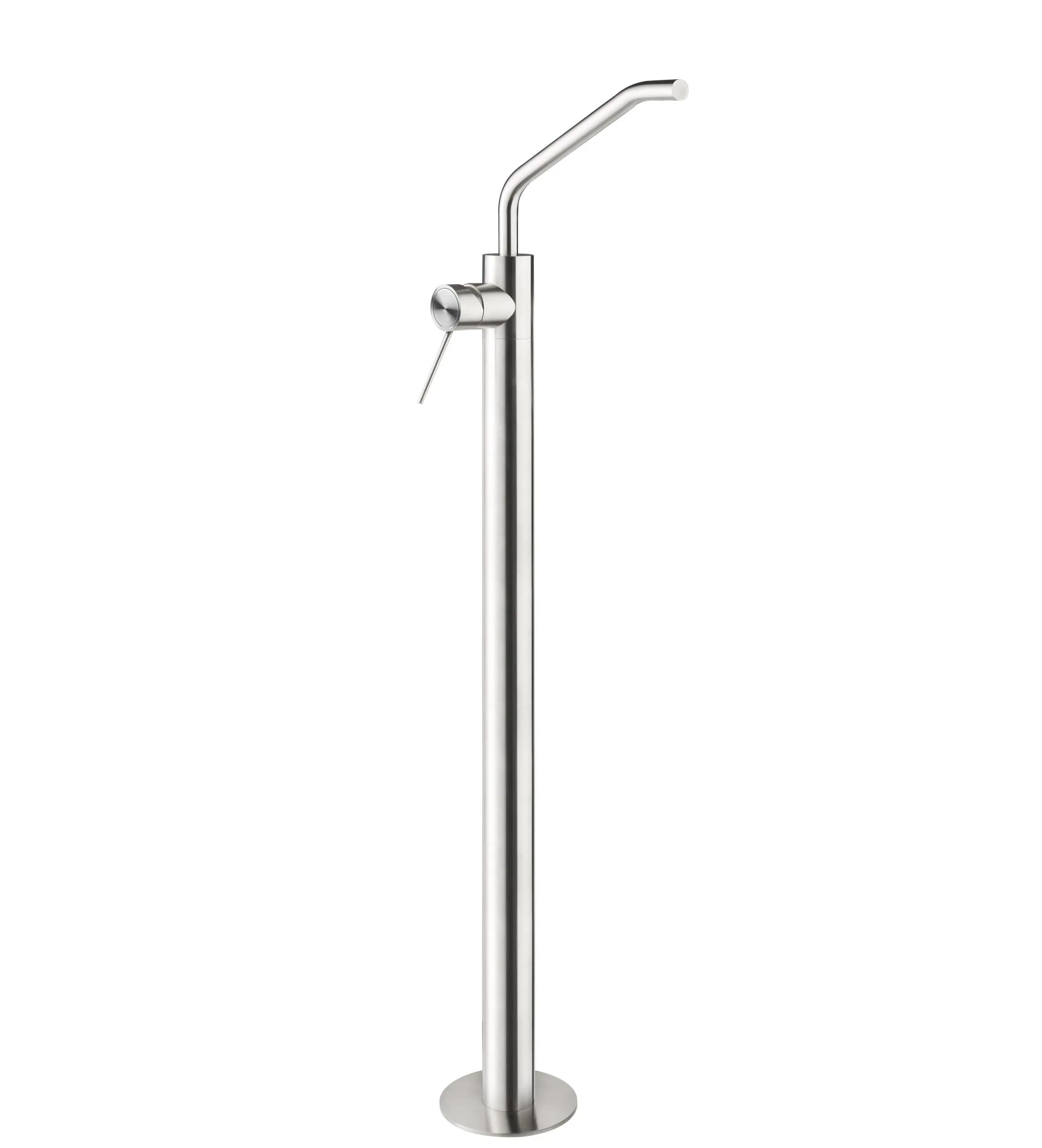 ProductFloor Standing Basin Mixer Column, 316L2SL33606X-BSAISI 316L stainless steel; fed from the floor so the supplies are waterproofed in the deck before the basin is set; guide price from £1950 per unit ex VAT.View in catalogue →
Where a phased programme leaves a buyer best protected
The pattern across all of this is that the risks on a multi-phase supply order are not in the fittings, they are in the gaps between phases. A programme that slips is not a supply problem, it is a scheduling problem that supply has to absorb. A shortage that is counted at the point of delivery is an administrative fact, not a dispute. A finish that is held against one approved sample across every phase reads consistent across a room block. The buyer who has agreed these points before the first order has turned most of the things that go wrong on a phased delivery into process, and process is the part that does not need to be renegotiated in week three.
Ready to plan a phased supply schedule?
If you are sourcing taps and fittings for a build-to-rent or hotel scheme and want a phased delivery plan built around your programme, register a Fontea trade account or get in touch with the team to discuss your volumes, your programme and the fittings you need per phase. Firm trade pricing is quoted per order based on volume and finish.
Specify it from the catalogue
Every fitting mentioned here is stocked and specified in the FONTEA trade catalogue: full technical data, finishes and wholesale tiers.
Related reading
-
 Commercial projects
Who Buys Bathroom Accessories on a Build-to-Rent or Hotel Project?
Assign accessory selection, procurement, backing, installation and handover responsibilities explicitly across FF&E and construction packages.
-
 Commercial projects
Grade 304 or 316 for High-Traffic Office Washrooms?
Choose bathroom accessory grade from exposure, cleaning regime, product specification and maintenance expectations, not traffic volume alone.
-
 Specification
Stainless Steel Bathroom Fittings for Coastal and Seafront Developments: A Salt-Air Corrosion Guide
What actually governs whether bathroom fittings survive a seafront elevation: the chloride gradient, finish, joint design, drainage and ventilation, how corrosion appears, and what to schedule.